
In modern farming systems, agricultural machinery plays a decisive role in improving efficiency, consistency, and long-term soil performance. As agriculture equipment becomes more specialized, professionals and business owners are expected to make informed decisions that balance productivity with sustainability. Among the less publicly discussed but operationally critical machines are seed tenders, applicators, and rippers.
These tools support different stages of the crop cycle, from logistics and input handling to soil treatment and compaction management. When used strategically, they reduce downtime, improve accuracy, and help protect soil structure. Understanding how these machines function individually and how they complement each other is essential for farms operating at scale.
The Growing Complexity of Agriculture Equipment Selection
Agriculture equipment has moved beyond basic mechanization into a category of advanced industrial equipment designed to support precision farming. Rising input costs, tighter planting windows, and environmental pressures have increased the need for machinery that delivers both efficiency and control.
Farm operators today evaluate equipment based on factors such as:
Operational efficiency and labor reduction
Accuracy in input handling and application
Compatibility with existing machinery systems
Impact on long-term soil health
At an early research stage, many professionals rely on neutral, equipment-focused information platforms such as AllMachines, which organize agricultural machinery by category and application rather than by brand promotion. This type of structured information supports better technical comparisons and more informed decision-making.
Seed Tenders: Improving Efficiency Before Planting Begins
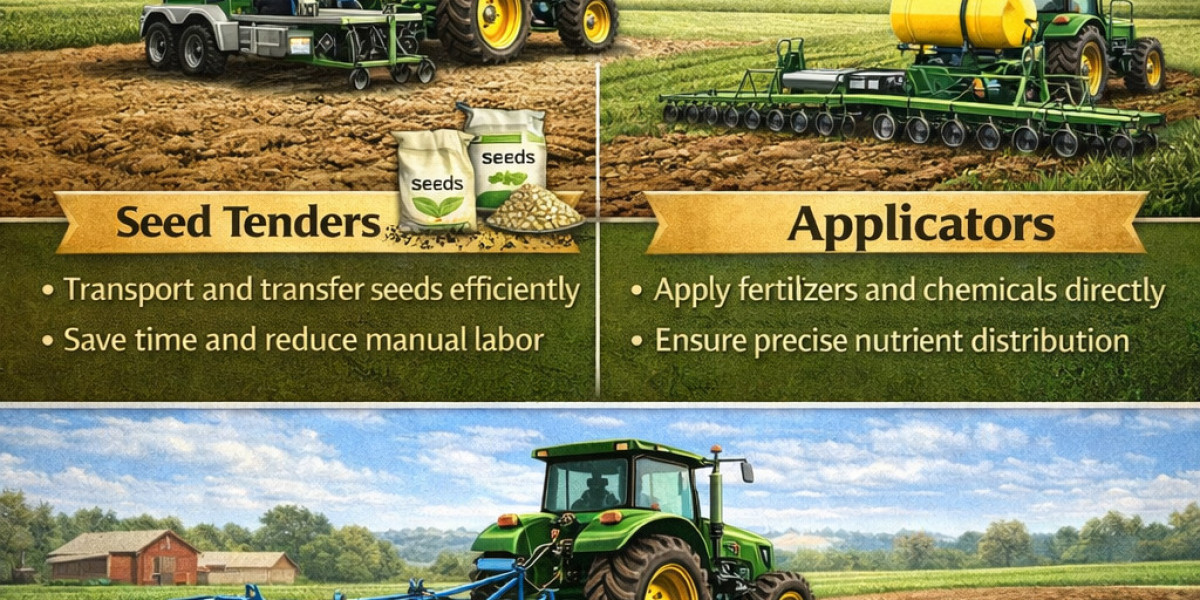
Seed tenders play a crucial but often underestimated role in crop production. Their primary function is to transport, store, and load seed efficiently into planters or drills. By streamlining seed handling, seed tenders reduce downtime during planting one of the most time-sensitive operations on a farm.
Why seed tenders matter in modern operations
Faster refill times for planters
Reduced labor requirements
Lower risk of seed damage or contamination
Improved accuracy in seed inventory management
As planting equipment has grown larger and more precise, manual seed handling has become impractical for medium to large farms. Seed tenders bridge the gap between bulk seed delivery and precision planting systems. A technical overview of different Seed Tenders can help professionals evaluate capacity, auger systems, and mobility options suited to their operation.
Applicators: Precision in Input Management
Applicators are essential for delivering fertilizers, pesticides, herbicides, and other inputs accurately and efficiently. Their role extends beyond simple distribution; modern applicators are integral to precision agriculture strategies that aim to reduce waste and environmental impact.
Key functions of applicators include:
Accurate rate control
Uniform coverage across variable field conditions
Integration with GPS and variable-rate technology
Reduced overlap and input loss
Applicators may be ground-based or tractor-mounted, depending on field size and crop type. For business owners managing input costs, the ability to apply materials precisely where needed can have a significant impact on margins. Reviewing categorized information on Applicators helps clarify differences in design, application methods, and operational requirements.
Rippers: Addressing Deep Soil Challenges
Soil compaction remains one of the most persistent challenges in mechanized agriculture. Heavy equipment traffic and repeated shallow tillage can create dense soil layers that restrict root growth and water movement. Rippers are designed to address this issue by loosening soil at deeper levels without fully inverting the surface.
Benefits of ripping include:
Improved root penetration
Enhanced water infiltration
Reduced surface runoff
Long-term improvement in soil structure
Unlike conventional tillage tools, rippers require careful timing and soil condition assessment. When used appropriately, they help restore soil functionality without excessive disturbance. Understanding the technical distinctions among different Rippers is essential for matching working depth, shank spacing, and power requirements to field conditions.
How These Machines Work Together in Practice
While seed tenders, applicators, and rippers serve distinct purposes, their value is maximized when they are considered as part of an integrated machinery system. Decisions made at one stage of field preparation often influence outcomes at later stages.
For example:
Effective ripping improves soil conditions for nutrient uptake from applicators
Efficient seed handling supports tighter planting windows
Accurate application reduces the need for corrective field operations
Research shared by global agricultural organizations and soil science studies summarized on Wikipedia emphasize that sustainable mechanization depends on aligning equipment use with agronomic objectives rather than relying on isolated interventions.
Evaluating Agricultural Machinery Beyond Short-Term Performance
For professionals and business owners, machinery investment decisions are long-term commitments. Beyond purchase cost, considerations include maintenance demands, fuel efficiency, compatibility with precision systems, and adaptability to changing crop practices.
Neutral reference platforms such as AllMachines provide category-level perspectives that help users understand where specific machines fit within the broader agricultural machinery ecosystem. This approach supports objective evaluation rather than brand-driven decision-making.
Conclusion: Strategic Use of Specialized Equipment
Seed tenders, applicators, and rippers may not always receive the same attention as planting or harvesting equipment, but their impact on efficiency and soil health is substantial. When selected and used strategically, these machines support smoother operations, more precise input management, and healthier soil systems.
As agriculture continues to evolve toward data-driven and sustainability-focused practices, understanding the role of specialized agriculture equipment becomes increasingly important. Informed machinery choices help ensure that operational efficiency and long-term land stewardship move forward together.