
Your Own Bank Can Freeze Your Account — Here Is What to Do
Most people assume that a frozen bank account is always the result of a government authority or court order. The reality is that millions of bank accounts across India are frozen every single year by the banks themselves — without any external direction from a court, tax department, or law enforcement agency.
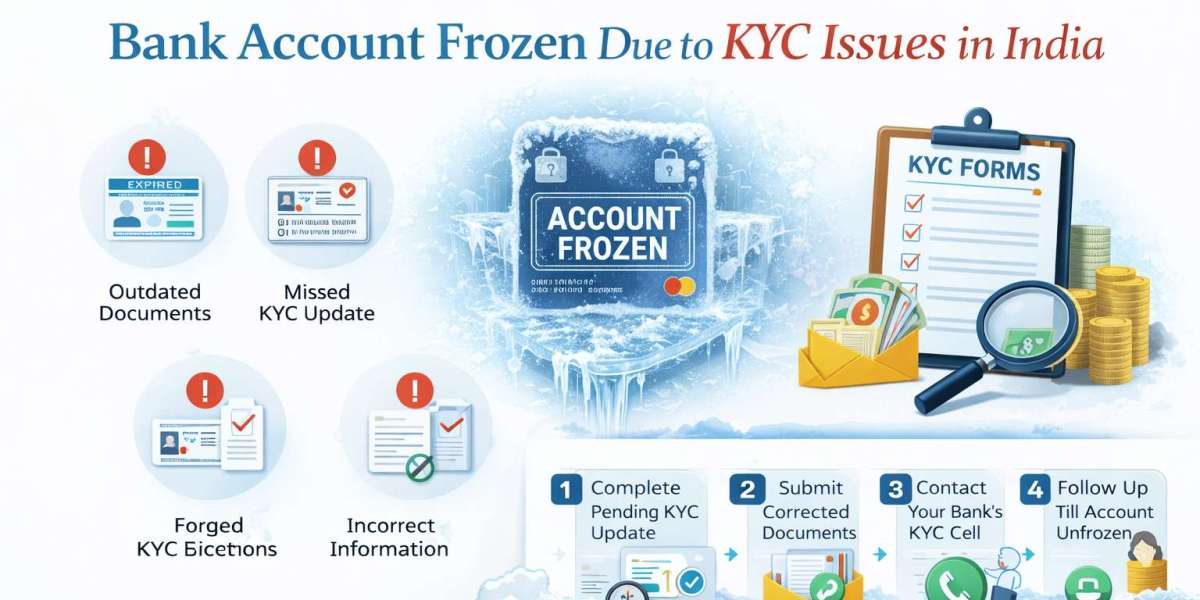
The most common reason banks freeze accounts internally is incomplete or expired KYC — Know Your Customer — documentation. Under RBI regulations, all banks in India are required to periodically update the KYC details of their customers. If a customer fails to submit updated documents when required, the bank is entitled to restrict or freeze the account until compliance is completed.
Other internal reasons for account freezes include suspicious transaction monitoring alerts triggered by the bank's automated fraud detection systems, regulatory compliance failures identified during internal audits, accounts flagged under PMLA reporting obligations, and accounts where the customer's address or identity cannot be verified against current records.
The good news about KYC and compliance-related account freezes is that they are typically the most straightforward to resolve — provided you know the correct procedure and follow it without delay. This guide tells you exactly how to unfreeze your bank account frozen for KYC or internal compliance reasons.
Why Banks Freeze Accounts for KYC Non-Compliance
The Reserve Bank of India's KYC Master Directions require all banks to maintain current and verified identity, address, and photograph records for every account holder. Banks must conduct periodic KYC updates at intervals determined by the risk category of the customer — typically every two years for high risk customers, every eight years for medium risk, and every ten years for low risk account holders.
When the deadline for a KYC update passes without the customer submitting the required documents, the bank is authorised under RBI guidelines to progressively restrict the account — first limiting certain transactions, then freezing credits, and ultimately freezing the entire account if the customer continues to be non-responsive.
Banks also freeze accounts when their automated transaction monitoring systems flag unusual activity — large cash deposits inconsistent with the account's historical pattern, rapid transfers to multiple new beneficiaries, or transactions that match patterns associated with money laundering or fraud.
How to Unfreeze Your Bank Account Frozen for KYC Reasons
Step 1: Visit the Branch and Identify the Exact Reason
The first step is always a personal visit to your bank branch with full identity documents. Ask the branch manager for a written explanation of exactly why the account was frozen — whether it is KYC non-compliance, a suspicious transaction alert, or a specific regulatory compliance issue. The reason determines the resolution process.
Step 2: Submit Complete and Updated KYC Documents
If the freeze is due to KYC non-compliance, submit the complete set of required documents immediately:
- Aadhaar card — both front and back
- PAN card
- Recent passport sized photograph
- Current address proof — utility bill, rental agreement, or Aadhaar if the address is current
- For businesses — GST registration, business address proof, and authorised signatory documents
Step 3: Follow Up in Writing
After submitting documents, send a formal written request to the branch manager and the bank's nodal officer requesting immediate restoration of account access. Keep copies of everything submitted. Written follow-up creates a formal record that strengthens any subsequent complaint.
Step 4: File a Complaint With the Banking Ombudsman
If the bank does not restore account access within a reasonable period after receiving complete KYC documents, file a complaint before the Banking Ombudsman under the RBI Integrated Ombudsman Scheme. The Ombudsman has the power to direct banks to restore account access and pay compensation for losses caused by unreasonable account freezes.
Step 5: Approach the Consumer Court
If the Banking Ombudsman does not provide sufficient relief, the matter can be taken to the District Consumer Disputes Redressal Commission as a deficiency of service complaint against the bank. Consumer courts in India have awarded significant compensation to account holders whose accounts were frozen unreasonably by their own banks.
Final Word: A KYC Freeze Is Fixable — Act Immediately
A bank account frozen for KYC or internal compliance reasons is the most straightforward type of account freeze to resolve — but only if you act quickly and follow the correct process. Do not ignore repeated KYC update requests from your bank. Respond immediately and keep your documents current.
If your account is already frozen, submit your documents today and follow the escalation process outlined above to unfreeze your bank account as quickly as possible.