
Electrical installations often require conduit systems that can adapt to movement while providing robust protection for wiring. The Flexible Steel Conduit excels in scenarios demanding both mechanical strength and routing versatility, serving as a reliable shield against physical and environmental threats. Engineers and installers prioritize conduits that deliver consistent performance across varying conditions, focusing on how core functions contribute to system integrity. This exploration covers the essential functions and performance characteristics of Flexible Steel Conduit, illustrating their impact on modern electrical setups.
A primary function of flexible steel conduits is to offer superior mechanical protection, safeguarding cables from crushing, impact, and abrasion during installation and operation. The interlocked or continuously welded steel structure absorbs external forces, preventing damage to internal conductors in areas prone to physical stress. This protective capability proves vital in construction zones or machinery environments where accidental contact is common. Zhejiang Hongjuesi Connector designs their conduits with tightly formed profiles that enhance this defensive role without restricting bendability.
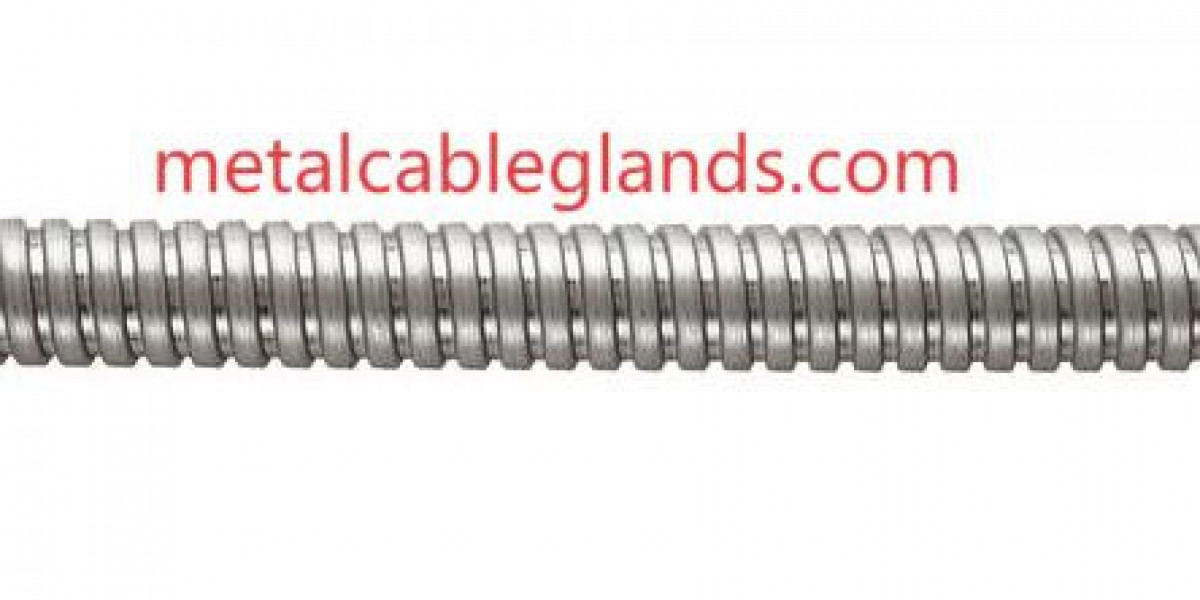
Flexibility itself stands as a core function, allowing the conduit to navigate tight corners, obstacles, and moving parts with ease. This adaptability facilitates installation in confined spaces or dynamic equipment, reducing the need for multiple fittings and junctions. The helical or square-locked construction enables repeated bending without fatigue, maintaining shape memory over time. Zhejiang Hongjuesi Connector optimizes spiral winding techniques to achieve smooth curvature while preserving structural strength.
Grounding continuity represents another critical function, as the metallic body provides a low-impedance path for fault currents. This inherent conductivity ensures safe dissipation of electrical surges, protecting personnel and equipment from shock hazards. In systems requiring bonding, the conduit doubles as a ground conductor, simplifying designs and reducing additional wiring.
Vibration resistance emerges as a key performance attribute in applications involving constant motion, such as robotics, vehicles, or industrial machinery. The robust steel construction dampens oscillations, preventing cable chafing or connector loosening over extended periods. This stability extends the lifespan of internal wiring in high-vibration settings.
Corrosion resistance plays a significant role in long-term performance, particularly with galvanized or coated variants that withstand moisture and chemical exposure. The protective layers maintain conduit integrity in damp basements, outdoor runs, or processing plants handling aggressive substances.
Thermal performance allows flexible steel conduits to operate effectively across wide temperature ranges, from cold storage facilities to hot industrial processes. The steel core conducts heat away from cables, preventing overheating while resisting deformation under thermal expansion.
Electromagnetic shielding becomes increasingly important with sensitive electronics, where the steel conduit acts as a Faraday cage to block interference. This function protects signal cables in automation systems or data networks from external noise sources.
Fire resistance contributes to safety by containing flames and limiting smoke propagation in case of electrical faults. Certain designs incorporate materials that retard burning, providing valuable evacuation time in building installations.
Cable support and organization help maintain proper bend radii and prevent sagging in vertical or overhead runs. The conduit's inherent stiffness offers structural support while allowing controlled flexibility for routing.
Impact absorption during seismic events or mechanical shocks preserves system functionality in earthquake-prone regions or heavy equipment areas. The ductile steel construction deforms gradually rather than fracturing suddenly.
Dust and debris exclusion keeps internal cables clean in dirty environments like workshops or agricultural facilities, reducing insulation breakdown risks over time.
Ease of pulling cables through the conduit enhances installation efficiency, with smooth inner surfaces minimizing friction during wire insertion. This feature speeds up project timelines and reduces labor costs.
Compatibility with various fittings and connectors ensures seamless integration into larger systems, from junction boxes to equipment enclosures. Standardized end configurations support quick assembly in field conditions.
Noise reduction properties help minimize acoustic transmission through conduit runs in quiet environments such as offices or hospitals.
Long-term fatigue resistance allows repeated flexing in moving applications without material degradation, crucial for doors, gates, or robotic arms.
Chemical inertness in coated versions resists degradation from oils, solvents, or cleaning agents common in manufacturing plants.
UV stabilization in outer jackets prevents cracking during prolonged outdoor exposure, maintaining appearance and functionality.
The combination of these functions creates a conduit system that not only protects but actively enhances electrical performance in challenging scenarios. Ongoing refinements focus on balancing flexibility with protective strength for evolving industry needs.Zhejiang Hongjuesi Connector continually advances these functional aspects to meet diverse requirements. Explore their range of high-performance flexible steel conduit solutions at https://www.metalcableglands.com .