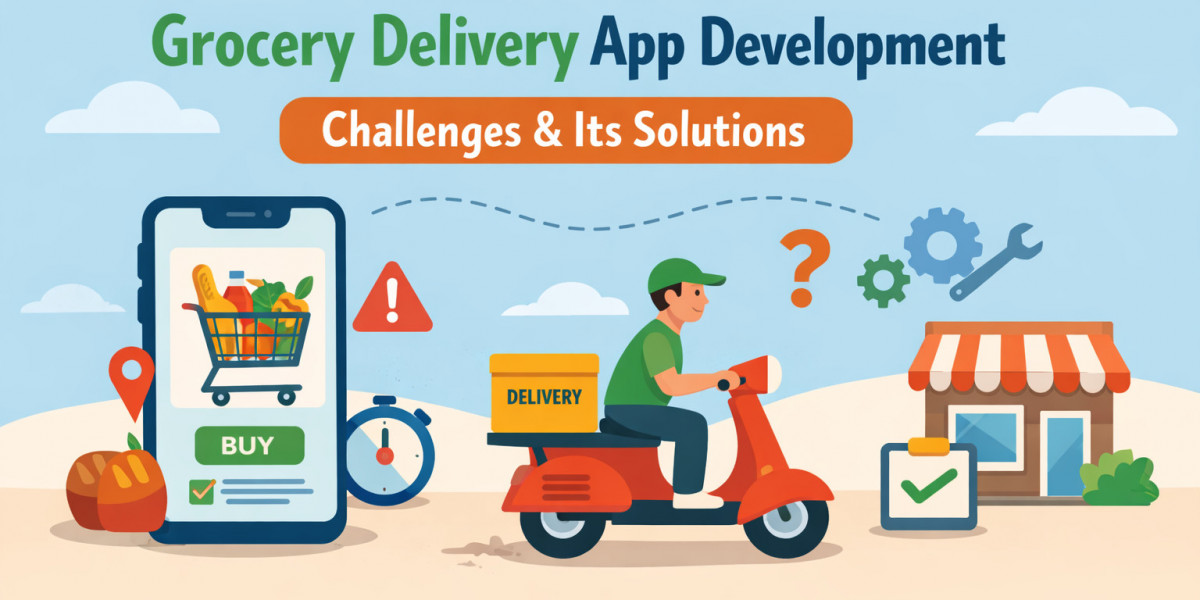

The grocery delivery industry has witnessed massive growth in recent years, driven by changing consumer behavior, urban lifestyles, and the demand for convenience. Customers now expect groceries to be delivered to their doorstep quickly, safely, and with complete transparency. This growing demand has encouraged businesses to invest in grocery delivery apps to stay competitive.
However, building a successful grocery delivery app is far from simple. From managing real-time inventory to ensuring seamless logistics and high performance during peak hours, developers and businesses face several technical and operational challenges. In this article, we’ll explore the key challenges in grocery delivery app development and provide practical solutions to overcome them.
Understanding Grocery Delivery App Development
A grocery delivery app connects customers, vendors, delivery partners, and administrators on a single digital platform. The app typically includes features like product listings, search and filters, online payments, order tracking, push notifications, and customer support.
To create such a complex ecosystem, businesses often rely on professional grocery delivery app development services that specialize in scalable architecture, secure transactions, and smooth user experiences.
Key Challenges in Grocery Delivery App Development & Their Solutions
1. Real-Time Inventory Management
Challenge:
Managing inventory in real time is one of the biggest challenges for grocery delivery apps. Grocery products are fast-moving, and stock levels change frequently. Incorrect inventory updates can lead to canceled orders, customer dissatisfaction, and revenue loss.
Solution:
Integrate a real-time inventory management system that syncs automatically with vendors’ databases. Using APIs and cloud-based systems ensures accurate stock updates across all platforms. Advanced analytics can also help predict demand and prevent stockouts.
2. Handling Multiple Vendors Efficiently
Challenge:
Many grocery apps operate on a multi-vendor model, which adds complexity. Managing product catalogs, pricing, availability, and commissions for multiple vendors can become overwhelming.
Solution:
Implement a dedicated vendor dashboard that allows sellers to manage products, prices, and availability independently. A centralized admin panel can help monitor vendor performance and ensure quality control.
3. Last-Mile Delivery Optimization
Challenge:
Last-mile delivery is expensive and logistically challenging. Delays, incorrect routes, or lack of delivery personnel can negatively impact customer satisfaction.
Solution:
Use AI-powered route optimization and GPS tracking to assign orders to the nearest delivery partners. Integrating real-time tracking and ETA updates improves transparency and builds customer trust.
4. App Performance During Peak Hours
Challenge:
During weekends, holidays, or promotional sales, grocery apps often experience heavy traffic. Poor performance, crashes, or slow loading times can drive users away.
Solution:
Develop the app using scalable cloud infrastructure that can handle traffic spikes. Load balancing and performance testing ensure the app remains stable even during high demand.
5. Secure Online Payments
Challenge:
Grocery apps handle sensitive user data, including payment information. Security breaches can damage brand reputation and lead to legal issues.
Solution:
Integrate secure payment gateways with encryption, tokenization, and multi-factor authentication. Compliance with data protection standards ensures safe and reliable transactions.
6. Managing Product Variability and Substitutions
Challenge:
Grocery items often vary in weight, size, and availability. Customers may also need substitutions if a product is out of stock.
Solution:
Allow customers to select substitution preferences during checkout. Smart algorithms can suggest similar products, ensuring order fulfillment without customer frustration.
7. User Experience (UX) and App Design
Challenge:
A cluttered interface or complicated checkout process can lead to cart abandonment. Users expect fast navigation and a smooth shopping experience.
Solution:
Focus on intuitive UI/UX design with easy navigation, smart search, and quick checkout. Professional mobile app development services prioritize user-centric designs to improve engagement and retention.
8. Order Tracking and Transparency
Challenge:
Customers want real-time updates on their orders. Lack of transparency can result in frequent support queries and dissatisfaction.
Solution:
Implement live order tracking with push notifications at every stage—order confirmed, packed, dispatched, and delivered. This improves communication and customer confidence.
9. Integration with Third-Party Systems
Challenge:
Grocery apps often need integration with CRM systems, accounting tools, ERP software, and marketing platforms. Poor integration can lead to data inconsistencies.
Solution:
Use robust APIs and middleware solutions for seamless integration. This ensures smooth data flow between systems and reduces manual errors.
10. Managing Returns and Refunds
Challenge:
Handling returns, refunds, or damaged items is more complex in grocery delivery due to perishable products.
Solution:
Create a clear refund and return policy within the app. Automated workflows can help process refunds quickly while minimizing disputes.
Technical Challenges & Smart Solutions
11. Scalability for Business Growth
Challenge:
As the user base grows, apps must handle more orders, vendors, and delivery partners without performance issues.
Solution:
Design a modular and scalable architecture from the start. Microservices-based development allows easy expansion and feature upgrades.
12. Data Analytics and Insights
Challenge:
Without proper analytics, businesses struggle to understand customer behavior, sales trends, and operational inefficiencies.
Solution:
Integrate advanced analytics dashboards to track KPIs such as order frequency, average order value, and delivery time. Data-driven decisions improve overall performance.
13. Compliance with Local Regulations
Challenge:
Grocery delivery apps must comply with food safety laws, tax regulations, and data protection policies.
Solution:
Work with legal experts and ensure the app adheres to local and international compliance standards. Regular audits help avoid legal complications.
14. Customer Support Management
Challenge:
Handling customer complaints, delivery issues, or payment problems manually can overwhelm support teams.
Solution:
Integrate AI chatbots and in-app support systems for quick issue resolution. Escalation mechanisms ensure complex issues are handled efficiently.
15. Maintaining Competitive Pricing
Challenge:
Customers compare prices across platforms. High delivery fees or inconsistent pricing can drive them away.
Solution:
Dynamic pricing strategies and promotional offers help retain users. Loyalty programs and personalized discounts enhance customer retention.
Role of Professional Development Services
Partnering with experienced grocery delivery app development services ensures that these challenges are addressed effectively. Skilled developers bring expertise in cloud computing, AI, logistics, and security, enabling businesses to launch robust and future-ready applications.
Similarly, reliable mobile app development services help maintain app performance, introduce new features, and ensure compatibility across devices and operating systems.
Future Trends Shaping Grocery Delivery Apps
AI-driven demand forecasting
Voice-based grocery ordering
Hyperlocal delivery models
Sustainable packaging integration
Personalized shopping experiences
Staying ahead of these trends requires continuous innovation and technical excellence.
Conclusion
Grocery delivery app development is a complex but highly rewarding venture. While challenges such as inventory management, logistics, scalability, and security can be daunting, they are not insurmountable. With the right strategy, technology stack, and development partner, businesses can overcome these obstacles and build successful grocery delivery platforms.
By leveraging professional grocery delivery app development services and trusted mobile app development services, businesses can create feature-rich, scalable, and user-friendly apps that meet modern consumer expectations and drive long-term growth.