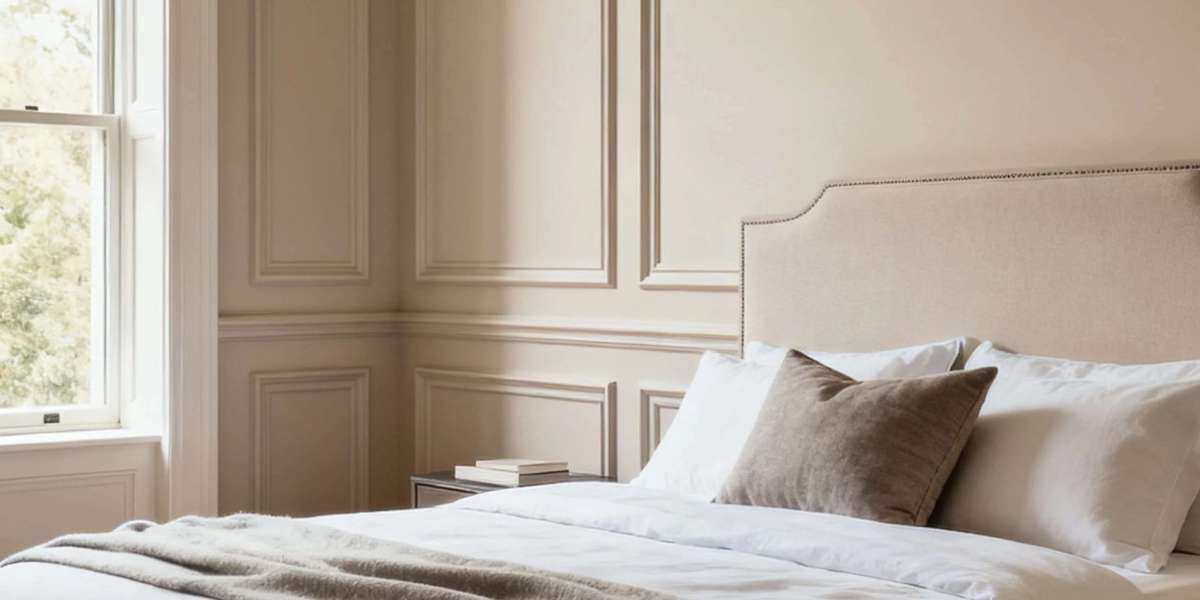

There is a reason why certain design elements never truly go out of fashion, they possess an inherent rightness that transcends passing trends and continues to satisfy generation after generation. Chair rail and picture frame molding represent exactly this kind of enduring classic, a wall treatment that has graced elegant interiors for centuries while remaining perfectly at home in today's most contemporary spaces. The combination serves both practical and aesthetic purposes, with the chair rail protecting walls from wayward furniture while providing a visual dividing line, and the picture frames adding geometric interest that brings walls to life. Together, they create a look that feels simultaneously formal and welcoming, structured yet warm. What makes this pairing so effective is how it plays with proportion and scale, breaking large wall expanses into manageable sections that relate to human dimensions rather than overwhelming us. The result is rooms that feel more intimate and intentional, as though every surface was designed with care rather than simply constructed and painted.
The Historical Journey From Function to Fashion
Understanding the enduring appeal of chair rail and picture frame molding requires a brief look at how these elements evolved from purely functional origins into beloved decorative features. Chair rails emerged in seventeenth-century Europe as a practical solution to a specific problem, dining chairs pushed back from tables repeatedly scraped against and damaged plaster walls. A wooden rail installed at chair-back height provided a protective barrier, absorbing impacts that would otherwise mar wall surfaces. Picture frame molding, sometimes called shadow box molding, developed later as a way to create the illusion of framed artwork on walls without the expense of actual paintings and frames. Homeowners would paint the recessed areas within the molding a contrasting color, creating the appearance of hung art that cost far less than the real thing. Both elements gradually transcended these practical origins to become sought-after decorative features in their own right. The chair rail continues to protect walls, but its presence now signals thoughtful design regardless of whether chairs actually touch it. The picture frames no longer need to simulate artwork, they provide architectural interest that complements whatever art you choose to hang. This evolution from necessity to luxury explains why these elements feel both substantial and appropriate, they carry echoes of genuine purpose while serving purely aesthetic roles today.
Proportion Principles That Create Harmony
The visual success of chair rail and picture frame installations depends almost entirely on getting proportions right, a design challenge that has occupied architects and interior designers for centuries. The height at which you place your chair rail fundamentally affects how the entire room feels, with traditional guidelines suggesting approximately one-third of the distance from floor to ceiling. This classic proportion creates a lower section that grounds the room and an upper section that allows the eye to travel upward, establishing comfortable human scale even in spaces with lofty ceilings. The picture frames above the chair rail require equally thoughtful proportioning, with their size relating to both the wall dimensions and the chair rail height below. Frames that feel too small get lost on large walls, while frames that overwhelm their space make rooms feel cramped and busy. The spacing between frames matters enormously, with consistent gaps creating rhythm and allowing each framed section to breathe. The relationship between frame proportions and the furniture placed against the wall deserves consideration, with sofas and consoles ideally relating to the grid rather than fighting it. Quality molding kits address these proportion challenges through designs developed by people who understand visual mathematics, delivering components sized to work together harmoniously without requiring you to solve complex design equations.
Material Options for Different Applications
The materials available for chair rail and picture frame molding have expanded dramatically beyond the solid wood options that dominated previous generations, offering choices that suit different applications, budgets, and skill levels. Traditionalists often still prefer solid wood for its authenticity and the way it ages over time, though they accept the maintenance requirements and the skill needed for installation. Medium-density fiberboard has emerged as a popular alternative, offering exceptional smoothness and paintability at a lower price point while remaining stable and workable. High-density polyurethane represents the premium engineered option, providing dimensional stability that exceeds wood, resistance to moisture that makes it suitable for bathrooms and kitchens, and lightweight properties that simplify installation. For those seeking the simplest possible installation, flexible polymer moldings with adhesive backing allow even renters to enjoy classic wall treatments without permanent commitment. Each material brings different characteristics to your project, and the right choice depends on your specific circumstances. A formal dining room with perfect walls might justify the investment in solid wood. A busy family bathroom benefits from moisture-resistant polyurethane. A rental apartment calls for removable adhesive options. Understanding these material differences helps you select the option that will perform best in your particular situation.

Installation Techniques for Professional Results
Installing chair rail and picture frame molding follows a logical sequence that rewards careful preparation and patience with professional-looking results. The chair rail typically goes up first, establishing the horizontal line from which everything else relates. Getting this line perfectly level proves essential, as every picture frame above will reference it, and any error compounds as you work across the wall. Once the chair rail is securely installed, the picture frames take shape through careful layout and placement. Start by marking the center of your wall and working outward, ensuring balanced spacing that avoids awkward partial frames at the ends. The vertical pieces of each frame install first, followed by the horizontal pieces that complete the rectangle. Corners require particular attention, with pieces meeting at perfect right angles that create clean transitions. For the most professional appearance, consider coping inside corners rather than simply butting pieces together, a technique that accommodates the slight wall irregularities found in every home. Throughout installation, frequent checks with your level ensure everything remains true, and slight adjustments during the adhesive curing period allow you to correct minor deviations before the bond becomes permanent.
Creative Approaches Beyond Traditional Placement
While the classic combination of chair rail with picture frames above remains eternally appealing, creative homeowners have discovered numerous variations that put their own stamp on this traditional treatment. Some designers skip the chair rail entirely and run picture frames from floor to ceiling, creating dramatic paneling that transforms entire rooms. Others install picture frames below the chair rail as well as above, creating wainscot-like effects with framed sections throughout. The frames themselves need not remain simple rectangles, with arched tops, geometric shapes, and asymmetrical arrangements adding contemporary flair to the classic concept. The relationship between frames and architectural features like windows and doors offers opportunities for creative integration, with frames aligning with existing openings to create cohesive compositions. Some installations even incorporate multiple frame sizes within a single wall, using larger frames for main sections and smaller frames for narrower spaces, creating rhythm through variation rather than repetition. These creative approaches demonstrate that classic elements need not feel predictable or dated, they provide a vocabulary that you can speak in your own dialect, expressing personal style through thoughtful manipulation of traditional forms.
Paint Strategies That Define the Design
The colors you choose for your chair rail and picture frame installation dramatically affect the final character, with different approaches creating entirely different moods from the same basic layout. The most traditional approach paints the chair rail and frames white against colored walls, creating crisp definition that emphasizes the architectural lines while allowing wall color to provide warmth and personality. This classic combination works in virtually any setting, from formal dining rooms to casual family spaces. For a more subtle effect, consider painting everything the same color, allowing the dimensional qualities to create interest through shadow and light rather than color contrast. This tonal approach feels thoroughly contemporary while honoring the traditional forms, creating walls that reward close attention without shouting for it. Some designers paint the recessed areas within frames a different color from the surrounding wall, creating depth and the illusion of layered surfaces. This technique works particularly well in dining rooms and studies where a sense of richness and formality suits the space. Whatever color strategy you choose, quality paint and careful application make the difference between good results and exceptional ones. Take time with cutting in, use quality brushes that maintain their shape, and apply multiple thin coats for that smooth, flawless finish that makes your installation look built-in rather than added on.
Adapting Classic Elements to Modern Life
One of the most appealing aspects of chair rail and picture frame molding is how gracefully it adapts to the realities of modern living, accommodating contemporary needs while maintaining its essential character. In homes with open floor plans, these treatments help define zones without building walls, using visual cues to separate dining areas from living spaces while maintaining flow. For families with young children, chair rails provide genuine protection against the bumps and impacts that active households generate, saving walls from damage while looking beautiful doing it. Home offices benefit from the structure and professionalism that paneled walls provide, creating environments conducive to focus and productivity. Even challenging spaces like hallways and stairwells, often neglected in design schemes, come alive with thoughtfully placed picture frames that turn circulation spaces into gallery experiences. The durability of modern materials means these installations withstand daily life without demanding constant maintenance, no cracking at joints, no peeling at edges, no deterioration where life happens around them. This adaptability ensures that your investment in classic wall treatment continues paying dividends through all the stages of your life, accommodating changing needs while maintaining its fundamental contribution to your home's beauty and character.