
I remember the first time I heard someone say they were starting a food business. I instantly pictured a shiny food truck parked near a busy street, music playing, smoke drifting from the grill. Later I realized… not everyone starts with a truck. Some begin with a trailer, some with a converted van, and some with what’s called a mobile kitchen — and yes, that term gets thrown around a lot.
Right in the middle of all these conversations about street food businesses, the phrase mobile kitchen pops up constantly, and people use it almost like it means the same thing as a food truck. It doesn’t. Not exactly.
If you’re planning to start a street food business, or even just researching food truck cost and setup, the difference matters more than you’d think.
Let’s talk it through in a normal way. No fluff.
So… What Is a Mobile Kitchen?
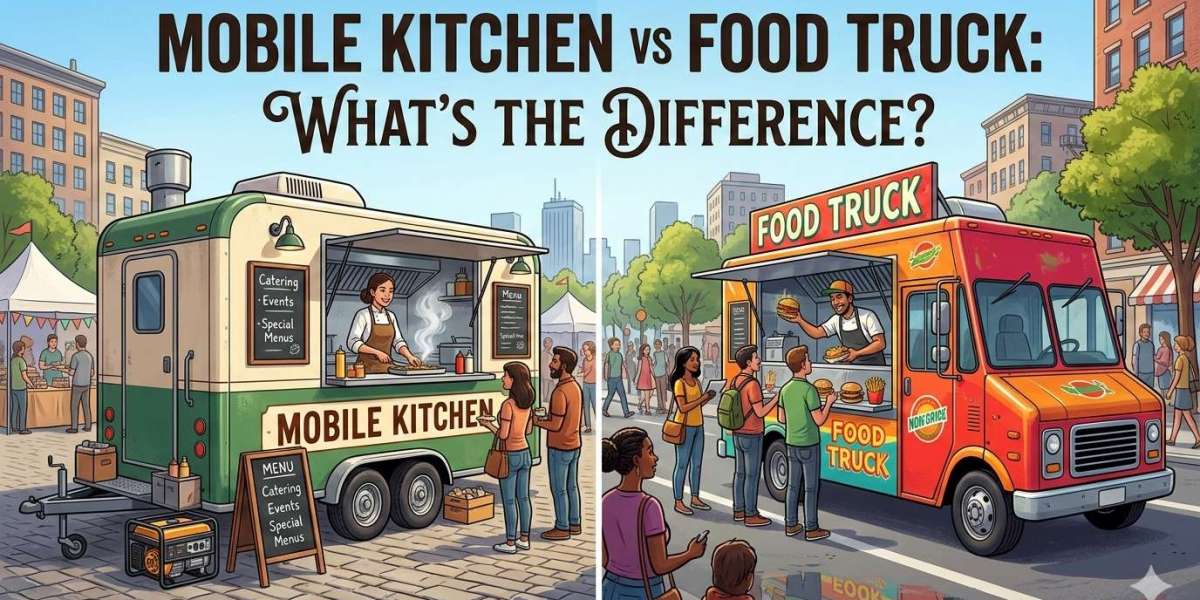
A mobile kitchen is basically a fully functional kitchen built into something movable. That “something” could be a trailer, a container, a cart, or even a modified van. The key idea? It moves. But it’s still a kitchen first.
Most mobile kitchens are designed mainly for food preparation. They may not even sell directly to customers. Some caterers use them. Event organizers rent them. Large-scale festivals sometimes rely on them as backup cooking stations.
Picture a heavy-duty mobile kitchen trailer parked behind a wedding venue. Staff inside prepping curries, grilling kebabs, assembling plates. Guests never even see it. It’s not flashy. It’s practical.
And that’s the vibe. Functional over aesthetic.
Mobile kitchen trailers are also common in construction sites or disaster relief setups. They focus on output, volume, compliance, and storage.
Not branding.
What Is a Food Truck Then?
A food truck is built for selling. It’s a kitchen, yes — but it’s also a storefront on wheels.
When you think of food trucks, you probably imagine Instagram-friendly branding, a serving window, a menu board, maybe some neon signs. The food truck business model revolves around direct customer interaction.
You park. Customers line up. You serve from the truck window.
That’s the big difference already.
Food trucks are designed with customer experience in mind. A mobile kitchen might not even have a serving window. A food truck must have one.
And the psychology changes too. A food truck is part food, part marketing machine.
Structure and Setup Differences
This is where things get practical.
A mobile kitchen trailer usually needs a separate vehicle to tow it. So you’re dealing with two units: the kitchen and the towing vehicle.
A food truck? It’s self-contained. Engine in front, kitchen in the back.
That sounds minor, but it affects a lot:
Parking logistics
Setup time
Mobility
Fuel consumption
Licensing
With a mobile kitchen trailer, you might park it semi-permanently at one location for an event season. With a food truck, you can move from lunch spots to night markets in one day.
Flexibility hits differently.
Cost Comparison (And This Is Where People Pause)
Money. Yeah.
Food truck cost tends to be higher upfront. A fully equipped new food truck in 2026 can range anywhere from $50,000 to $150,000 depending on size and equipment. In India, the cost varies widely too, but even there, a well-equipped truck isn’t cheap.
A mobile kitchen trailer? Often cheaper. You might spend significantly less because you’re not paying for the engine or full vehicle integration.
If budget is tight, some entrepreneurs start with a mobile kitchen trailer and upgrade later.
Though… and this is personal opinion… upgrading later sometimes costs more overall. It depends how clear your business plan is from the beginning.
Permits and Licensing
Here’s where it gets slightly messy.
Both mobile kitchens and food trucks need health permits, food safety certifications, and fire safety compliance. That part is universal.
But a food truck also requires vehicle registration, commercial driving compliance, and parking permits depending on your city.
In many cities, food truck permits are harder to secure because they operate in public spaces. Mobile kitchens used only for catering may face fewer restrictions since they’re often parked on private property.
This difference surprises people.
And permit delays? They can test your patience. I’ve seen entrepreneurs spend months just waiting.
Branding and Customer Perception
A food truck business thrives on personality.
Bright paint. Catchy name. Social media presence. Location updates. You’re building a brand on wheels.
A mobile kitchen doesn’t rely on that. It’s usually behind the scenes.
If you want to build a recognizable street food brand, a food truck gives you that visibility. Customers associate your food with your truck’s look.
If you’re focused on high-volume catering, private events, or B2B supply, a mobile kitchen setup makes more sense.
Different goals. Different tools.
Space and Equipment Layout
This part gets overlooked.
Mobile kitchen trailers often have more room for storage because they’re built solely around cooking operations. No driver cabin cutting into space.
Food trucks sacrifice some space for driving components.
If your menu includes heavy equipment — tandoors, large fryers, pizza ovens — layout becomes critical. A cramped food truck can get stressful during peak hours. Heat builds up. Staff bump into each other.
A slightly larger mobile kitchen trailer can feel less chaotic.
But again, it depends on what you’re cooking.
Mobility and Expansion
Food trucks are built for movement. That’s their charm.
Lunch at an IT park. Evening at a food festival. Weekend at a flea market.
A mobile kitchen trailer can move too — but it’s less spontaneous. Towing, parking adjustments, setup time… it’s more planned.
If you imagine yourself hopping locations frequently, a food truck wins.
If your plan revolves around catering contracts and scheduled events, a mobile kitchen setup might feel more stable.
So Which One Should You Choose?
It depends on what kind of food business you want to build.
If you want direct customer engagement, strong brand identity, and daily street sales, a food truck business aligns better.
If you’re targeting bulk orders, events, institutional catering, or behind-the-scenes cooking operations, a mobile kitchen trailer might be smarter financially and operationally.
Some entrepreneurs even start with a mobile kitchen, build capital, then launch a branded food truck later.
There’s no universal right choice. Only alignment with your goals.
I’ll say this though — whatever you pick, the paperwork and early expenses feel heavier than expected. That first approval certificate feels like winning a marathon.
And then the first real customer walks up. Or the first catering order gets confirmed. That moment? Worth the chaos.
So yeah. Mobile kitchen or food truck. Both roll. Both cook. Both can make money.
It just depends on how you want your story to move.