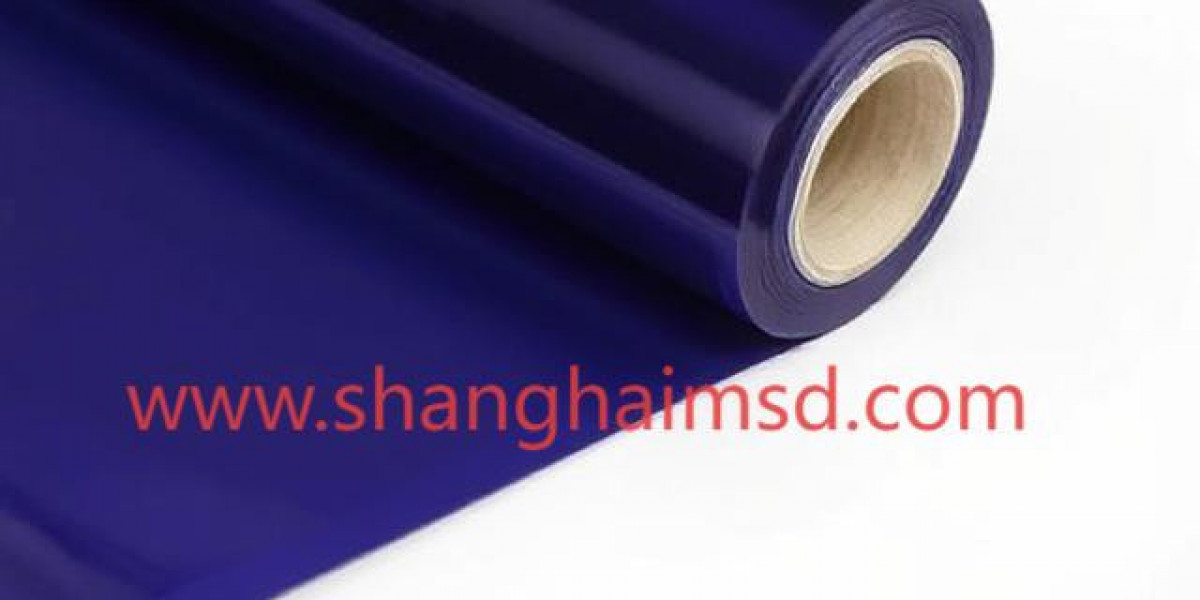

As product designers continue to pursue lightweight structures without sacrificing functional protection, TPU Compound Film has emerged as a versatile material that supports both mechanical resilience and user-oriented performance. Positioned between rigid engineering plastics and soft elastomers, this composite film provides manufacturers with a controllable balance of flexibility, strength, and surface quality. Shanghai MSD International Trading Company integrates this material into solution-oriented supply chains, aligning film design with evolving industrial and consumer expectations.
The material characteristics of TPU composite film are rooted in its segmented polymer architecture. The interaction between flexible soft segments and reinforcing hard segments enables the film to stretch and recover repeatedly without cracking. This structure also contributes to consistent load distribution when the film is subjected to pressure or impact. By managing polymer purity and melt flow behavior during compounding, manufacturers can fine-tune elasticity and tensile response, ensuring that the film performs reliably across varying thicknesses and application demands.
Manufacturing processes for TPU composite films prioritize thermal control and interlayer compatibility. Precision extrusion allows the molten TPU to achieve uniform thickness before bonding with substrates such as woven textiles or nonwoven backings. Lamination parameters are carefully calibrated to ensure sufficient adhesion without compromising flexibility. Shanghai MSD works closely with processing partners to maintain stable production conditions, as temperature fluctuations or uneven pressure can affect bonding integrity and long-term performance.
In application environments where repeated motion is unavoidable, TPU composite films demonstrate particular value. They are widely used in articulated covers, inflatable structures, and flexible protective components that undergo continuous deformation. The film’s resistance to tearing and puncture helps maintain structural integrity even after extended cycles of use. This makes it suitable for both industrial equipment and recreational products, where reliability under dynamic stress is essential.
Performance evaluation of TPU composite films focuses on functional durability rather than isolated material metrics. Fatigue testing simulates prolonged bending and stretching, while hydrolysis resistance tests assess stability in humid or wet conditions. Surface abrasion tests help predict visual and tactile wear over time. Shanghai MSD incorporates these testing protocols into its quality control framework to ensure that supplied materials meet application-specific endurance requirements rather than generic standards.
Surface behavior is another defining aspect of TPU composite film. Depending on formulation and finishing techniques, the film can exhibit varying levels of friction, transparency, or softness. Anti-slip textures may be introduced for handling-oriented applications, while smooth finishes support ease of cleaning and visual clarity. The film also accepts secondary treatments such as coatings or inks, enabling customization without altering the core mechanical properties.
From a sustainability and lifecycle perspective, TPU composite films offer advantages related to processing efficiency and material utilization. Their thermoplastic nature allows for reprocessing of production scrap, supporting waste reduction strategies. Additionally, the durability of TPU composites can extend product service life, reducing the frequency of replacement in demanding environments. Shanghai MSD considers these factors when advising customers on material selection for long-term projects.
The adaptability of TPU composite film continues to support innovation across industries that require materials capable of responding to movement, stress, and environmental exposure. By combining controlled processing with application-focused testing, Shanghai MSD International Trading Company contributes to the practical deployment of this material in diverse product categories. Further insights into the composition and functional versatility of TPU composite films can be found at https://www.shanghaimsd.com/news/the-composition-and-versatility-of-tpu-compound-film.html .