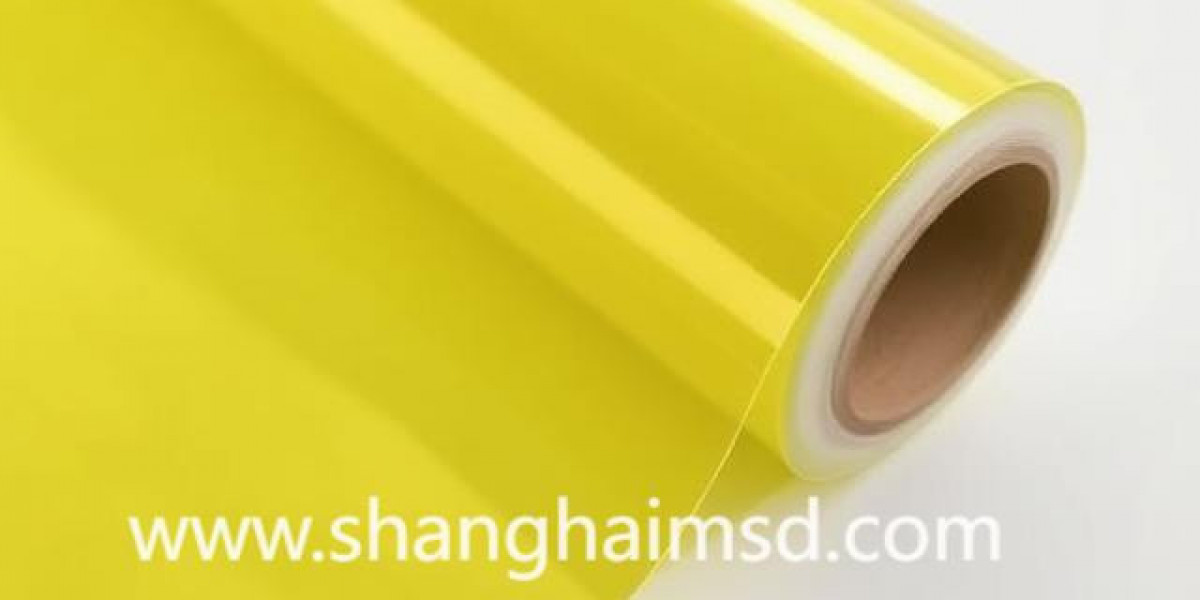

In applications where materials are required to withstand continuous bending, pressure, and environmental exposure, TPU Compound Film offers a balanced solution by integrating flexibility with dependable mechanical performance. This composite material has become increasingly relevant in modern manufacturing systems, particularly where traditional rigid films fail to deliver comfort or durability. Shanghai MSD International Trading Company positions this film as a functional material that bridges the gap between elastic polymers and engineered protective layers, supporting diverse industrial requirements.
The internal structure of TPU composite film plays a key role in its performance. Thermoplastic polyurethane consists of hard and soft segments at the molecular level, creating a microphase-separated structure that contributes to both elasticity and strength. During processing, these segments are carefully aligned through controlled heating and cooling cycles. By adjusting formulation ratios and processing parameters, manufacturers can influence softness, rebound behavior, and surface characteristics. Shanghai MSD emphasizes consistency at this stage, as even minor deviations can affect long-term performance in demanding applications.
In terms of processing technology, TPU composite films are commonly produced using extrusion coating and hot-melt lamination techniques. These methods allow the TPU layer to bond effectively with fabrics, foams, or other polymer films. The resulting composite structure improves tear resistance and load distribution while maintaining a smooth, uniform surface. Such processing methods are particularly beneficial for applications that involve repeated mechanical stress, as the bonded layers work together to reduce localized strain and material fatigue.
The application scope of TPU composite films extends across multiple sectors. In consumer products, they are used for protective casings, wearable accessories, and soft-touch surfaces that require both durability and comfort. In industrial contexts, the material serves as a functional barrier in flexible ducts, covers, and technical enclosures. Its resistance to oils, greases, and common chemicals further supports its use in manufacturing environments where contamination and abrasion are persistent concerns. Shanghai MSD collaborates with customers to match material configurations with specific operational conditions.
Performance validation is a critical part of the development cycle for TPU composite films. Laboratory testing typically includes abrasion resistance assessments, cyclic flex testing, and peel strength evaluation between laminated layers. These tests simulate real-world conditions and help predict service life under continuous use. Environmental aging tests are also conducted to observe changes in elasticity and surface integrity after prolonged exposure to heat or moisture. Through systematic testing, Shanghai MSD ensures that material behavior aligns with application expectations rather than relying on theoretical performance alone.
Another important aspect of TPU composite film is its adaptability to surface modification and finishing processes. The film can be embossed to create tactile textures or enhanced grip, while coatings can be applied to modify gloss, friction, or contamination resistance. Printing compatibility allows for branding, instructional markings, or decorative elements without compromising flexibility. These finishing options expand design possibilities while preserving the functional core of the material, making it suitable for both technical and consumer-facing products.
From a production standpoint, TPU composite film supports efficient fabrication due to its weldability and thermal stability. It responds well to heat sealing and high-frequency welding, enabling strong joints without additional adhesives. This processing efficiency reduces waste and improves consistency across large production runs. As manufacturing trends continue to favor materials that support automation and customization, TPU composite films remain a practical choice for scalable production models.
Shanghai MSD International Trading Company continues to refine its approach to TPU composite materials by focusing on process reliability and application-driven customization. Through careful material selection, controlled processing, and comprehensive testing, the company supports clients seeking flexible solutions for evolving product designs. Additional technical perspectives on TPU composite film composition and versatility are available at https://www.shanghaimsd.com/news/the-composition-and-versatility-of-tpu-compound-film.html .