

Every year, trekkers make easily preventable mistakes on Mount Rinjani. They run out of water because they underestimated the heat on the savanna. They get lost in fog because they wandered away from their group. They suffer needlessly from altitude sickness because they flew into Lombok and climbed the next morning. Local guides watch these mistakes unfold season after season, and they have developed a quiet wisdom about how to avoid them. The secrets are not complicated. They are not expensive. They are simply the accumulated knowledge of people who have climbed this mountain hundreds of times. This guide shares those local secrets openly, because a safe climb is a happy climb, and a happy climb means you leave Rinjani with memories you actually want to keep.
The Water Secret That Saves Your Climb
Local guides know something that many trekkers learn the hard way. The Sembalun savanna section is a water trap. You start the morning cool and fresh, and the gentle terrain lulls you into drinking less than you need. By midday, the sun bakes the open grassland, and suddenly you are dehydrated with hours still to go. The local secret is to start drinking water the moment you wake up, even before you feel thirsty, and to force down at least half a liter during the first hour of hiking. Also, never trust that the next water refill point will be clean or available. Springs dry up. Containers get contaminated. Carry your own full supply from the trailhead and treat every water source as suspicious unless your guide personally approves it. Dehydration is the number one reason trekkers feel miserable on day one, and it is entirely preventable.
Why Locals Start the Summit Push at One AM
Foreign guides sometimes push summit starts to two or even three AM. Local guides who have spent decades on Rinjani Trekking Guide prefer one AM. The reason is not arbitrary. The volcanic scree that makes up the upper section is unstable underfoot. Late starts mean you reach the steepest, loosest terrain just as the sun rises and the surface begins to warm and shift. Earlier starts allow you to climb the scree in cooler temperatures when the rock is slightly more stable. Earlier starts also get you to the summit before the crowds, giving you peaceful sunrise photos instead of jostling for position. And most importantly, earlier starts give your guide a buffer if someone in your group moves slowly. A one AM start means you are not rushing against daylight. Local guides know that the mountain punishes haste.
The Acclimatization Secret Most Trekkers Ignore
Here is a secret that will cost you nothing but could save your summit attempt. Never climb Rinjani the day you arrive in Lombok. Your body needs at least one full night at low altitude to begin adjusting after your flight. Two nights are better. Many trekkers fly into Lombok in the morning, take a car to the trailhead, and start climbing that afternoon. Their blood oxygen levels are already suppressed from the flight, and the rapid ascent to two thousand six hundred meters pushes them into altitude sickness. Local guides see this pattern constantly. They quietly advise their clients to spend a full day relaxing in Senggigi or Kuta, drinking water, eating well, and sleeping properly. Trekkers who follow this advice have significantly higher summit success rates. Patience before the climb pays off on the mountain.
Reading the Mountain’s Weather Signals
Local guides do not rely on smartphone weather apps, which are often wrong in Rinjani’s microclimate. They read physical signals. When the morning clouds form flat bottoms and rise slowly, the day will likely stay clear. When the clouds develop dark, cauliflower tops before noon, afternoon thunderstorms are coming. When the wind shifts from east to west suddenly, conditions on the summit are about to deteriorate. Guides also watch the behavior of birds. When hawks fly low and return to the forest early, bad weather approaches. Trekkers cannot learn to read these signs overnight, but you can learn to trust your guide when they make a weather call. If your guide says it is time to turn back from the summit, they are not being lazy. They are seeing something in the sky that you cannot.
The Toilet Strategy That Keeps Campsites Clean
No one talks about this, but human waste is a genuine problem on Rinjani’s popular campsites. The local secret is simple: use the designated toilet tents that responsible operators provide, and if none exists, walk at least one hundred meters from any water source and dig a hole fifteen centimeters deep. Never rely on the “behind a bush” method. Other trekkers will find it. Animals will dig it up. Rain will wash it into the water supply. Also, pack out every piece of toilet paper in a sealed zip bag. Yes, this feels strange. But local porters will quietly respect you for it, and you will not contribute to the disgusting white flowers of tissue that now bloom near some campsites. A clean mountain is a safe mountain. Everyone benefits.
Why Locals Never Hike Alone
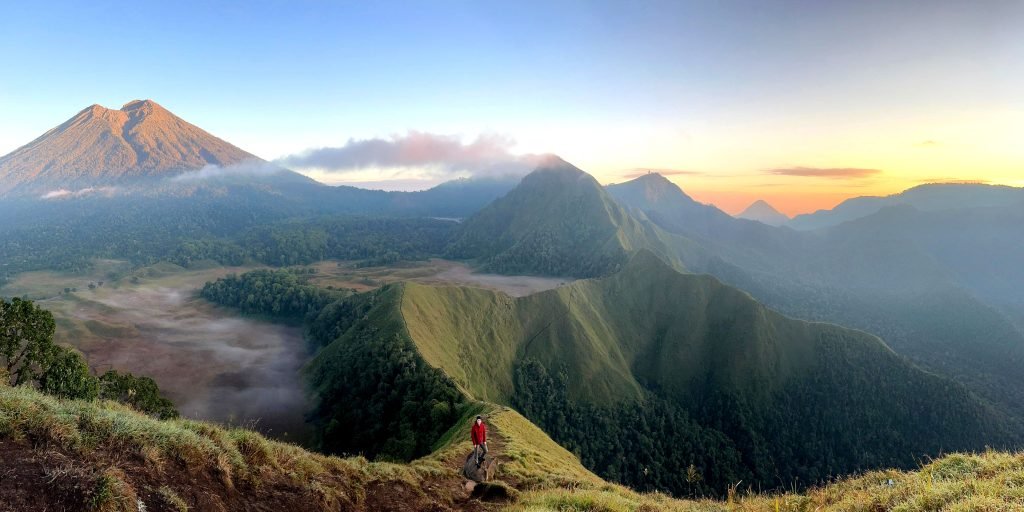
You will sometimes see solo trekkers on Rinjani’s lower trails. Local guides frown at this practice. The mountain is vast, the weather changes fast, and a twisted ankle or sudden fog can turn a solo trek into a emergency situation within minutes. The local secret is to always hike within sight and sound of at least one other person. If you are on a private trek, that person is your guide. If you are in a group, stay close enough to hear the person ahead of you. If you need to stop for any reason, tell your guide before you fall behind. The locals who have grown up on this mountain still follow this rule. They know that Rinjani does not forgive isolation. A simple fall on the scree could leave you immobile for hours. With a companion, that fall becomes an inconvenience. Without one, it becomes a crisis.
Listening to Your Body Like a Local
Local guides have an expression: the mountain rewards humility. They have seen strong, fit young men turn back from the summit while older, slower women reached the top. The difference was not physical strength. It was the ability to listen to their bodies without ego. If your head pounds with altitude, descending is not failure. If your knees scream on the descent, taking a slow pace is not weakness. Local guides never shame trekkers for turning back. They respect the wisdom of recognizing limits. So here is the final secret. Before you start your climb, make a promise to yourself that you will be honest with your guide about how you feel. No hiding symptoms. No pushing through dizziness for a photo. The mountain will still be here tomorrow, next month, next year. You only get one body. Treat it with the same respect locals show Rinjani itself.