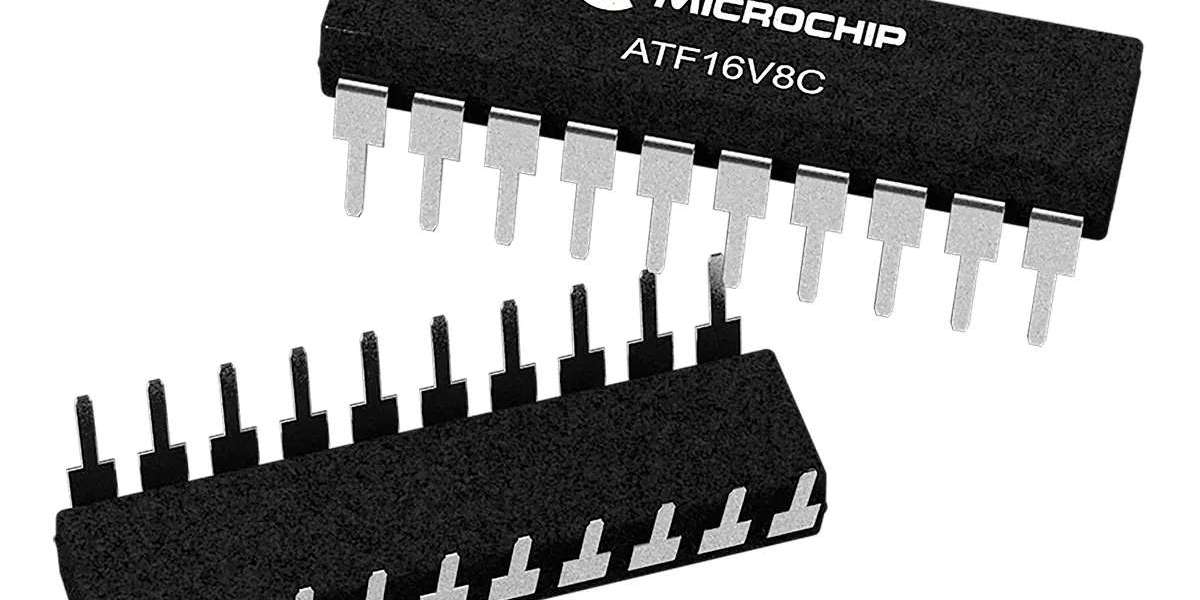

Introduction to Programmable Logic Circuits
Programmable Logic Circuits have become a driving force behind intelligent electronic systems. As industries shift toward automation, connectivity, and high-speed computation, hardware must be both powerful and adaptable. Static circuit designs often limit scalability and innovation. In contrast, programmable hardware provides engineers with a flexible framework that can evolve alongside technological progress.
By enabling hardware-level customisation without fabricating a new chip, Programmable Logic Circuits reduce development barriers and accelerate product innovation. They are now essential components in systems that demand reliability, precision, and performance.
What Defines Programmable Logic Circuits?
Programmable Logic Circuits are integrated circuits designed to perform user-defined digital operations. Their internal structure contains configurable logic resources that can be programmed to implement specific functions.
Instead of relying solely on software instructions, these circuits physically configure their internal connections to execute logic. This results in highly efficient processing with minimal latency.
Key defining characteristics include:
- Reconfigurable digital logic
- Parallel task execution
- Hardware-based control systems
- Deterministic signal timing
- Long-term reusability
These attributes make Programmable Logic Circuits suitable for advanced system design across multiple sectors.
The Shift from Fixed Logic to Reconfigurable Hardware
In traditional electronic design, functionality was permanently embedded during manufacturing. Any change required redesigning and refabricating the chip. This process was costly and time-consuming.
Programmable Logic Circuits introduced a new approach. Designers could now modify hardware functionality through configuration files. This shift has had a profound impact on development strategies.
Benefits of reconfigurable hardware include:
- Faster innovation cycles
- Reduced financial risk during prototyping
- Simplified adaptation to new standards
- Greater design experimentation
This flexibility supports rapid evolution in competitive markets.
Core Functional Architecture
Programmable Logic Circuits are built around configurable hardware resources that work together to implement digital systems.
Logic Processing Units
These units execute Boolean operations and arithmetic functions. They are combined to build complex digital structures such as controllers and data paths.
Sequential Storage Elements
Registers and memory blocks allow systems to maintain state and store intermediate data, enabling multi-step operations.
Interconnection Network
The programmable interconnect determines how signals move between components. During configuration, designers define routing paths that shape system behaviour.
Clock Distribution and Timing
Precise clock management ensures synchronised operations across the entire circuit. This capability is crucial in high-speed and real-time applications.
Together, these architectural elements create a highly adaptable digital environment.
Key Advantages of Programmable Logic Circuits
Programmable Logic Circuits offer measurable performance and strategic benefits.
- Custom hardware acceleration
- Improved computational efficiency
- Scalable logic density
- Reduced reliance on external processors
- Enhanced system reliability
Their ability to execute multiple operations simultaneously gives them a distinct advantage in processing-intensive applications.
Applications Driving Demand
The versatility of Programmable Logic Circuits supports their widespread adoption.
Intelligent Manufacturing
Factories use programmable hardware to coordinate robotics, manage production lines, and process sensor data in real time.
Advanced Communication Systems
Network infrastructure relies on programmable logic for efficient packet handling and signal management.
Renewable Energy Management
Solar inverters and smart grid controllers depend on rapid decision-making and accurate timing provided by programmable circuits.
Embedded Consumer Devices
Smart appliances and wearable devices use programmable hardware for energy-efficient signal processing.
Scientific Research Platforms
High-precision measurement systems benefit from the deterministic performance of programmable logic.
Performance Compared to General Purpose Processing
General-purpose processors are flexible but operate sequentially. As workloads grow more complex, this approach may limit throughput.
Programmable Logic Circuits address this challenge by:
- Executing tasks concurrently
- Eliminating unnecessary software overhead
- Delivering predictable response times
- Allowing direct hardware optimisation
This makes them particularly valuable in systems requiring consistent real-time performance.
Integration with Modern System Architectures
Many modern designs combine programmable logic with processors in unified platforms. In these hybrid systems:
- Processors handle operating systems and complex decision-making
- Programmable Logic Circuits accelerate computation-intensive functions
- Data exchange occurs efficiently between hardware and software domains
This integrated approach maximises overall system efficiency.
Future Directions and Technological Growth
Programmable Logic Circuits continue to evolve in response to technological demands.
Emerging developments include:
- Support for artificial intelligence workloads
- Advanced power optimisation techniques
- Higher bandwidth communication interfaces
- Enhanced security frameworks
- Compact architectures for edge computing
As digital transformation accelerates, programmable hardware will remain central to innovation.
Conclusion
Programmable Logic Circuits are more than configurable components. They represent a fundamental shift in how digital systems are designed and maintained. By combining hardware performance with adaptability, they empower engineers to create scalable and future-ready solutions.
From industrial automation and telecommunications to renewable energy and scientific instrumentation, Programmable Logic Circuits play a vital role in shaping modern electronics. Their ability to evolve alongside technological advancements ensures their continued importance in the future of intelligent systems.