
In modern manufacturing and product development, companies are often faced with a common challenge: how to accurately reproduce, improve, or replace an existing physical component when original design data is missing or outdated. This is where reverse engineering becomes essential. When combined with advanced scanning technologies, reverse engineering has evolved into a highly accurate, efficient, and reliable process.
3D scanning reverse engineering allows manufacturers to convert physical objects into precise digital models, enabling redesign, optimization, and reproduction with exceptional accuracy. This article explains what this process is, how it works, and why it has become a critical tool across industries.
Understanding Reverse Engineering in Manufacturing
Reverse engineering is the process of analyzing an existing product or component to understand its design, structure, and functionality. Instead of creating a design from scratch, engineers work backward from the finished object to recreate its digital representation.
Traditionally, this process relied on manual measurements using calipers, gauges, and coordinate measuring machines. While effective for simple parts, manual methods are time-consuming and prone to error when dealing with complex geometries.
The introduction of 3D scanning technology transformed reverse engineering into a faster, more accurate, and highly automated workflow.
What Is 3D Scanning Reverse Engineering?
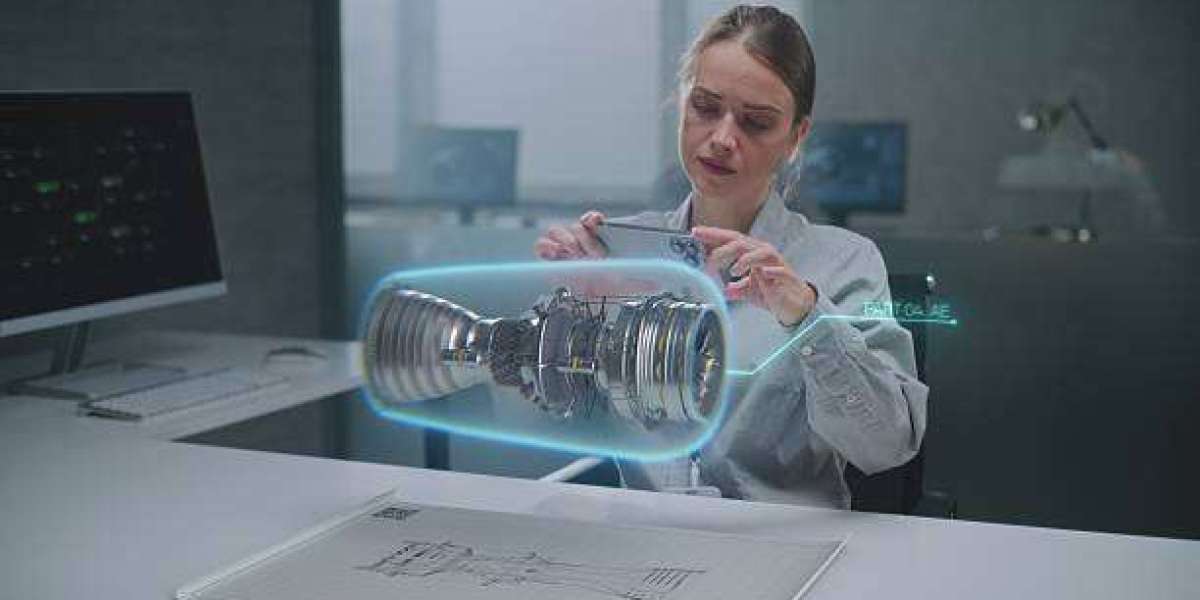
3D Scanning Reverse Engineering refers to the process of capturing the physical geometry of an object using a 3D scanner and converting that data into a usable digital model. The scanner records millions of data points from the object’s surface, creating a highly detailed digital representation.
These scanned data points are then processed and converted into a CAD-ready format, allowing engineers to analyze, modify, and reproduce the component digitally. This approach eliminates guesswork and ensures that even the most complex shapes can be accurately replicated.
Why 3D Scanning Is Preferred Over Manual Measurement
Manual measurement methods struggle to capture freeform surfaces, organic shapes, and intricate features. In contrast, 3D scanning provides:
High-density data capture
Consistent accuracy across complex surfaces
Rapid data acquisition
Minimal human error
This makes 3D scanning reverse engineering particularly valuable for components with complex contours, worn parts, or internal features that are difficult to measure manually.
How the 3D Scanning Reverse Engineering Process Works
Step 1: Preparing the Physical Object
The process begins with preparing the component for scanning. This may involve cleaning the surface, applying a matte spray to reduce reflectivity, or positioning the object to ensure full coverage.
Proper preparation ensures that the scanner captures accurate and consistent data across the entire surface.
Step 2: Capturing the Scan Data
A 3D scanner is used to capture the object’s geometry. Depending on the application, different scanning technologies may be used, such as laser scanning, structured light scanning, or photogrammetry.
The scanner records millions of points on the object’s surface, creating what is known as a point cloud. This point cloud represents the exact physical shape of the component in digital form.
Step 3: Processing the Point Cloud
Once scanning is complete, the raw point cloud data is processed using specialized software. This step involves:
Removing noise and unwanted data
Aligning multiple scans
Filling gaps or holes
Optimizing data density
The cleaned point cloud is then converted into a mesh, typically composed of interconnected triangles that form the object’s surface.
Step 4: Creating a CAD Model
The mesh data alone is not sufficient for most engineering applications. To make the data usable for design and manufacturing, engineers convert the mesh into a parametric CAD model.
This step often involves recreating features such as holes, fillets, surfaces, and edges using CAD software. The resulting model is suitable for analysis, modification, and production.
At this stage, 3D CAD Modeling becomes essential, as it allows the scanned geometry to be transformed into an editable, manufacturing-ready design.
Step 5: Validation and Optimization
The final CAD model is compared with the original scan data to ensure accuracy. Any deviations are corrected to maintain tight tolerances.
Once validated, the model can be optimized for strength, weight, performance, or manufacturability, depending on project requirements.
Applications of 3D Scanning Reverse Engineering
Replacement of Legacy Parts
Many industries rely on legacy equipment for which original design files are no longer available. Reverse engineering allows manufacturers to recreate these parts accurately, extending equipment life and avoiding costly downtime.
Product Redesign and Improvement
Existing products can be scanned and redesigned to improve performance, reduce weight, or enhance manufacturability. This is particularly useful when updating older designs to meet modern standards.
Quality Inspection and Verification
Scanned data can be compared against CAD models to identify deviations, wear, or manufacturing defects. This helps maintain consistent quality and identify issues early.
Tooling, Molds, and Dies
Reverse engineering is widely used to recreate molds, dies, and tooling components. Accurate digital models ensure reliable reproduction and consistent production results.
Custom-Fit and Medical Applications
In medical and ergonomic applications, 3D scanning reverse engineering enables the creation of custom-fit components based on real-world geometry, improving comfort and functionality.
Benefits of Using 3D Scanning Reverse Engineering
High Accuracy and Detail
3D scanning captures complex geometries with exceptional precision, making it ideal for intricate components and freeform surfaces.
Time Efficiency
Compared to manual measurement, scanning significantly reduces data collection time. Projects that once took weeks can often be completed in days.
Reduced Design Risk
By working with accurate digital data, engineers can identify potential issues early and avoid costly manufacturing errors.
Improved Design Flexibility
Once a component is converted into a CAD model, it can be easily modified, scaled, or adapted for different applications.
Cost Savings
Reduced rework, fewer physical prototypes, and faster development cycles all contribute to lower overall project costs.
Role of 3D CAD Modeling in Reverse Engineering
3D CAD Modeling plays a crucial role in transforming raw scan data into functional design assets. While scanning captures geometry, CAD modeling adds intelligence to the design.
Parametric features allow engineers to:
Adjust dimensions easily
Apply tolerances
Optimize features for manufacturing
Integrate the design into assemblies
This combination ensures that the reverse-engineered part is not just an accurate copy, but a fully functional, production-ready model.
Industries That Rely on This Technology
3D scanning reverse engineering is widely used across industries such as:
Automotive
Aerospace
Industrial machinery
Medical devices
Consumer products
Energy and power generation
Any industry that deals with complex components, tight tolerances, or legacy equipment can benefit from this technology.
Challenges and Considerations
While highly effective, the process requires skilled professionals to interpret scan data correctly. Poor modeling decisions or insufficient validation can compromise accuracy.
Selecting the right scanning technology and ensuring expertise in CAD reconstruction are essential for achieving reliable results.
Future of 3D Scanning Reverse Engineering
As scanning hardware becomes more advanced and software more intelligent, reverse engineering workflows are becoming faster and more automated. Integration with artificial intelligence and cloud-based collaboration tools is further enhancing accuracy and efficiency.
The combination of scanning technology and advanced CAD modeling is expected to play an even greater role in digital manufacturing, product lifecycle management, and Industry 4.0 initiatives.
Conclusion
3D scanning reverse engineering is a powerful process that bridges the gap between physical objects and digital design. By capturing real-world geometry and converting it into accurate, editable CAD models, manufacturers gain the ability to reproduce, improve, and innovate with confidence.
From legacy part replacement to product optimization and quality inspection, this technology offers unmatched accuracy, efficiency, and flexibility. When paired with expert 3D CAD Modeling, reverse engineering becomes a strategic tool that supports modern manufacturing demands and drives long-term success.