
In today’s fast-evolving business environment, every organization operates on the edge of opportunity and competition. New markets are emerging, customer preferences are shifting, and innovation cycles are shortening. At the same time, competitors are strengthening their capabilities, refining their offerings, and targeting the very same audience. In such a landscape, relying on instinct is no longer enough. Businesses need clarity, direction, and evidence-based insights. This is where Competitive benchmarking & SWOT competitor analysis become essential pillars of strategic market research.
Market research is more than collecting numbers or tracking trends. It is about transforming data into actionable intelligence. It answers fundamental business questions: Where do we stand in the market? How are competitors positioning themselves? What gaps exist that we can leverage? By systematically analyzing competitors and industry performance, organizations can shift from reactive decision-making to proactive strategy development.
Understanding Competitive Benchmarking
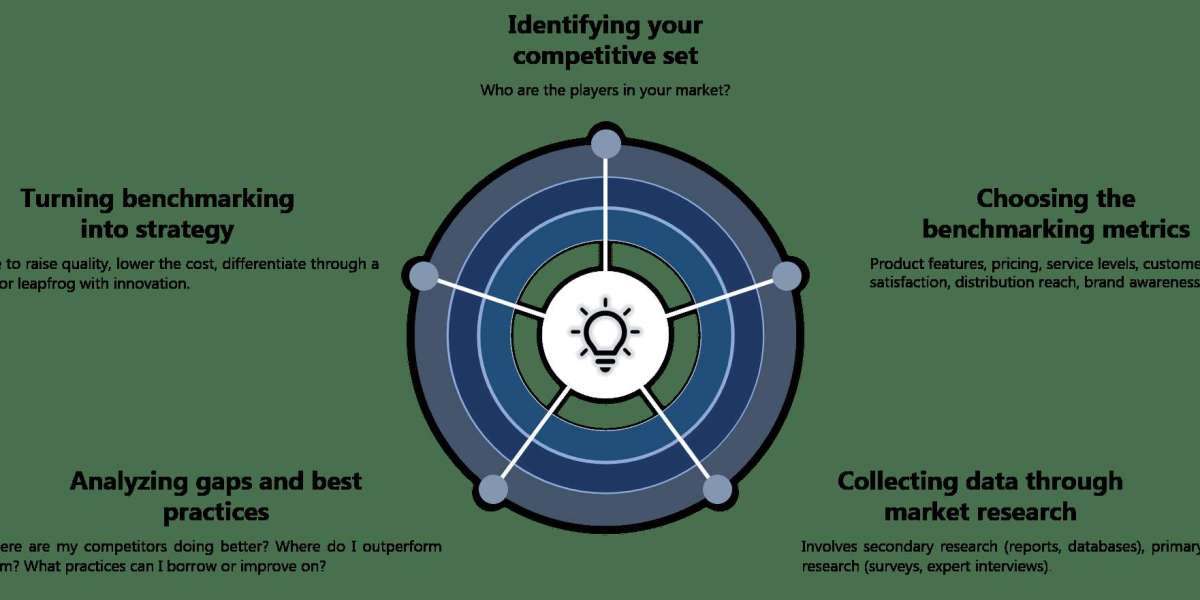
Competitive benchmarking is the structured process of evaluating your organization’s performance against key competitors and industry standards. It goes beyond surface-level comparisons. Instead, it focuses on identifying performance gaps, operational efficiencies, innovation capabilities, and customer engagement strategies.
A well-executed competitive benchmarking analysis provides clarity on several critical aspects:
Performance Metrics: How does your revenue growth, pricing strategy, product quality, or customer satisfaction compare to competitors?
Operational Efficiency: Are competitors delivering products faster or at lower cost?
Market Positioning: What differentiators are they emphasizing?
Innovation and Product Development: How frequently are new offerings introduced, and how well are they received?
The goal is not imitation. Competitive benchmarking is about insight. By understanding how top players operate, businesses can identify best practices worth adapting and uncover weaknesses that create opportunity. For example, if competitors are excelling in digital engagement but lagging in after-sales service, this gap can become your strategic advantage.
Moreover, competitive benchmarking analysis helps organizations anticipate market movements. By tracking innovation cycles and investment patterns, businesses can forecast where the market is heading and prepare accordingly.
The Strategic Value of SWOT Competitor Analysis
While benchmarking provides measurable comparisons, SWOT competitor analysis dives deeper into strategic positioning. SWOT—Strengths, Weaknesses, Opportunities, and Threats—is a structured framework used to evaluate both internal capabilities and external market forces.
When applied to competitor analysis, SWOT helps answer not only what competitors are doing, but why they are succeeding or struggling.
Strengths
What core advantages do competitors possess? These could include brand recognition, distribution networks, technological expertise, or financial stability. Understanding these strengths allows businesses to identify areas where competing directly may require additional investment or differentiation.
Weaknesses
Every competitor has vulnerabilities. These might include limited geographic presence, outdated technology, inconsistent product quality, or negative customer sentiment. Identifying weaknesses provides opportunities to position your brand more effectively.
Opportunities
Opportunities arise from market shifts, regulatory changes, evolving customer needs, or technological advancements. Through SWOT competitor analysis, businesses can identify underserved segments or unmet needs that competitors have not fully addressed.
Threats
Threats may include new entrants, substitute products, changing regulations, or economic instability. By recognizing the threats competitors face, companies can anticipate broader market risks and design mitigation strategies.
When integrated properly, SWOT competitor analysis becomes a powerful decision-making tool. It enables businesses to craft strategies that maximize strengths, minimize weaknesses, seize opportunities, and prepare for threats—ultimately creating a sustainable swot analysis competitive advantage.