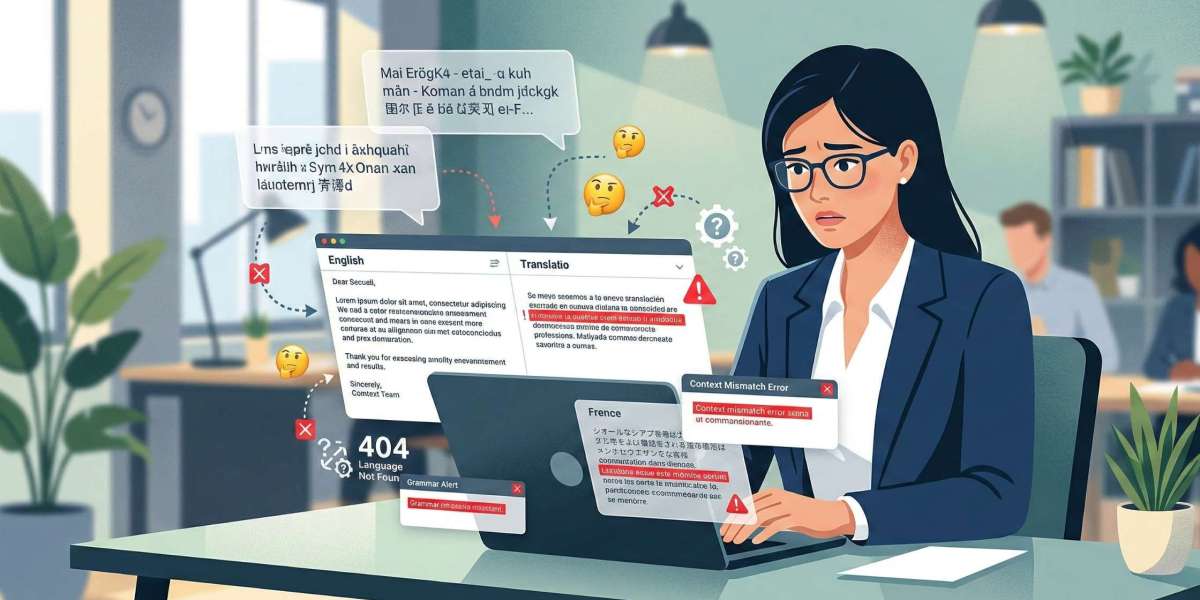

In today’s fast-paced global market, businesses rely heavily on Integrated Translation Tools to communicate seamlessly across languages. These tools streamline translation workflows, improve productivity, and ensure brand consistency across multiple platforms. However, even with advanced technology, many organizations make critical mistakes that reduce the effectiveness of their translation efforts. Understanding these pitfalls can help you maximize the full potential of your Integrated Translation Tools.
1. Ignoring Proper Setup and Configuration
One of the most common mistakes when using Integrated Translation Tools is rushing through the setup process. Proper configuration ensures that the tool integrates smoothly with your CMS, CRM, or other platforms. Skipping this step can lead to inaccurate translations, formatting issues, and unnecessary workflow delays.
Before launching, ensure your tool’s integration points are correctly configured, translation memory is enabled, and data syncs properly across all systems. Investing time in proper setup saves countless hours in the long run.
2. Overlooking the Importance of Translation Memory
A key advantage of Integrated Translation Tools is their translation memory feature, which stores previously translated content for reuse. Many users neglect to maintain or update this memory, leading to inconsistent translations and wasted effort.
Translation memory ensures that common phrases, terminology, and brand language remain consistent across all documents and projects. Regularly reviewing and cleaning up your translation memory database can dramatically enhance translation quality and reduce redundancy.
3. Not Customizing Glossaries and Terminology
Every business has unique terminology, product names, and brand-specific phrases. A frequent mistake is failing to create a glossary within Integrated Translation Tools. Without this customization, automated translations can misinterpret technical terms or brand slogans, resulting in confusing or off-brand messaging.
To avoid this, develop a clear glossary that defines key terms and preferred translations. This ensures that every translated document aligns with your company’s voice and style guidelines.
4. Relying Entirely on Machine Translation
While Integrated Translation Tools powered by AI have improved significantly, relying solely on machine translation is risky. Machines may struggle with nuances, idioms, or cultural context. This can lead to embarrassing translation errors that damage your brand’s reputation.
Instead, use Integrated Translation Tools in combination with professional human translators or editors. The human touch ensures that translations are accurate, culturally appropriate, and polished for your target audience.
5. Neglecting Quality Assurance and Review
Even the best Integrated Translation Tools can produce mistakes if the final content isn’t reviewed properly. Many businesses skip quality assurance (QA) checks, assuming automation guarantees accuracy. This can lead to subtle errors that undermine professionalism.
Implement a quality assurance process that includes peer reviews, proofreading, and linguistic validation. Using built-in QA features in your Integrated Translation Tools can also help catch inconsistencies and grammatical issues before publication.
6. Failing to Train Your Team
Another common oversight is not training your team on how to use Integrated Translation Tools effectively. These platforms often come with advanced features that users overlook due to lack of familiarity. Without proper training, employees may misuse the tool or fail to leverage key capabilities like automation, collaboration, and API integrations.
Schedule regular training sessions and encourage your team to explore all available features. A well-trained team can dramatically improve translation speed, accuracy, and overall workflow efficiency.
7. Ignoring Updates and Tool Enhancements
Technology evolves rapidly, and Integrated Translation Tools are no exception. Failing to update your software can result in missing out on critical improvements, bug fixes, and security enhancements. Outdated tools may also lose compatibility with your other systems.
Always stay current with the latest software updates and feature releases. Regular maintenance ensures your translation process remains secure, efficient, and cutting-edge.
Conclusion
Using Integrated Translation Tools can revolutionize how your organization handles multilingual communication — but only when used correctly. By avoiding these common mistakes — from ignoring configuration and glossary setup to skipping quality checks — you can unlock the full power of your translation technology.
At My Transcription Place, we understand the importance of accuracy, consistency, and seamless integration in every translation project. Our team specializes in helping businesses leverage Integrated Translation Tools to achieve global reach without compromising quality. When you combine advanced tools with expert guidance, your content doesn’t just translate — it truly connects.