
Tailings management is one of those behind-the-scenes challenges that nobody thinks about until something goes wrong. Mines produce enormous volumes of waste material mixed with water, and that slurry must be moved reliably to storage facilities, often over long distances and up significant elevation changes. The consequences of a tailings pump failure are not just financial; they can include environmental damage and regulatory penalties. CNSME has learned that no two tailings streams are exactly alike. What works for a gold mine in Nevada may fail completely for a diamond mine in Canada. This is why customization is not a luxury but a necessity in tailings management, and CNSME has built their approach around this reality.
Particle Size Analysis Driving Liner Selection
The first step in customizing a CNSME pump for tailings is understanding exactly what is in that slurry. A laboratory particle size distribution analysis tells the story. Coarse, angular tailings from a crushing circuit demand high-chrome iron liners that resist cutting wear. Fine, rounded tailings from a grinding circuit often wear more slowly but can be handled effectively with rubber liners that absorb impact. Some tailings, like those from phosphate or potash processing, are chemically aggressive as well as abrasive. CNSME uses this particle size data to recommend not just a liner material but a specific formulation of high-chrome iron or rubber compound. One size does not fit all, and the difference between a liner lasting six months versus eighteen months often comes down to matching the material to the particle size and shape.
Pipeline Length and Head Requirements
Tailings pipelines can stretch for kilometers from the mill to the storage facility. The pump must generate enough head to overcome friction losses in the pipe and any elevation gain. CNSME works with mine engineers to map the entire pipeline system curve. This analysis determines the required pump size, impeller diameter, and operating speed. In some cases, multiple pumps in series are needed for very long or high-lift applications. CNSME can customize the impeller vane design for these series installations, ensuring that the pumps operate in harmony rather than fighting each other. They also offer booster pump configurations for existing systems where the original pump can no longer keep up with increased tailings volume or longer pipeline distances.
Settling Velocity Considerations for Suspension
Tailings slurries are mixtures of solids and water, and the solids have a natural tendency to settle out of suspension. If the pump flow velocity drops below the critical settling velocity, solids accumulate in the bottom of the pipe, eventually blocking it completely. CNSME customizes pump selection to maintain flow velocities above the calculated settling velocity for the specific tailings. This might mean selecting a larger pump running at slower speed to move the same volume with lower friction loss, or a smaller pump running faster to keep solids suspended. The hydraulic design of the impeller also affects how well the pump maintains suspension through the volute. CNSME engineers use computational fluid dynamics to model particle behavior inside the pump, optimizing the design for the specific tailings properties.
Abrasion-Corrosion Balance in Chemical Tailings
Some tailings streams combine abrasion with chemical attack. Acidic tailings from copper leaching or alkaline tailings from bauxite processing eat away at standard wear materials. CNSME offers specialized alloy formulations for these applications. High-chrome irons with added molybdenum and copper resist both abrasion and mild corrosion. For more aggressive chemistry, duplex stainless steel liners or even hastelloy may be recommended. In some cases, a rubber-lined pump with a specialty elastomer compound provides the best of both worlds. The rubber resists chemical attack while handling fine abrasive particles. CNSME maintains a database of chemical compatibility for all their materials, allowing precise matching to the tailings chemistry. This customization prevents the unpleasant surprise of a liner that is abrasion-resistant but dissolves in the process fluid.
Climate and Altitude Adjustments
Tailings pumps operate everywhere from the freezing cold of northern Canada to the high altitude of the Andes mountains. Cold temperatures thicken lubricants and can freeze flush water lines. High altitude reduces air cooling efficiency and affects motor performance. CNSME customizes pumps for these environmental factors. For cold climates, they offer bearing lubricants rated for low temperatures, heated bearing housings, and freeze protection for seal flush systems. For high altitude, they specify larger cooling fans or oil coolers on the bearing housing to compensate for thinner air. They also adjust motor sizing because motors lose power at high altitude. These climate customizations are often overlooked by generic centrifugal slurry pump suppliers, but they are essential for reliable tailings management in extreme environments.
Remote Monitoring Integration
Modern tailings management increasingly relies on remote monitoring and control. Mines want to know pump performance data in real time without sending someone to walk the pipeline. CNSME can customize their pumps with a full suite of sensors: bearing temperature, vibration, seal flush flow, discharge pressure, and even wear liner thickness indicators. These sensors connect to standard industrial communication protocols like Modbus or Profibus, feeding data directly into the mine control system. Operators can see developing problems before they become failures, and automated alarms can trigger shutdowns or speed adjustments. CNSME works with each mine to specify the right sensor package for their control philosophy, from basic standalone alarms to fully integrated IIoT systems. This digital customization turns a simple pump into an intelligent asset.
Modular Wet End Interchangeability
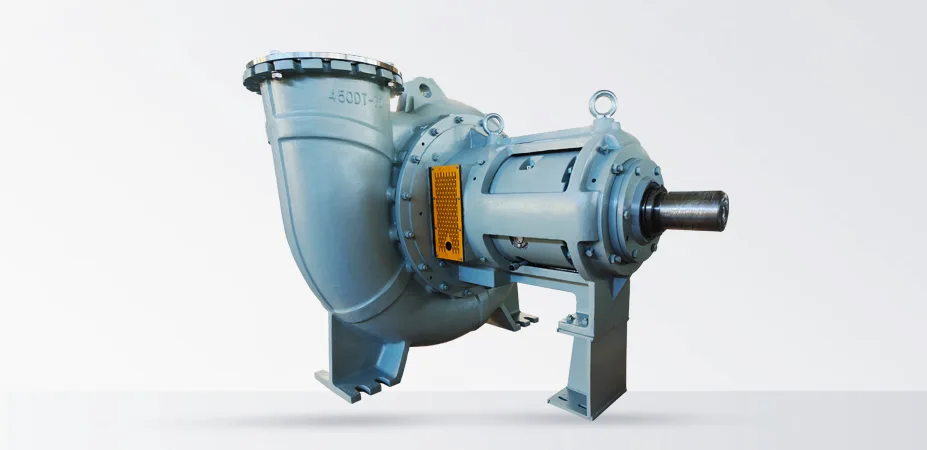
One of the most practical customizations CNSME offers is modular wet end interchangeability on the same bearing frame and casing. A mine might need to handle coarse tailings from a gravity circuit for part of the year and fine tailings from a flotation circuit for the rest. Rather than buying two complete pumps, they can buy one power end and two wet ends. Swapping from the coarse service wet end to the fine service wet end takes a few hours. This modular approach saves capital costs and storage space. CNSME can also customize the wet end design to accept different liner materials without changing the casing. A mine could start with high-chrome liners for coarse tailings, then later switch to rubber liners for a different ore body using the same pump casing, only replacing the internal components. This future-proofing customization is highly valued by mines with uncertain long-term tailings characteristics.