

Hearing that your child has leukemia is devastating enough, but when doctors say the cancer has returned after chemotherapy, that feeling of helplessness can become overwhelming. This is precisely where CAR-T therapy enters the picture — not as a first treatment, but as a powerful option for children whose B-cell acute lymphoblastic leukemia has relapsed or failed to respond to standard approaches. As a parent, you are suddenly thrust into a world of unfamiliar terms: apheresis, lentiviral vectors, cytokine storms. The goal of this article is to strip away the medical jargon and give you the honest, practical information you need to understand what CAR-T therapy involves, what questions to ask your child’s oncology team, and how to prepare for the emotional and logistical journey ahead.
Is Your Child Actually a Candidate for CAR-T Therapy
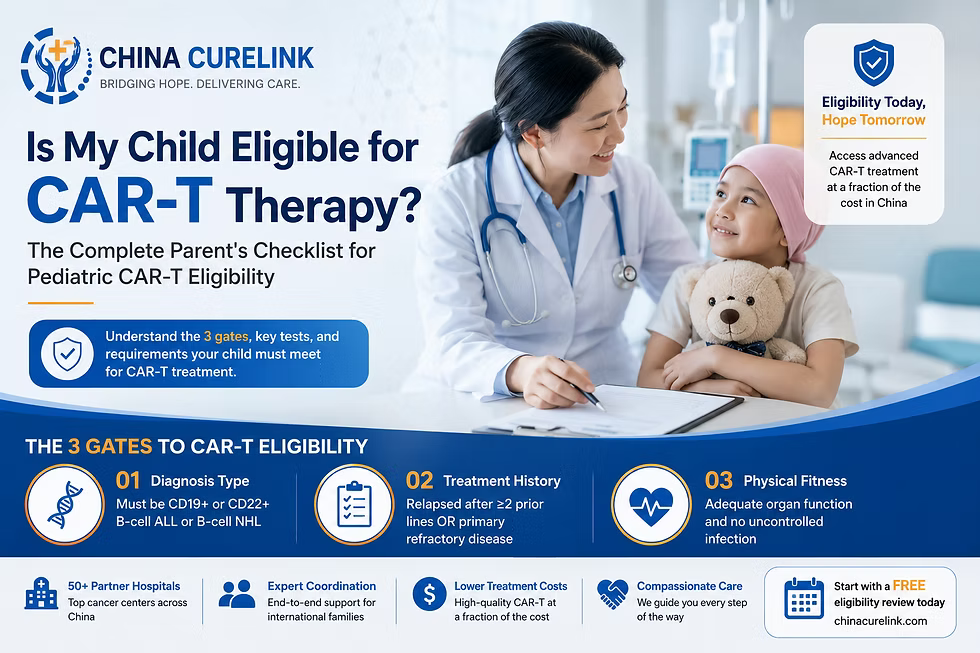
Not every child with leukemia qualifies for CAR-T therapy for leukemia, and understanding the criteria early can save families from false hope or unnecessary delays. Currently, CAR-T is approved specifically for children and young adults up to age twenty-five with B-cell acute lymphoblastic leukemia that is refractory, meaning it never achieved remission with chemotherapy, or has relapsed at least twice. Your child’s leukemia cells must also carry a specific protein marker called CD19 on their surface, since the engineered T-cells are programmed to recognize and attack that exact target. Children with T-cell acute lymphoblastic leukemia or Philadelphia chromosome-positive leukemia that responds to targeted drugs are generally not candidates for standard CAR-T, though clinical trials are exploring those applications. The most important step is asking your child’s oncologist for a clearance panel that includes flow cytometry to confirm CD19 expression and a thorough review of your child’s organ function and infection history.
The Emotional Rollercoaster of Waiting for Engineered Cells
Between the day your child’s T-cells are collected and the day they are reinfused, roughly two to four weeks will pass. For parents, this waiting period can feel agonizing, especially if your child has active, aggressive leukemia. Many children require what doctors call “bridging therapy” during this gap — low-dose chemotherapy or targeted drugs designed to hold the cancer in check without wiping out the newly collected T-cells or damaging organs. Some parents describe this as walking a tightrope: you want to suppress the leukemia enough to keep your child safe, but not so aggressively that your child enters the infusion too weak to handle the coming immune reaction. Use this time to prepare practically as well. Pack a hospital bag with familiar blankets, noise-canceling headphones, and a tablet loaded with favorite movies. Arrange for siblings to stay with relatives, because once CAR-T infusion happens, you will not leave your child’s hospital room for at least a week or two.
What Actually Happens on Infusion Day
When the big day arrives, the actual procedure is surprisingly anticlimactic after all the buildup. Your child will receive a pre-medication cocktail that typically includes acetaminophen and an antihistamine like diphenhydramine to reduce the chance of an immediate allergic reaction. The CAR-T cells themselves look just like a small bag of pale yellowish fluid, not unlike a standard blood transfusion. A nurse connects it to your child’s IV line and lets it drip slowly over fifteen to thirty minutes. Many parents expect fireworks or immediate changes, but the first few hours after infusion are usually quiet. Your child might feel tired or slightly nauseated, but nothing dramatic. Do not let this calm fool you, however. The real action begins days later, when the infused cells finish their journey through the bloodstream, settle into lymph nodes, and begin multiplying by the millions before launching their coordinated attack on leukemia cells.
Recognizing the Warning Signs of Cytokine Release Syndrome
Between day two and day ten after infusion, most children will develop some degree of cytokine release syndrome, the most common and potentially serious side effect of CAR-T therapy. This happens because the activated T-cells release massive amounts of inflammatory molecules called cytokines as they kill leukemia cells. As a parent, you need to know the early warning signs: a persistent fever that does not respond to normal fever-reducing medications, rapid breathing, low blood pressure that makes your child feel dizzy or unusually tired, and oxygen levels that drop even when your child seems comfortable. Mild CRS might require only extra fluids and close monitoring. Moderate to severe CRS typically prompts doctors to give a drug called tocilizumab, which blocks the specific inflammatory pathway without killing the CAR-T cells. In extreme cases, your child might need intensive care for blood pressure support or even a ventilator, though most children recover fully once the inflammation subsides.
Neurotoxicity and What It Looks Like in a Young Child
Beyond the physical symptoms of CRS, some children experience a separate complication called immune effector cell-associated neurotoxicity syndrome, or ICANS. In practical terms, this means the inflammation reaches the brain, causing temporary neurological symptoms. In a preschooler, neurotoxicity might present as extreme irritability, trouble finding words, or handwriting that suddenly becomes illegible. Older children might complain of severe headaches, lose their ability to follow simple commands, or have a seizure. The terrifying reality is that your child might not recognize you for a few hours or days. However, pediatric oncologists have become skilled at managing ICANS with steroids that calm brain inflammation, and most children recover completely without long-term cognitive damage. Parents should ask the hospital team two critical questions before infusion: how often will nurses perform neurological checks, and what is the threshold for moving your child to the pediatric intensive care unit?
Life After CAR-T: Remission, Relapse, and Long-Term Monitoring
If CAR-T therapy works, and it does for approximately eighty to ninety percent of children with relapsed B-ALL, the initial response is often dramatic. Within a month of infusion, bone marrow biopsies often show no detectable leukemia cells. This is not a cure in the traditional sense, however. Some children will eventually relapse, sometimes with leukemia cells that have stopped displaying the CD19 protein that CAR-T cells target. Doctors manage this risk by carefully balancing next steps. Some children proceed directly to a bone marrow transplant after CAR-T to lock in the remission, while others continue monitoring without transplant if their leukemia was low-risk at the time of relapse. Long-term follow-up includes regular blood counts to watch for low antibody levels, as CAR-T can wipe out normal B-cells along with cancerous ones. Your child will need monthly immunoglobulin infusions to prevent infections, and pediatric hematologists recommend lifelong monitoring for late effects, including autoimmune conditions that can emerge years after treatment ends. The road is long, but for many families, CAR-T therapy transforms a devastating relapse into a story of survival and renewed hope.