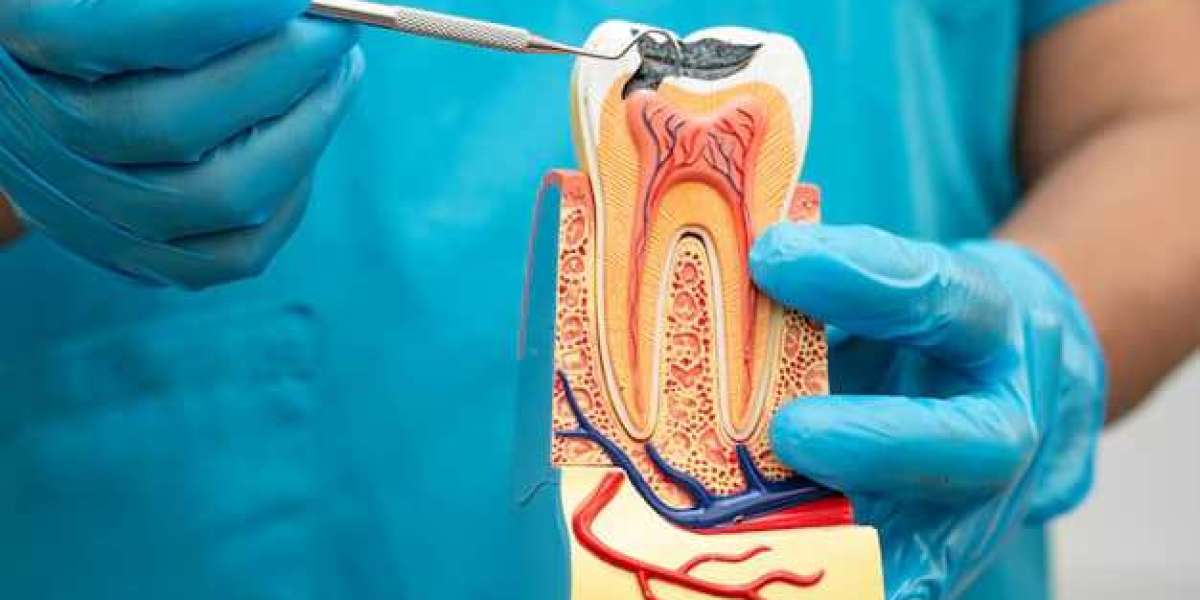

A deep tooth infection is not always straightforward to manage. Some cases settle with routine treatment, but others present added challenges. The internal structure of a tooth can be complex, with fine canals that are difficult to locate and clean. Infection may also extend into the surrounding bone, making careful planning essential. In these situations, the knowledge and judgement of a root canal specialist can make a clear difference.
The specialist concentrates solely on diseases affecting the inner tissue of the tooth. This focused practice supports accurate diagnosis, precise treatment, and stronger long-term outcomes in demanding cases.
The Hidden Anatomy Inside Every Tooth
From the outside, a tooth looks solid and simple. Inside, it is far more intricate. Root canals can be narrow, curved, divided, or even hidden behind layers of hardened tissue.
Some molars contain extra canals that are easy to miss. Front teeth may appear simple but can still contain subtle variations. Infection may sit deep within these spaces.
A root canal specialist is trained to understand these anatomical differences. This knowledge helps them locate and treat canals that might otherwise remain untreated.
When Standard Treatment Approaches Reach Their Limits
Routine cases often follow a predictable pattern. Pain develops, infection is identified, and treatment removes the diseased tissue.
Complex cases are different. The tooth may have:
Calcified canals that are difficult to access
A fractured root
The previous root filling material blocked access
An infection that has extended into the surrounding bone
In these situations, a root canal specialist adapts technique rather than following a fixed approach. That flexibility supports higher success rates.
Reading Between the Lines on a Scan
Diagnosis is not just about spotting infection. It is about understanding its behaviour. A root canal specialist often uses three-dimensional imaging to gain a clearer view of the tooth.
A 3D scan shows the true length and shape of each canal. It can reveal hidden cracks or bone loss. It can also show how close the infection is to important structures.
Accurate imaging reduces uncertainty. It allows treatment to be planned with care rather than assumption.
The Science of Retreatment: Correcting What Went Wrong
A tooth that has already had a root canal can still develop an infection. This may happen if bacteria were left behind or if the seal breaks down over time.
Retreatment is rarely simple. The old filling must be removed fully. Missed canals must be found. Blocked pathways must be reopened without damaging the root.
A root canal specialist has the tools and patience to manage this process. Their focus on detail increases the chance that the tooth can be saved rather than removed.
Managing Infection Beyond the Tooth
In some cases, infection spreads into the surrounding bone. A patient may notice swelling or tenderness when biting. A small abscess may develop.
A root canal specialist assesses the extent of this spread. Cleaning the canal alone may not be enough. Careful shaping, irrigation, and sealing are required to remove bacteria fully.
Healing is monitored over time with follow-up imaging. This structured review supports predictable recovery.
Micro-Level Precision in Daily Practice
Complex root canal treatment often depends on millimetre accuracy. Canals may curve sharply. Instruments must follow these curves without causing damage.
A root canal specialist uses magnification and focused lighting to improve visibility. This allows them to:
Identify fine cracks
Remove debris from narrow spaces
Shape canals with control
Place filling material precisely
These steps reduce the risk of future leakage or reinfection.
The Role of Judgement in Saving a Tooth
Not every tooth can be preserved. Honest assessment is part of responsible care. A root canal specialist evaluates whether the remaining structure is strong enough to support restoration.
Factors considered include:
Amount of healthy tooth left
Condition of the surrounding bone
Presence of vertical root fracture
Long-term bite forces
Careful judgement protects patients from repeated treatment that may not succeed.
Complex Pain Patterns and Diagnostic Skill
Tooth pain does not always follow a clear pattern. Sometimes discomfort radiates to other teeth or the jaw. In other cases, pain appears only when pressure is applied.
A root canal specialist is trained to interpret these patterns. They perform pulp testing, percussion checks, and imaging analysis before confirming a diagnosis.
Correct diagnosis prevents unnecessary treatment and improves confidence in the outcome.
Long-Term Seal and Biological Healing
Successful treatment is not only about removing infection. It is about sealing the canal system so bacteria cannot return.
A root canal specialist focuses on creating a tight internal seal. The canal is shaped, cleaned, and filled to its full working length. Attention is given to every canal within the root system.
When the seal is secure, the surrounding bone has the chance to heal naturally. Follow-up assessments confirm that healing is progressing.
Calm, Structured Care for Anxious Patients
Complex cases can be stressful. Patients may arrive in significant discomfort or with concern after a previous failed procedure.
A root canal specialist works in a structured and methodical way. Clear explanation of findings and treatment steps helps reduce fear. Local anaesthetic techniques are carefully applied to maintain comfort.
Confidence grows when patients understand what is happening and why.
Final Thoughts
Choosing the right clinician can influence whether a tooth is saved or lost. Straightforward cases may respond well to routine care. However, when infection is advanced or previous treatment has failed, the approach must be precise and carefully planned.
A root canal specialist brings deeper knowledge of internal tooth anatomy, refined technical skill, and experience with difficult scenarios. This combination supports predictable healing and long-term stability. Preserving a natural tooth is always preferable when possible. With careful assessment and detailed treatment, even challenging cases can often be managed successfully and with confidence.