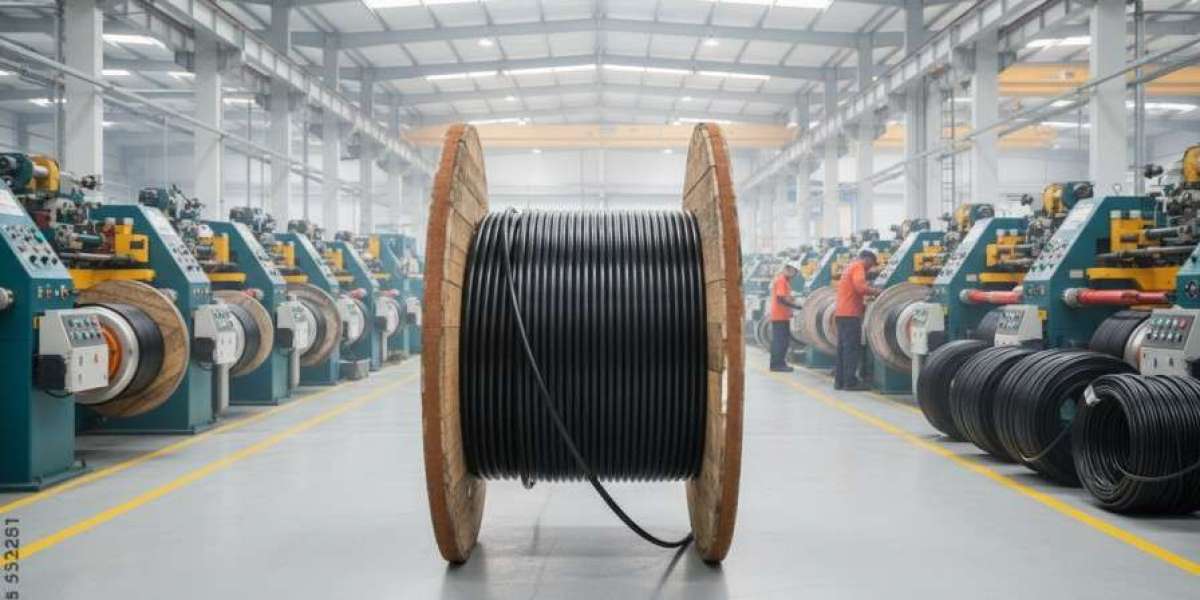

Industrial mobile machines require uninterrupted electrical connectivity even while moving. Rubber Trailing Cables are specially engineered flexible power cables that allow heavy equipment to operate freely without disconnecting from the power supply.
They are commonly installed in:
Steel plants
Cement factories
Ports & docks
Thermal and hydro power plants
Automotive assembly lines
Oil refineries
Petrochemical industries
Major Types Available
Depending on operating conditions, several rubber compounds are used:
EPR insulated trailing cables
CSP sheathed trailing cables
Neoprene sheathed cables
Natural rubber insulated cables
Silicone rubber insulated cables
Performance Features
Each cable type serves specific industrial requirements:
EPR insulation – Superior weather and heat resistance
CSP compound – Protection against oils, chemicals, and abrasion
Neoprene jacket – Reliable performance in manufacturing applications
Natural rubber – High elasticity for repetitive bending
General performance benefits:
Flame retardancy
UV stability
Low temperature flexibility
How to Choose the Right Cable
Before purchasing Rubber Trailing Cables, consider:
Safety and regulatory compliance
Working environment exposure
Mechanical load on cable
Electrical voltage/current rating
Flexibility requirements
Budget suitability