
Fair Use Copyright in 2026
Fair Use Copyright Explained: The Legal Usage Rights for 2026. The present digital environment shows that content exists throughout the entire online space. People continuously distribute and reuse creative works from YouTube videos, Instagram reels, blog posts, and online courses. The problem needs resolution to determine which materials people can use without facing legal consequences.
Fair use copyright exists to solve this particular issue. Content creators and business owners, educators, and startup founders need to understand this concept throughout 2026. The post presents complete information about fair use, which includes its definition, its function, its permitted uses, prohibited activities, and requirements for copyright registration to safeguard your original creations.
What Is Copyright?
Before going into detail, first, we know what comes under copyright:
Copyright registration is a legal protection given to original creative works, such as:
Books and articles
Music and songs
Movies and videos
Photographs
Software
Website content
Artistic designs
When you create an original work and fix it in a tangible form (written, recorded, saved), you automatically own the copyright. However, if you want legal protection, you should go for copyright registration to secure official proof of ownership.
What Is Fair Use Copyright?
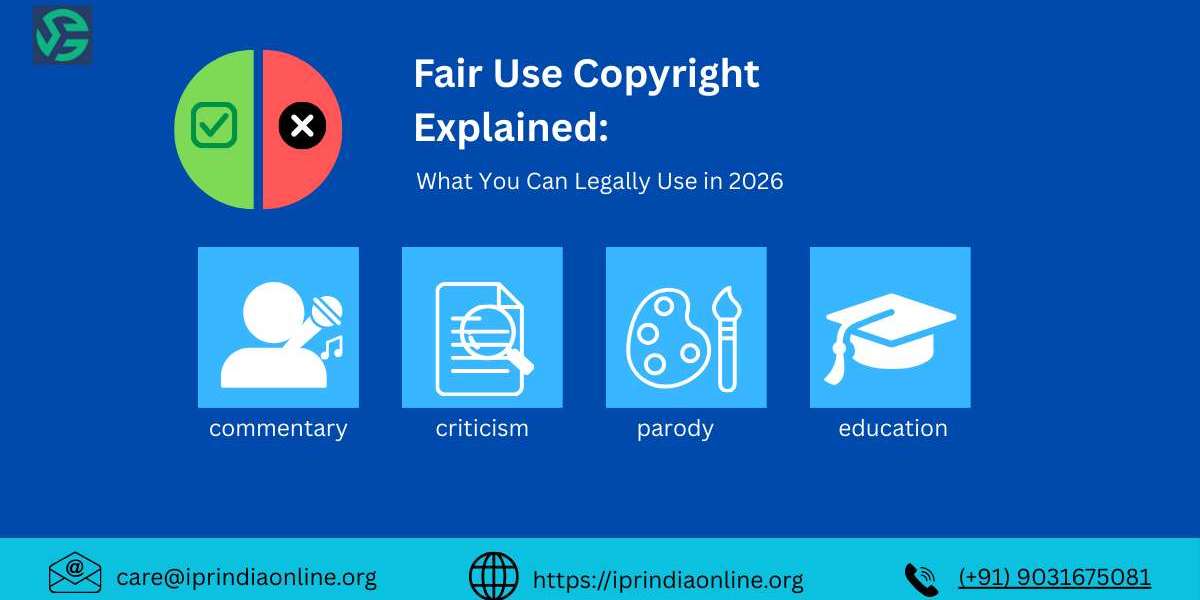
Fair use copyright is a legal concept that allows limited use of copyrighted material without permission from the actual owner.
It exists to balance two important interests:
The rights of creators
The public interest in freedom of expression
Fair use of copyright means people can use copyrighted material for the following purposes:
Education
Commentary
Criticism
News reporting
Research
Parody
But fair use is not automatic. It depends on certain legal factors.
The Four Factors of Fair Use in 2026
Courts generally evaluate fair use based on four main factors:
1. Purpose and Manner of the Use
If you are using the content for:
Educational purposes
Non-profit use
Transformative content (adding new meaning or value)
Then your case for fair use becomes stronger.
For example, reviewing a movie and showing short clips for commentary is more likely to be accepted than simply re-uploading the entire movie.
2. Nature of the Copyrighted Work
Using factual or informational content is more likely to be accepted for fair use than highly creative works like songs, movies, or artwork.
For instance, quoting from a research article may be a safer move than using a full song in your commercial video.
3. Amount and Substantiality Used
Using a small portion of the content increases your chances of qualifying for fair use. However, even a small piece can be a problem if it includes the main idea of the work.
For example:
Using 10 seconds of a song can be risky.
Quoting 2 lines from a 300-page book for review may not be risky.
4. Effect on the Market
The original creator's ability to earn money will be harmed through your usage of their work, which makes your usage less likely to be considered fair use.
The courts will determine your case as unfavorable when your usage of the content either replaces the original product or decreases its sales.
Common Examples of Fair Use in 2026
Let’s see some examples:
1. YouTube Reaction Videos
The addition of commentary and criticism, together with your content modification,s will result in a fair use determination.
2. Educational Presentations
Teachers who use brief sections during classroom instruction typically operate within fair use boundaries.
3. News Reporting
Journalists using clips for reporting purposes can claim fair use.
4. Parody
A funny imitation of the original work
5. Satire
Humor used to criticize society or public figures
What Is NOT Fair Use?
Many people misunderstand fair use. Here’s what generally does NOT qualify:
Uploading full movies
Reposting someone’s entire blog post
Using music in commercial ads without permission
Copying website content for SEO purposes
Selling copyrighted PDFs
If you’re unsure, better to ask for permissions; better to create something new.
Why Content Creators Must Be Careful in 2026
The copyright violations in digital spaces have increased because of social media automation, AI tools, and digital marketing solutions.
The automated copyright detection systems on YouTube, Instagram, and Facebook operate to protect their content from unauthorized usage. Your content can get flagged even when you think your usage qualifies as fair use.
The required actions for creators and businesses to complete.
Understand copyright fundamentals
Avoid copying content blindly
Secure their own creative works with proper copyright registration
Why You Should Register Copyright
Although copyright exists automatically, legally registering it has the following benefits:
Legal proof of ownership
Better protection in court
The right to claim statutory damages
Stopping people who misuse your content
The owner of a business, a startup, or a digital creator should use online copyright registration to protect their content according to their business requirements.
Your copyright registration provides you with stronger legal protection against work duplication, and it enables you to issue legal notifications.
Fair Use vs Copyright Infringement
It is important to understand the difference between fair use and copyright infringement.
Fair Use means:
Using something in a limited way that changes it or adds new meaning
Using it for education, to give opinions, or to explain something
Not hurting the original creator’s market or sales
Copyright Infringement means:
Copying or using something without asking for permission
Using it mainly to make money without rights
Hurting the original creator by lowering their income
If what you use doesn’t add something new or change the original, and it affects how much money the original creator can make, then it is probably copyright infringement.
How Businesses or Startups Can Protect Themselves
If you have business, you must go for copyright protection.
You should:
Register original content
Use proper licensing agreements
Avoid copying competitor content
Maintain documentation of creation dates
Fair Use in the Digital and AI Time
In 2026, artificial intelligence tools can generate a lot of stuff in a single click, like text, images, music, etc. But using AI-generated content does not automatically protect you from copyright issues.
You must:
Verify originality
Avoid using copyrighted prompts or datasets improperly
Check licensing terms
Even AI-assisted content may also require legal clarity and proper documentation.
What Happens If You Violate Copyright?
Copyright infringement can lead to:
File Legal notices
Content takedown
Account suspension
Heavy penalties
Court cases
In serious cases, damages can be serious. That’s why prevention is always better than legal cases.
When Yor Require Professional Help?
You should need expert help if:
Someone copied your content
You received a copyright notice
You want to register copyright online
You are unsure whether your usage qualifies as fair use or not
Legal clarity saves time, money, and stress.
As a private service provider, we assist businesses and creators with a team of professionals who give them online assistance, ensuring their creative assets are legally protected in 2026.
Note: If you are planning to protect your brand identity as well, you can also online register trademark from IPR India Portal.
Final Thoughts on Fair Use Copyright in 2026
Content creators, business operators, and educational instructors need to understand fair use copyright regulations,s which will apply to their work in 2026.
The only way to save your creative work is by registering your copyright with proper documentation. The process establishes your legal rights while protecting your work from theft in the competitive online environment.