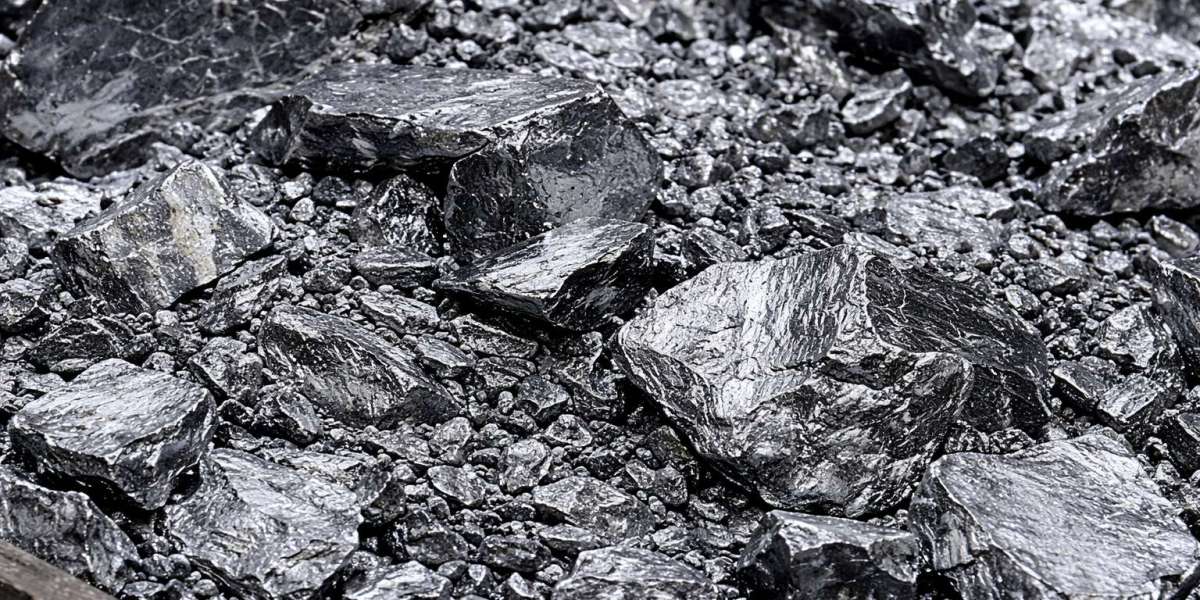

Graphite density refers to the mass of graphite per unit volume, usually expressed in grams per cubic centimeter (g/cm³). It is a critical property that influences mechanical strength, electrical and thermal conductivity, porosity, and overall performance. Graphite, a crystalline form of carbon, has a layered structure in which atoms are arranged in hexagonal sheets. The density of graphite is essential in applications like batteries, steel production, aerospace, and electronics, as it directly affects reliability and efficiency in industrial and technological uses.
Atomic Structure and Its Effect on Density
Graphite consists of carbon atoms arranged in hexagonal layers called graphene sheets. Each carbon atom is bonded to three others, creating strong planar layers. These layers are stacked and held together by weak van der Waals forces, allowing them to slide over one another. The spacing between layers creates voids that influence graphite’s density. Compression, heat treatment, and purification processes can reduce these gaps, increasing density and improving mechanical strength, thermal stability, and electrical conductivity.
Types of Graphite and Density Variations
Graphite exists in natural and synthetic forms. Natural graphite is mined and comes in flake, amorphous, and vein types, with density affected by impurities and structural alignment. Synthetic graphite is manufactured from petroleum coke through high-temperature processing, providing more consistent density and purity. Expanded graphite has lower density due to increased porosity. The selection of graphite type depends on desired density and application, whether for electrodes, batteries, or refractory materials.
Factors Influencing Graphite Density
Several factors affect graphite density. Purity of the material influences compactness, with higher purity producing higher density. Manufacturing processes such as compaction pressure and heat treatment reduce voids and improve crystallinity. Particle size, grain structure, and the presence of impurities also impact density. Control over these factors ensures uniform, high-quality graphite suitable for industrial and laboratory applications, where performance depends on precise density characteristics.
Measurement Methods of Graphite Density
Graphite density can be measured as true density or bulk density. True density refers to the solid material without pores, while bulk density includes pores and voids. Techniques like the Archimedes principle, pycnometry, and mass-to-volume calculations are commonly used. Accurate density measurement is essential for quality control and ensures that graphite performs reliably in battery electrodes, furnace components, and high-temperature applications.
Importance in Battery Technology
Graphite is widely used as an anode material in lithium-ion batteries. Its density influences energy storage capacity, ion mobility, and battery longevity. High-density graphite allows more active material in a given space, improving energy density. However, excessively high density may limit lithium ion movement. Manufacturers balance density and porosity to achieve optimal performance, stability, and safety in modern batteries.
Use in Steel and High-Temperature Applications
High-density graphite is essential for electrodes in electric arc furnaces used in steelmaking. It provides mechanical strength, electrical conductivity, and durability under extreme temperatures. Lower-density graphite may be used for insulation or lightweight applications but has reduced strength. Choosing the right density ensures performance and longevity in demanding industrial conditions, including high heat and mechanical stress.
Mechanical and Thermal Properties
Graphite density directly affects mechanical strength, hardness, and thermal conductivity. Higher-density graphite shows better compressive strength and wear resistance. Reduced porosity allows more efficient heat transfer, making it ideal for high-temperature furnaces, heat exchangers, and electronic components. Optimizing density enhances durability and performance under extreme conditions.
Electrical Conductivity and Density
Graphite’s electrical conductivity is influenced by density. Higher-density graphite has fewer voids, enabling better electron flow. This makes it suitable for electrodes, conductive components, and high-current industrial applications. Consistent density ensures predictable performance in electronics, energy storage systems, and industrial processes.
Comparison with Other Carbon Materials
Graphite differs from diamond and amorphous carbon in structure and density. Diamond has a higher density (~3.51 g/cm³) due to tetrahedral bonding. Amorphous carbon is less ordered and less dense. Graphite’s layered structure allows a balance of moderate density, high conductivity, and flexibility, making it versatile for energy storage, industrial uses, and thermal management.
Industrial Applications Beyond Energy
Graphite density is important in aerospace, automotive, nuclear, and chemical industries. Dense graphite components provide strength, thermal stability, and chemical resistance. In nuclear reactors, dense graphite is used as a moderator. In aerospace and automotive components, controlled density ensures durability and optimal weight. Proper density selection allows graphite to perform reliably across various industrial applications.
Advantages of High-Density Graphite
High-density graphite offers improved durability, thermal and electrical performance, chemical resistance, and mechanical strength. It can withstand extreme heat and stress, making it suitable for high-performance applications. Controlling production processes allows manufacturers to achieve precise density for specific industrial needs, ensuring reliability and efficiency.
Environmental and Sustainability Considerations
Graphite production can have environmental impacts, especially in mining and synthetic manufacturing. Recycling graphite from batteries, industrial waste, and end-of-life materials conserves resources and maintains consistent density. Sustainable production practices help reduce ecological impact while meeting global demand for graphite in energy, electronics, and industrial sectors.
Future Trends in Graphite Density Optimization
Research is focused on improving graphite density for applications in solid-state batteries, advanced electronics, and high-temperature industries. Techniques like high-pressure compaction, heat treatment, and nanostructuring enhance density, conductivity, and mechanical properties. Optimized graphite density will be crucial for future energy storage, aerospace, and engineering technologies.
Conclusion
Graphite density is a key property affecting strength, conductivity, thermal performance, and industrial suitability. Proper measurement, manufacturing control, and material selection ensure graphite meets performance standards in batteries, steel production, aerospace, and electronics. Understanding and optimizing graphite density allows engineers and manufacturers to achieve durable, reliable, and high-performing materials across multiple industries.