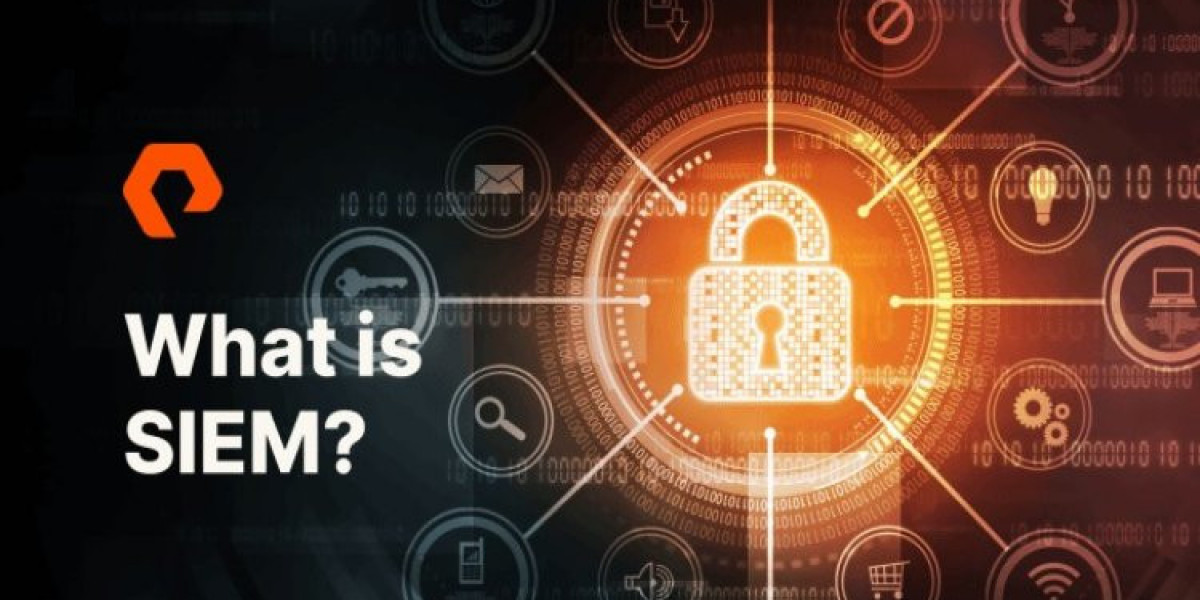

For years, Security Information and Event Management (SIEM) platforms were viewed primarily as log collectors—tools used for compliance reporting, audits, and post-incident investigations. But as cyber threats have evolved, so has the role of SIEM. In modern security operations, SIEM is no longer just a repository of events. It has become the central brain of detection and response, orchestrating visibility, context, and decision-making across the entire security stack.
From Log Storage to Intelligence Hub
Traditional SIEM deployments focused on aggregating logs from firewalls, servers, applications, and endpoints. The value was historical: what happened, when it happened, and who was involved.
Today’s SIEMs do far more. They ingest telemetry from endpoints, networks, cloud workloads, identity platforms, SaaS applications, and APIs. More importantly, they correlate this data in real time, transforming raw events into meaningful security signals.
By connecting activity across domains, SIEM provides the foundation for understanding complex, multi-stage attacks that no single tool can fully see on its own.
Why Centralization Matters in Modern Attacks
Modern attacks are not isolated events. They are campaigns that unfold across time and technology layers:
- A suspicious login from a new location
- Followed by abnormal API usage in the cloud
- Followed by lateral movement on the internal network
Viewed separately, each event may seem low risk. Viewed together, they reveal clear attacker intent.
SIEM solutions acts as the central nervous system that brings these signals together. It answers critical questions security teams face every day:
- Are these alerts related?
- Is this activity normal for this user or system?
- Is this an isolated anomaly or part of a broader attack?
Without a central brain, security teams are left manually stitching together evidence across tools—losing precious time while attackers move forward.
Powering Detection Through Correlation and Context
The true strength of SIEM lies in correlation. By applying rules, analytics, and increasingly machine learning, SIEM platforms:
- Link events across endpoint, network, cloud, and identity
- Reduce false positives by adding context
- Elevate weak signals into high-confidence incidents
This contextual awareness is essential in environments where attackers use legitimate credentials and trusted tools. SIEM doesn’t just ask “Did something happen?”—it asks “Does this behavior make sense in context?”
That shift dramatically improves detection quality.
The Brain Behind Coordinated Response
Detection without response is incomplete. Modern SIEMs play a central role in driving response decisions, even when actions are executed elsewhere.
By prioritizing incidents based on risk, asset value, and attack progression, SIEM helps teams decide:
- What needs immediate containment
- What can be investigated further
- What can be safely deprioritized or automated
When integrated with automation and response platforms, cloud SIEM becomes the decision engine that triggers containment actions—such as disabling accounts, isolating endpoints, or blocking network paths—based on a unified understanding of the threat.
Reducing Cognitive Load on SOC Teams
One of the biggest challenges in security operations is cognitive overload. Analysts are flooded with alerts, dashboards, and notifications from dozens of tools.
SIEM reduces this burden by:
- Centralizing visibility into a single operational view
- Providing timelines and attack narratives
- Highlighting what matters most, not everything that happened
Instead of acting as alert traffic controllers, analysts become investigators and decision-makers—guided by the intelligence SIEM provides.
Enabling Scalability and Consistency
As environments grow more complex, manual correlation simply doesn’t scale. SIEM enables security operations to grow without linear increases in effort by:
- Applying consistent detection logic across the organization
- Maintaining institutional knowledge through correlation rules and analytics
- Supporting 24/7 operations regardless of staffing levels
This consistency ensures that response quality does not depend on who is on shift or how experienced they are.
The Modern Role of SIEM
In today’s threat landscape, SIEM is not optional infrastructure—it is strategic infrastructure. It sits at the center of detection and response, connecting tools, data, and people into a cohesive defense capability.
SIEM does not replace endpoint, network, or cloud security tools. It unifies them, providing the intelligence layer that allows security teams to see the full picture and act with confidence.
Conclusion: The Brain That Makes Defense Possible
Cybersecurity is no longer about collecting more data—it’s about making better decisions, faster.
As the central brain of detection and response, SIEM transforms fragmented telemetry into actionable intelligence. It enables security teams to understand attacks as they unfold, prioritize effectively, and respond decisively.
In a world of multi-stage, cross-domain attacks, the organizations that succeed are those with a brain at the center of their defense.
That brain is SIEM.