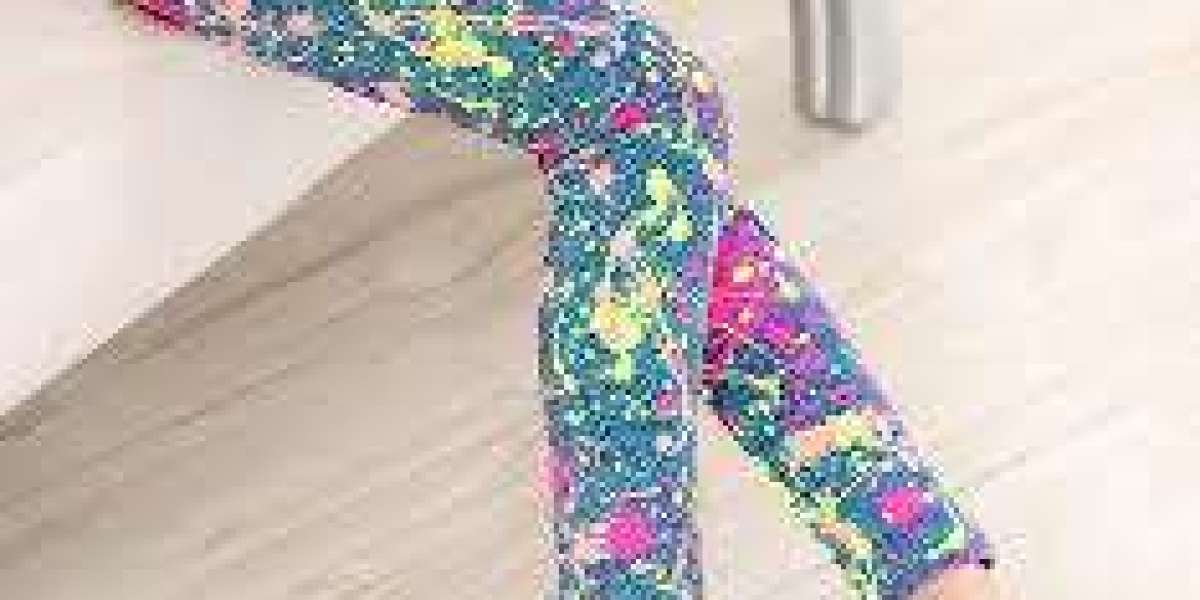

Leggings have completed one of the most remarkable journeys in fashion history — from workout-only garment to everyday essential to cultural phenomenon.
The global leggings market surpassed $30 billion in 2023 and shows no signs of slowing. In the United States, leggings are now the most purchased bottoms category among women aged 18–45, surpassing jeans for the first time in recorded retail history.
They're worn to yoga class, to the office, to brunch, to the airport, to school pickup, to date night. They're worn under dresses and on their own. They're worn by athletes, executives, students, and retirees. The universality of leggings is unprecedented in modern fashion.
But behind this seemingly simple garment lies a leggings production process that is surprisingly technical, precision-dependent, and quality-sensitive. The difference between leggings that customers love and leggings they return after one wear comes down to manufacturing decisions that happen long before the product reaches a shelf.
Why Leggings Are Harder to Manufacture Than They Look
At first glance, leggings seem straightforward — essentially tubes of stretchy fabric with a waistband. But this simplicity is deceptive. Leggings are among the most technically demanding garments to manufacture well because:
1. Fit Is Everything
Leggings are body-conforming garments. Unlike a loose-fitting t-shirt or a structured jacket, leggings must:
- Stretch to accommodate different body shapes and sizes
- Recover (snap back) to their original shape after stretching
- Maintain consistent compression without being restrictive
- Stay in place during movement without slipping, rolling, or riding up
- Provide smoothing and support without creating visible compression lines
A legging that's 1/4 inch off in the pattern or 5% wrong in fabric stretch behaves fundamentally differently on the body. The margin for error is razor-thin.
2. Fabric Transparency (The Squat Test)
One of the most common complaints about leggings — and one of the most damaging for brands — is sheerness. When a customer bends over or squats and the fabric becomes see-through, that brand loses trust permanently.
Transparency is a function of:
- Fabric weight (GSM — grams per square meter)
- Fabric composition (fiber type and blend ratio)
- Knit structure (interlock vs. jersey vs. double-knit)
- Color (lighter colors show transparency more easily)
- Stretch percentage (over-stretched fabric becomes thinner and more transparent)
Professional leggings production includes squat testing and stretch-transparency testing as standard quality control measures.
3. Seam Engineering
Leggings have seams that sit directly against the skin during high-movement activities. Uncomfortable seams cause:
- Chafing and irritation
- Visible seam lines through the fabric
- Seam failure during stretching
The seam type, thread choice, and construction method dramatically affect comfort and durability:
| Seam Type | Application |
|---|---|
| Flatlock seam | Lies flat against the skin, minimal bulk, chafe-free. The gold standard for athletic leggings. |
| Overlock (serger) seam | Cost-effective, durable, but creates a raised ridge that can cause irritation in compression garments. |
| Bonded (no-sew) seam | Uses adhesive instead of thread. Creates the flattest, smoothest seam possible. Used in premium and seamless-look leggings. |
| Coverstitch | Clean, professional-looking topstitch that also provides stretch. Common for hems and waistband finishing. |
| Blind hem | Nearly invisible hem finish for a clean, premium look. |
4. Waistband Construction
The waistband is the make-or-break element of any legging. A poorly designed waistband:
- Rolls down during movement
- Digs into the stomach
- Creates a "muffin top" effect
- Loses elasticity after washing
Premium leggings use wide, high-rise waistbands (typically 3–5 inches) with:
- Power mesh lining for additional support
- Silicone grip strips to prevent rolling
- Hidden pockets (increasingly expected by consumers)
- Reinforced elastic that maintains compression through hundreds of wash cycles
Fabric: The Foundation of Leggings Production
Fabric selection determines approximately 70% of a legging's performance and customer satisfaction. Here's what matters:
Key Fabric Metrics:
| Metric | What It Means | Ideal Range for Leggings |
|---|---|---|
| GSM (weight) | Grams per square meter — thickness/density | 220–300 GSM for everyday; 250–320 for compression |
| Stretch % | How far the fabric stretches | 4-way stretch, 75–85% stretch in both directions |
| Recovery % | How well it returns to original shape | 95%+ recovery |
| Pilling resistance | Resistance to surface fiber balls | Grade 4–5 (on a 1–5 scale) |
| Colorfastness | Resistance to fading from washing and light | Grade 4+ (on a 1–5 scale) |
| Moisture wicking | Ability to pull sweat away from skin | Critical for athletic leggings |
| UPF rating | UV protection factor | UPF 30–50+ for outdoor leggings |
| Opacity | Resistance to see-through when stretched | Must pass squat test in all colors |
Common Leggings Fabrics:
Nylon-Spandex (80/20 or 75/25)
The premium standard. Nylon provides softness, durability, and a luxurious hand feel. Spandex provides stretch and recovery. This blend is used by virtually every premium leggings brand (Lululemon, Alo Yoga, Girlfriend Collective). The fabric is smooth, compressive, and holds its shape.
Polyester-Spandex (85/15 or 88/12)
More affordable than nylon blends. Excellent moisture-wicking and colorfastness. Ideal for sublimation printing (vibrant, full-coverage prints). Slightly less soft than nylon but more durable and fade-resistant. The standard fabric for printed leggings and budget-to-mid-range activewear.
Cotton-Spandex (92/8 or 95/5)
Soft, breathable, and comfortable for casual/lifestyle wear. Not ideal for intense exercise (absorbs sweat rather than wicking it). Tends to lose shape faster than synthetic blends. Best for lounge leggings, basic leggings, and children's leggings.
Recycled Fabric Options
- Recycled polyester (rPET) — Made from post-consumer plastic bottles
- Recycled nylon (Econyl) — Made from ocean waste, fishing nets, and industrial nylon waste
- Organic cotton-spandex — Organic cotton grown without pesticides, blended with spandex
Specialty Fabrics
- Brushed/fleece-lined — Inner brushed surface for warmth; essential for winter/cold-weather leggings
- Ribbed knit — Textured, fashion-forward look with inherent stretch
- Compression fabric — Medical-grade compression for athletic performance and recovery
- Seamless knit — Produced on circular knitting machines for a smooth, seam-free construction
The Leggings Production Process
Step 1: Fabric Sourcing and Testing
Fabric is sourced from textile mills and tested for stretch, recovery, pilling, colorfastness, opacity, and GSM consistency before production begins.
Step 2: Pattern Making and Grading
Patterns are developed based on the target fit (high-rise, mid-rise; full-length, 7/8, capri, biker short). The base pattern is graded across the full size range (typically XS–3XL, with extended sizing becoming increasingly standard).
Step 3: Marker Making and Cutting
Pattern pieces are laid out digitally for maximum fabric utilization. Fabric is spread, and pieces are cut using CNC automated cutting machines for precision.
Step 4: Printing (if applicable)
For printed leggings:
- Sublimation printing — Designs are printed onto transfer paper and heat-pressed onto polyester fabric. Produces vibrant, permanent, full-coverage prints that won't crack, peel, or fade.
- Screen printing — For simpler designs and logos. Applied to cut pieces or finished garments.
- Digital direct-to-fabric printing — Newer technology allowing complex prints directly on fabric without transfer paper.
Step 5: Sewing and Assembly
Key construction operations:
- Side seam and inseam assembly
- Gusset attachment (the diamond-shaped panel in the crotch area that improves fit and movement)
- Waistband construction and attachment
- Elastic insertion
- Pocket construction (if applicable)
- Hem finishing
Step 6: Quality Control
Every pair is inspected for:
- Measurement accuracy (compared against tech pack specs)
- Seam integrity and consistency
- Stretch and recovery verification
- Squat/opacity test (critical)
- Waistband elasticity
- Symmetry (both legs must be identical)
- Thread trimming and finishing
- Label accuracy
Step 7: Finishing, Labeling, and Packaging
- Brand labels (woven or printed) sewn into waistband
- Care labels attached per FTC requirements
- Hang tags attached
- Folding, poly-bagging, or custom packaging
- Shipment preparation
Common Leggings Production Mistakes
Brands new to leggings production frequently encounter these pitfalls:
❌ Choosing fabric based on price alone — Cheap fabric = transparent, pilling, saggy leggings = returns and brand damage
❌ Insufficient size grading — Using simple proportional scaling instead of body-proportionate grading results in poor fit at extreme sizes
❌ Skipping the gusset — No gusset means poor crotch fit, restricted movement, and seam stress failure
❌ Ignoring the squat test — If you don't test for opacity during production, your customers will test for you — publicly, in reviews
❌ Wrong waistband width or construction — A 1-inch yoga waistband on a high-rise legging is a recipe for roll-down complaints
❌ No fabric pre-testing — Skipping shrinkage, pilling, and colorfastness testing leads to customer disappointment after the first wash
❌ Inconsistent sizing — Variations between production batches destroy customer trust. Measurement auditing on every batch is essential.
Market Segments Driving Leggings Demand
| Segment | Key Requirements |
|---|---|
| Activewear/Athletic | High-performance fabrics, moisture-wicking, compression, squat-proof, 4-way stretch |
| Athleisure/Lifestyle | Buttery-soft fabrics, fashionable designs, versatile styling, comfort-first |
| Plus-size | Extended sizing (1X–6X), inclusive fit engineering, body-positive branding |
| Maternity | Over-belly and under-belly waistband options, extra stretch panels, supportive construction |
| Kids | Durable, soft, bright prints, elastic waistbands, affordable price points |
| Men's | Performance compression tights, running tights, base layers — a rapidly growing segment |
| Fashion/Statement | Bold prints, leather-look, ribbed, textured, embellished — fashion-forward designs |
| Medical/Compression | Graduated compression ratings (mmHg), medical-grade fabrics, therapeutic applications |
The Private Label Leggings Opportunity
Leggings are one of the highest-volume, highest-repeat-purchase categories in apparel. Consumers who find a legging they love buy multiples — in every color and print available. This creates exceptional customer lifetime value for brands that get the product right.
Private label leggings production allows brands to:
- Develop proprietary fits and designs
- Choose premium fabrics that differentiate from mass-market competitors
- Create exclusive prints and colorways
- Build a loyal customer base through consistent quality
- Offer inclusive sizing from the start
- Scale from small test runs to large-scale production
Manufacture Leggings That Customers Buy on Repeat
The leggings market rewards quality, punishes mediocrity, and remembers everything. One great pair creates a customer for life. One bad pair creates a one-star review that lives forever. The manufacturing partner you choose determines which outcome you get. Vel Clothing is a private label clothing manufacturer specializing in premium leggings production. From buttery-soft nylon-spandex everyday leggings to high-performance compression tights to bold sublimation-printed statement pieces — Vel Clothing engineers every pair for fit, comfort, durability, and opacity.
Expert pattern grading across inclusive size ranges, flatlock seam construction, rigorous squat testing, custom fabric sourcing, and full branding services — from woven labels to hang tags to retail-ready packaging. Low minimums for launching brands, scalable production for growing labels, and the expertise to help you build a leggings line that customers can't stop buying. Your brand, your designs, flawlessly manufactured — contact VEl CLothing for a free consultation, fabric swatches, and sample development today.