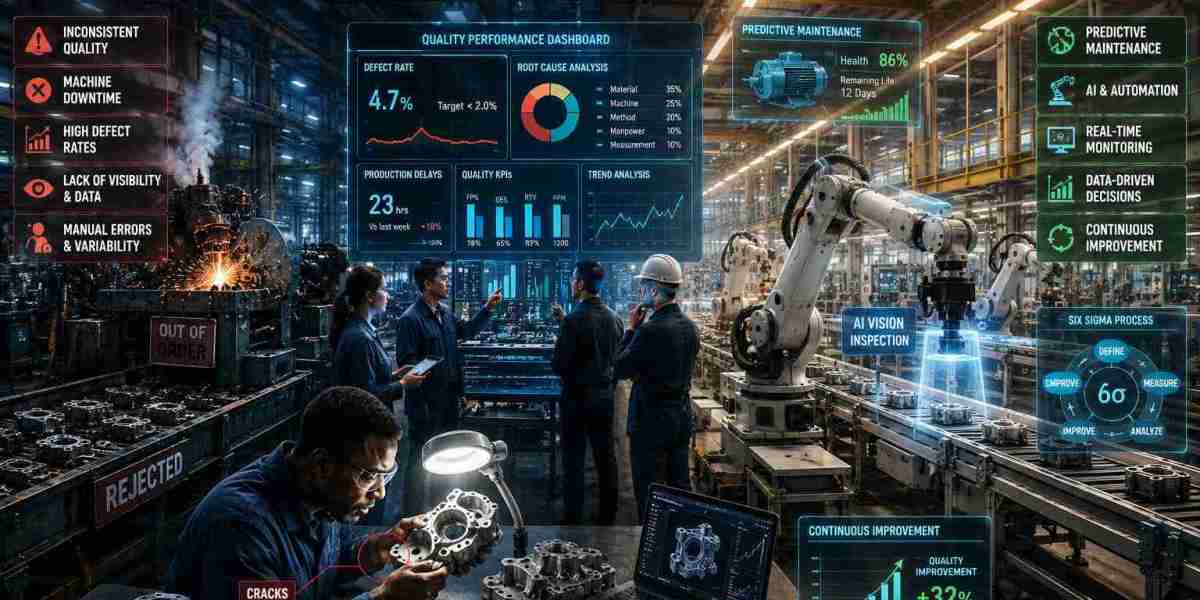

Manufacturing environments are often described in terms of precision, efficiency, and output. But anyone who has spent time inside a production setting knows there’s another layer beneath the surface—one shaped by pressure, expectations, and the constant need to get things right.
When quality issues arise, they rarely stay confined to a single process. They ripple outward, affecting timelines, costs, team morale, and customer trust. Over time, repeated disruptions can create a sense of instability—something that feels both operational and deeply human.
This is why understanding and addressing manufacturing quality challenges is so important. Not just to improve performance, but to create a more balanced, predictable, and supportive work environment where both systems and people can thrive.
Understanding the Nature of Quality Challenges
Quality issues in manufacturing are rarely caused by a single factor. More often, they emerge from a combination of small gaps—unclear processes, inconsistent communication, or overlooked details—that gradually build into larger problems.
Much like in personal well-being, it’s not always the big events that cause disruption. It’s the accumulation of small, unresolved issues over time.
Recognizing this helps shift the focus from blame to understanding. Instead of asking “Who made the mistake?” the question becomes, “What in the system allowed this to happen?”
That shift is where meaningful improvement begins.
The Most Common Manufacturing Quality Challenges
Let’s explore some of the most frequent challenges organizations face—and how they impact both performance and people.
1. Inconsistent Processes
When processes vary from one shift, team, or location to another, quality becomes unpredictable.
This inconsistency can lead to:
Variations in product output
Increased defect rates
Confusion among employees
Difficulty in identifying root causes
How to Overcome It:
Standardize workflows and procedures
Document clear operating guidelines
Provide consistent training across teams
Regularly review and update processes
Consistency creates stability. And stability allows teams to work with confidence.
2. Poor Communication Across Teams
Manufacturing often involves multiple departments—engineering, production, quality control, and supply chain. When communication breaks down, even well-designed systems can fail.
Common effects include:
Misunderstood specifications
Delayed responses to issues
Repeated errors due to lack of feedback
Frustration between teams
How to Overcome It:
Establish clear communication channels
Encourage open and respectful dialogue
Use standardized reporting systems
Hold regular cross-functional meetings
Strong communication isn’t just efficient—it builds trust.
3. Lack of Real-Time Visibility
Without clear insight into what’s happening on the production floor, organizations are forced to react after problems occur.
This can result in:
Delayed detection of defects
Increased rework and waste
Difficulty tracking performance trends
How to Overcome It:
Implement real-time monitoring systems
Use data dashboards for visibility
Track key performance indicators consistently
Train teams to interpret and act on data
Visibility turns uncertainty into awareness—and awareness enables action.
4. Supplier Quality Issues
Even the most controlled internal processes can be affected by inconsistent supplier quality.
This challenge often leads to:
Defective incoming materials
Production delays
Increased inspection requirements
Strained supplier relationships
How to Overcome It:
Establish clear supplier quality standards
Conduct regular audits and evaluations
Build collaborative relationships with suppliers
Provide feedback and support for improvement
Addressing supplier-related manufacturing quality challenges requires partnership, not just oversight.
5. Resistance to Change
Introducing new processes or improvements can sometimes be met with hesitation. People naturally seek familiarity, especially in high-pressure environments.
This resistance can slow progress and limit innovation.
How to Overcome It:
Communicate the purpose behind changes clearly
Involve employees in decision-making
Provide training and support
Recognize and celebrate progress
Change becomes easier when people feel included and supported.
6. Inadequate Training and Skill Gaps
Even well-designed systems depend on the people who operate them. Without proper training, mistakes become more likely.
This can lead to:
Increased defects
Safety risks
Reduced efficiency
Lower employee confidence
How to Overcome It:
Invest in ongoing training programs
Provide clear instructions and resources
Encourage knowledge sharing between teams
Regularly assess skill levels and address gaps
When people feel capable, they perform with greater clarity and confidence.
7. Reactive Problem-Solving Culture
In some organizations, quality issues are addressed only after they occur. This reactive approach creates a cycle of constant firefighting.
Over time, this leads to:
Chronic stress
Repeated problems
Limited long-term improvement
How to Overcome It:
Focus on root cause analysis
Implement preventive measures
Encourage proactive thinking
Build a culture of continuous improvement
Breaking this cycle is essential for sustainable success.
The Human Impact of Quality Challenges
It’s important to pause here and acknowledge something often overlooked: quality challenges don’t just affect processes—they affect people.
When issues are frequent and unresolved, teams may experience:
Ongoing stress and pressure
Frustration from repeated errors
Reduced motivation
A sense of instability
Over time, this can lead to burnout.
On the other hand, when quality systems are strong and supportive, the environment shifts:
Work becomes more predictable
Teams feel more in control
Collaboration improves
Confidence grows
From a psychological perspective, this sense of stability is essential. It allows individuals to focus, think clearly, and contribute meaningfully.
Building a Strong Quality Culture
Overcoming manufacturing quality challenges requires more than fixing individual issues—it requires building a culture where quality is part of everyday thinking.
A strong quality culture includes:
Leadership commitment to continuous improvement
Open communication across all levels
Shared responsibility for quality outcomes
Willingness to learn from mistakes
When quality becomes a shared value, it stops feeling like a burden and starts becoming a natural part of the process.
Practical Strategies for Long-Term Success
To create lasting improvement, organizations can focus on a few key strategies:
Integrate quality early
Address quality during design and planning stagesUse data effectively
Make decisions based on insights, not assumptionsEncourage collaboration
Break down silos between departmentsInvest in people
Training and support are essential for consistencyStay adaptable
Continuously refine processes as conditions change
These strategies help transform challenges into opportunities for growth.
FAQs
1. What are manufacturing quality challenges?
They are issues that affect the consistency, reliability, and performance of production processes and outputs. These can include process inconsistencies, communication gaps, and supplier-related problems.
2. Why is it important to address quality challenges early?
Early intervention prevents small issues from becoming larger problems, reducing costs, delays, and stress on teams.
3. How can companies improve manufacturing quality?
By standardizing processes, improving communication, investing in training, and adopting a proactive approach to problem-solving.
4. What role do employees play in quality improvement?
Employees are central to quality. Their understanding, engagement, and feedback directly impact the effectiveness of quality systems.
5. How does quality impact overall business performance?
High-quality processes lead to fewer defects, lower costs, improved customer satisfaction, and stronger long-term growth.
Conclusion
Manufacturing quality is not just about meeting standards—it’s about creating systems that support consistency, clarity, and trust.
The reality is that manufacturing quality challenges will always exist in some form. But they don’t have to define the experience of your organization.
With the right approach—one that values prevention, communication, and continuous improvement—these challenges can be managed effectively.
And perhaps most importantly, they can be approached in a way that supports not just operational success, but human well-being.
When systems are stable and processes are clear, people feel more grounded. They can focus, collaborate, and contribute without the constant pressure of uncertainty.
In the end, true quality is not just about the product—it’s about creating an environment where both the work and the people behind it can thrive.