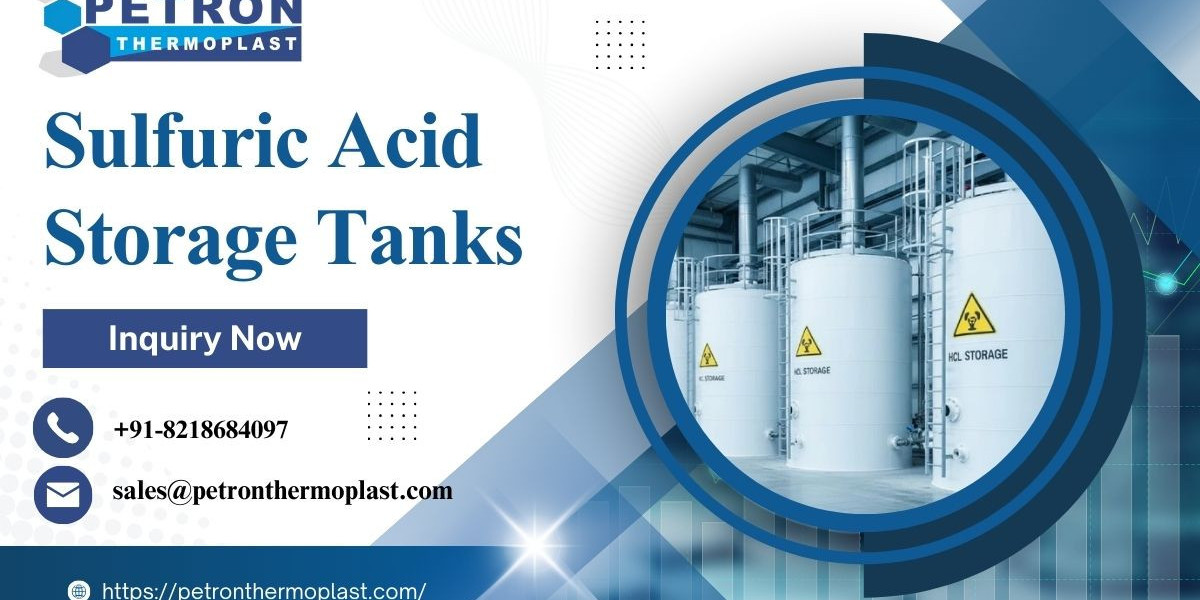

Sulfuric acid is one of the most widely used industrial chemicals, playing a critical role in industries such as chemicals, fertilizers, water treatment, mining, petrochemicals, and metal processing. Due to its highly corrosive nature, safe and reliable storage of sulfuric acid is essential for maintaining plant safety, operational efficiency, and regulatory compliance. Traditional storage solutions often struggle with corrosion, leakage, and high maintenance costs. This has driven the industry toward next generation sulfuric acid storage tanks designed specifically for modern industrial requirements.
Next generation sulfuric acid storage tanks combine advanced materials, precision engineering, and improved safety features to deliver superior performance, extended service life, and reduced operational risk. This blog explores the design, benefits, applications, and industrial value of next generation sulfuric acid storage tanks.
Challenges in Storing Sulfuric Acid
Sulfuric acid is extremely aggressive and can quickly degrade unsuitable materials. Improper storage can lead to:
- Severe corrosion and structural damage
- Acid leakage and environmental hazards
- Safety risks for personnel
- Costly downtime and repairs
- Non-compliance with industrial safety regulations
Conventional metal tanks often require frequent coatings, linings, or replacements to withstand sulfuric acid. Over time, these protective layers can fail, increasing the risk of leaks and contamination. Next generation storage tanks address these challenges with chemically resistant materials and advanced construction methods.
What Defines Next Generation Sulfuric Acid Storage Tanks?
Next generation sulfuric acid storage tanks are engineered using modern materials and fabrication technologies to ensure long-term reliability in corrosive environments. Unlike traditional designs, these tanks focus on corrosion resistance, structural integrity, safety, and lifecycle efficiency.
Key Characteristics Include:
- Use of corrosion-resistant thermoplastics or composite materials
- Precision fabrication for uniform wall thickness
- Enhanced joint and weld integrity
- Compatibility with industrial safety accessories
- Design optimized for long-term chemical exposure
Advanced Materials for Superior Corrosion Resistance
Material selection is the most critical factor in sulfuric acid storage. Next generation tanks are commonly manufactured using high-performance plastics and engineered materials that are inherently resistant to sulfuric acid.
Material Advantages:
- Excellent resistance to sulfuric acid at various concentrations
- Non-reactive and non-corrosive properties
- No need for internal coatings or linings
- Resistance to cracking, scaling, and permeation
- Long service life even under continuous exposure
By eliminating corrosion at the material level, these tanks significantly reduce maintenance requirements and improve operational safety.
Structural Design Innovations
Next generation sulfuric acid storage tanks are designed with a focus on strength, stability, and durability.
1. Reinforced Wall Construction
Uniform and reinforced wall thickness improves resistance to mechanical stress, hydrostatic pressure, and thermal variation.
2. Precision Fabrication
Advanced manufacturing techniques ensure accurate dimensions, smooth internal surfaces, and strong joints that prevent leakage.
3. Optimized Stress Distribution
Modern tank designs minimize stress concentration points, reducing the risk of deformation or cracking over time.
4. Leak-Proof Connections
Nozzles, flanges, and fittings are designed to maintain tight seals, even under fluctuating temperature and pressure conditions.
Enhanced Safety Features
Safety is a top priority when storing sulfuric acid. Next generation tanks incorporate features that improve containment and reduce risk.
Key Safety Enhancements:
- Chemical-resistant construction eliminating corrosion failure
- Compatibility with secondary containment systems
- Provision for level indicators and monitoring systems
- Venting options to manage pressure buildup
- Stable base design to prevent tipping or settlement
These features help industries meet safety regulations while protecting personnel and the environment.
Operational Benefits of Next Generation Tanks
Long Service Life
Advanced materials and precision engineering significantly extend tank lifespan compared to conventional storage solutions.
Reduced Maintenance Costs
Corrosion-free construction eliminates frequent inspections, recoating, and repairs.
Improved Reliability
Consistent performance minimizes the risk of leaks, shutdowns, or emergency maintenance.
Cost Efficiency Over Time
Although the initial investment may be higher than basic tanks, lower maintenance and longer service life result in better long-term value.
Easy Installation
Lightweight construction simplifies handling and installation compared to metal tanks.
Applications Across Industrial Sectors
Next generation sulfuric acid storage tanks are used across a wide range of industries:
Chemical Processing Plants
For storing sulfuric acid used in chemical reactions, production, and formulation processes.
Fertilizer Industry
Essential for phosphoric acid production and other fertilizer manufacturing processes.
Water and Wastewater Treatment
Used for pH control, chemical dosing, and treatment applications.
Mining and Metal Processing
Used in ore processing, leaching, and metal surface treatment.
Power and Industrial Utilities
Used for chemical treatment of cooling water and industrial processes.
Compliance with Industrial Standards
Next generation sulfuric acid storage tanks are designed to comply with relevant industrial safety and quality standards. Compliance ensures:
- Safe handling and storage of hazardous chemicals
- Reduced risk of regulatory penalties
- Improved confidence for EPC contractors and plant operators
- Suitability for domestic and export projects
Adherence to recognized standards ensures tanks are suitable for use in regulated industrial environments.
Why Industries Are Moving Toward Next Generation Storage Tanks?
Industrial facilities today prioritize safety, sustainability, and operational efficiency. Next generation sulfuric acid storage tanks align with these goals by:
- Minimizing environmental risk
- Reducing material wastage and replacements
- Supporting long-term operational planning
- Lowering total cost of ownership
As regulations become stricter and safety expectations increase, next generation storage solutions are becoming the industry standard.
Why Choose Petron Thermoplast for Sulfuric Acid Storage Tanks?
Petron Thermoplast is a trusted manufacturer of next generation sulfuric acid storage tanks for industrial use, offering solutions engineered for durability, safety, and performance. With advanced fabrication capabilities and strict quality control, Petron Thermoplast delivers storage tanks that meet the demanding requirements of modern industries.
Key Advantages:
- High-quality corrosion-resistant materials
- Precision fabrication and robust construction
- Custom tank capacities and configurations
- Compatibility with industrial safety systems
- Proven performance in industrial environments
Conclusion
Next Generation Sulfuric Acid Storage Tanks for Industrial Use represent a significant advancement in chemical storage technology. By combining corrosion-resistant materials, innovative design, and enhanced safety features, these tanks by Petron Thermoplast offer a reliable and cost-effective solution for handling one of the most aggressive industrial chemicals.
For industries seeking long-term safety, reduced maintenance, and dependable performance, investing in next generation sulfuric acid storage tanks is a strategic decision that supports operational efficiency and regulatory compliance.