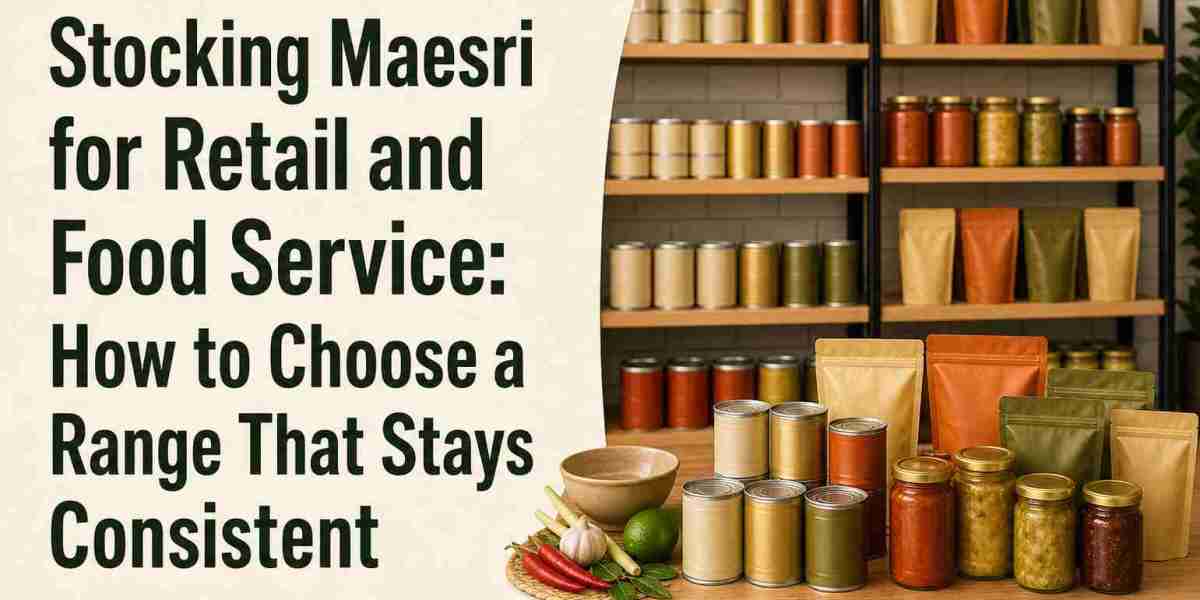

Thai pantry lines are easy to overbuy and surprisingly easy to misuse if the range isn’t chosen with your workflow in mind.
For many buyers, Maesri product selection is really about getting consistent flavour outcomes with fewer SKUs, fewer substitutions, and less last-minute scrambling.
The goal is repeatable prep, not a shelf that looks impressive.
Why range choices matter in commercial terms
A “good range” is the one your team can use correctly every time, even when the kitchen is slammed or the store is short-staffed.
Range decisions are operational decisions.
If the same dish tastes different depending on who’s on shift, your range is too wide, your process is unclear, or both.
In retail, range decisions also shape basket behaviour: shoppers want obvious “next steps” (paste + coconut milk + noodles/rice) without needing a long explanation.
Common mistakes that cause waste and inconsistency
Most problems start before the carton is opened.
The biggest mistake is stocking too many variants at once, then using whichever tin is closest, which quietly changes heat, salt, and aroma from batch to batch.
A second mistake is mismatching pack size to throughput, so open tins linger too long, get handled inconsistently, or end up “topped up” without any tracking.
Some venues treat curry paste like a finished sauce and skip tasting and adjustment, which makes results wildly dependent on who’s cooking.
Retailers sometimes range items without a planogram logic (core staples vs “exploration”), which leads to slow-moving SKUs expiring while the fast movers are always out of stock.
Finally, many buyers don’t set substitution rules, so staff replace a missing SKU with “something similar,” and nobody realises the impact until customers comment.
Decision factors for choosing a core range
Choose SKUs that match your throughput, not your ambition.
Start with use-case clarity: are you supporting quick-service bowls, a small Thai menu, batch cooking for meal prep, or retail pantry shoppers who want weekend cooking projects?
Then decide how you’ll communicate heat expectations internally (kitchen) or externally (retail), because “mild/medium/hot” can be interpreted differently across teams.
Think in building blocks: a small number of pastes that cover your most common flavour profiles will usually outperform a sprawling selection that’s hard to manage.
Consider how the products will be used in recipes: will you standardise grams per serve, or will each cook “go by feel” and adjust on the fly?
Also consider training load: if a SKU requires a specific method to taste right, make sure that method is documented and realistic on your busiest day.
How to build a simple core range
A practical approach is to create a Core / Optional / Seasonal structure.
Core items are the ones that cover your highest-volume dishes or highest-turnover retail needs, and they should be in stock all the time.
Optional items are there to expand the menu or the shelf for shoppers who want variety, but they shouldn’t break your system if they’re temporarily unavailable.
Seasonal items are for limited-time offers or special promos, and they should have a clear start/end date and a clear exit plan so they don’t become slow-moving leftovers.
A small, well-run range beats a large, poorly rotated one.
Making flavour consistent across shifts and sites
If the paste can’t be found quickly, it won’t be used consistently.
Write one baseline method for each core paste-based dish: paste amount, cooking order (what goes in first), coconut milk ratio, holding/reheat rules, and what “correct” tastes like.
Build a single tasting checkpoint into the process, because small adjustments (salt, sweetness, acidity) are easier to control than trying to “fix” a finished batch.
If you run multiple sites, treat the recipe spec like a brand asset: one master version, one change log, and no quiet tweaks without sign-off.
For retail, consistency comes from shelf logic: cluster complementary items and keep the “entry point” paste(s) clearly visible so shoppers don’t feel lost.
Storage, rotation, and handling that protect quality
Dry-goods discipline matters even for shelf-stable products, because heat, light, and poor rotation will still degrade outcomes.
Set a receiving routine that checks dents, damaged cartons, and date codes, then rotate stock front-to-back so the oldest product is easiest to grab.
In kitchens, create an “open-stock rule” that says how tins are labelled (opened date/time), where they’re stored, and how long they’re kept once opened.
In retail back rooms, avoid stacking that crushes tins or cartons, and keep slower-moving optional SKUs physically separate so staff don’t accidentally re-order them just because they’re in the way.
Consistency is the real premium.
A simple first-actions plan for the next 7–14 days
Days 1–2: List your top 5 dishes (or top 5 customer use-cases) that rely on curry pastes or Thai pantry foundations, then rank them by volume and margin impact.
Days 2–3: Define a Core/Optional structure and cap the first rollout (for example, 3–5 core SKUs max), so your system stays manageable.
Days 3–5: Run a controlled trial for each core item: same method, two different staff members, taste notes recorded, and one “final spec” agreed.
Days 5–7: Document the baseline method and a single tasting checkpoint, then place it where prep happens (not in a folder).
Days 7–10: Set storage rules: receiving checks, rotation habits, and open-tin labelling with clear discard rules.
Days 10–14: Set reorder triggers (minimum stock on hand) and substitution rules (what can replace what, and when to pause sales instead).
Operator Experience Moment
The fastest way to lose confidence in a product range is letting it drift without anyone noticing.
When a venue locks a small core range and documents one simple method, complaints usually drop because outcomes stop changing by shift.
Most “quality” issues turn out to be a control issue.
Local SMB mini-walkthrough (Australia-wide)
A suburban takeaway group standardises three core pastes that cover their best-selling bowls and curries.
They run a two-cook trial and agree one baseline method with a tasting checkpoint.
They label open tins with date/time and store them in one dedicated spot to prevent “mystery tins.”
They set a reorder trigger tied to weekly usage so they don’t run out during weekend peaks.
They keep optional SKUs for limited-time specials and only reorder them if the promo repeats.
They review one month of feedback and adjust the spec once, then lock it again.
Practical opinions
Standardise a core range before you expand.
If you can’t train it in five minutes, it won’t be followed under pressure.
Set substitution rules in writing, or accept flavour drift as the default.
Key Takeaways
Build a Core/Optional range so high-volume outcomes stay stable.
Match pack choices and SKUs to throughput and workflow, not just catalogue variety.
Lock in one baseline method and a single tasting checkpoint to keep flavour consistent across shifts.
Use simple controls: rotation, open-stock labelling, reorder triggers, and substitution rules.
Common questions we get from Aussie business owners
Q1: How many SKUs should we start with if we’re new to Thai pantry lines?
Usually fewer is better at the start, because consistency beats variety when you’re building routines. Next step: choose 3–5 core items that cover your highest-volume menu items (or the most common shopper use-cases) and trial them for two weeks before adding optional lines. In most cases across Australia, smaller teams benefit from tighter ranges because training and staff turnover make complexity expensive.
Q2: Should we stock different pastes for different chefs, or force one standard?
It depends on whether you’re running a chef-led venue where variation is the product, or a repeatable operation where consistency is the product. Next step: decide what customers expect (signature variation vs predictable taste), then document either one baseline or approved variations with clear names and uses. In most Aussie multi-site or high-volume setups, standardising core recipes reduces complaints and waste.
Q3: What’s the simplest way to stop flavour drifting between shifts?
Usually it’s one written method plus one tasting checkpoint, because it makes the adjustment step consistent instead of improvised. Next step: write the paste amount, coconut milk ratio, and the order of cooking steps on a prep card, then require a quick taste-and-adjust step before service. In many Australian kitchens with casual staff, a visible prep card works better than verbal handover.
Q4: How do we avoid slow-moving SKUs tying up cash in retail or storerooms?
In most cases you need a clear “core vs optional” rule and a reorder trigger that only applies to core items. Next step: separate optional SKUs physically and track their sell-through monthly, then delist or promo-clear anything that doesn’t meet a simple threshold. In Australia-wide retail, delivery timing and shelf space are always constrained, so slow movers should be treated as a deliberate choice, not an accident.