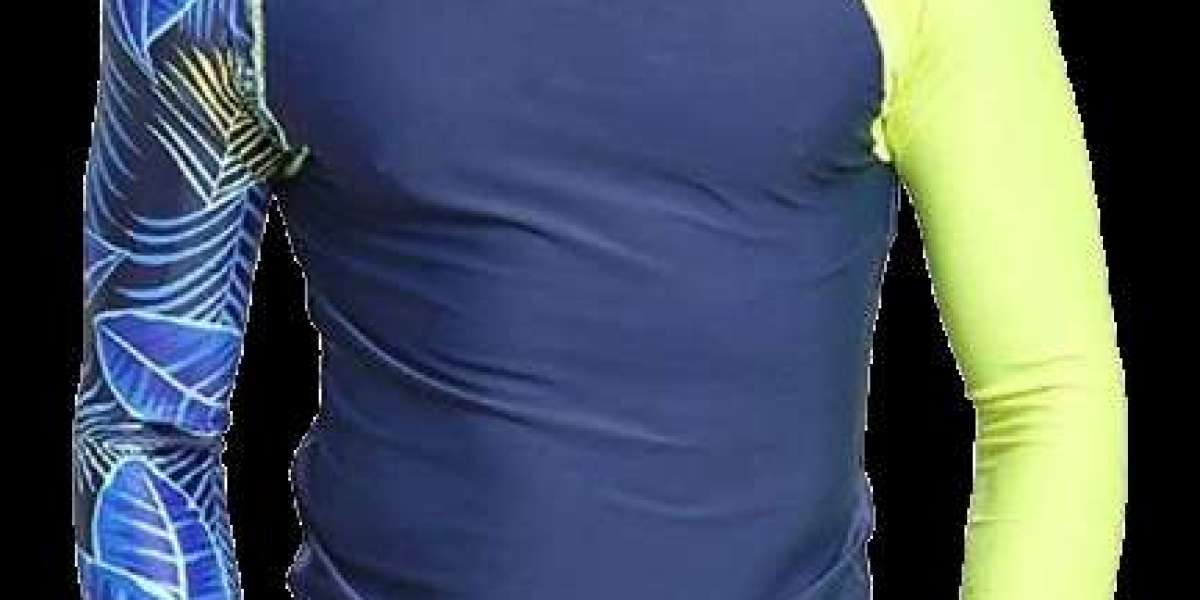

Water sports brands face strict performance demands. Customers expect UV protection, stretch recovery, fast drying, and long-lasting shape retention. At the same time, production timelines are shorter and quality standards are higher across global markets.
Many factories treat rash guard shirts as basic sports tops. This results in weak seam elasticity, fading prints, low UV resistance, and fabric that loses compression after repeated water exposure. For B2B buyers, these issues increase returns and harm brand credibility.
Without specialized manufacturing systems, scaling a rash guard collection becomes risky. Engineers and sourcing managers need a partner that understands technical fabrics, compression mapping, and durability testing.
What a Custom Performance Rash Guard Shirt Is
A custom performance rash guard shirt is a technical garment designed for sun protection, abrasion resistance, and water performance. It is widely used in surfing, swimming, diving, and other outdoor water activities.
The rash guard shirt production system focuses on combining high-stretch fabrics with reinforced seam construction. Unlike regular activewear, it requires UV-certified textiles and water-resistant finishes.
By integrating fabric engineering and controlled assembly processes, manufacturers ensure consistent performance across small and bulk production runs.
How Rash Guard Shirt Manufacturing Works
Technical Fabric Selection
Production starts with polyester-spandex or nylon-elastane blends. These materials provide:
UPF 30–50+ sun protection
Four-way stretch
Chlorine and saltwater resistance
Moisture-wicking capability
Quick-dry performance
Fabric testing includes stretch recovery measurement and colorfastness verification before bulk cutting.
Pattern Engineering and Fit Development
Accurate grading ensures the shirt fits securely without restricting movement. Digital pattern systems help reduce manual errors and maintain consistency across sizes.
Fit testing evaluates:
Shoulder flexibility
Chest compression balance
Sleeve length stability
Neckline comfort
This structured approach prevents sizing complaints after market launch.
Advanced Seam Construction
Rash guard shirts require reinforced stitching to handle stretching and friction. Manufacturers use:
Flatlock seams to reduce skin irritation
Double-needle hems for durability
Reinforced shoulder panels
Elastic binding at edges
These construction techniques increase garment lifespan.
Problems in Traditional Production Methods
Traditional garment factories often use untreated fabrics and standard overlock stitching. This creates several weaknesses:
Limited UV protection
Seam breakage during heavy use
Fabric transparency when wet
Slow drying time
Reduced elasticity after washing
Such issues reduce product quality and increase replacement costs for retailers and distributors.
How Modern Manufacturing Solves These Issues
A specialized rash guard shirt production process eliminates these weaknesses through controlled engineering and quality checks.
Solutions include:
Certified UPF fabric sourcing
Multi-stage quality inspection
Pre-production sample approval
Compression and elasticity testing
Strict shrinkage control
This ensures each shipment meets performance expectations.
Key Features B2B Buyers Should Evaluate
When sourcing rash guard shirts, focus on these features:
OEM and ODM capability
Custom sublimation printing
Anti-chafe seam technology
Eco-friendly fabric options
Flexible MOQ for startups
In-house sampling and design team
These features support innovation while maintaining consistent quality.
Comparison: Standard Sports Shirt vs Performance Rash Guard Shirt
| Criteria | Standard Sports Shirt | Performance Rash Guard Shirt |
|---|---|---|
| UV Protection | Minimal | UPF 30–50+ certified |
| Seam Type | Basic overlock | Flatlock reinforced |
| Water Resistance | Moderate | Chlorine & salt resistant |
| Stretch Recovery | Limited | Four-way recovery |
| Durability | Average | Performance tested |
This comparison shows why technical manufacturing is critical for water sports apparel.
Real Applications Across Markets
Custom rash guard shirts serve multiple segments:
Surf and Water Sports Brands
Require abrasion resistance and strong UV protection for extended outdoor exposure.
Swim Training and Open Water Events
Athletes use rash guards for sun protection and reduced drag.
Diving and Snorkeling Suppliers
Need quick-dry base layers under wetsuits.
Private Label Retail Brands
Require consistent sizing, vibrant print durability, and reliable bulk production.
Each segment requires strict quality standards and technical fabric control.
Why Manufacturers Prefer Specialized Rash Guard Production
Manufacturers and product engineers prefer specialized systems because they offer:
Lower defect rates
Stable production lead times
Reliable fabric sourcing
Transparent sampling procedures
Scalable production capacity
These benefits improve long-term partnerships between factories and global brands.
Reliable production also protects brand reputation and supports repeat orders.
How to Choose the Right Rash Guard Shirt Manufacturer
Selecting the right manufacturing partner requires technical review.
Verify UV Certification
Request UPF testing documentation.
Inspect Fabric Quality
Evaluate stretch recovery, pilling resistance, and chlorine endurance.
Review Seam Technology
Ensure flatlock stitching and reinforced panels are standard.
Test with a Pilot Order
Place a small order to evaluate consistency before scaling.
A structured evaluation reduces risk and ensures smooth product launches.
Conclusion
The demand for high-performance water sports apparel continues to grow. Brands cannot depend on standard garment factories to meet the technical requirements of UV protection, stretch recovery, and seam durability.
Custom rash guard shirt manufacturing provides a performance-focused solution. Through advanced fabric engineering, precision pattern grading, and reinforced construction, it delivers durable and comfortable garments for demanding environments.
For B2B buyers, engineers, and private label brands, investing in specialized rash guard production ensures product reliability, customer satisfaction, and long-term market success.