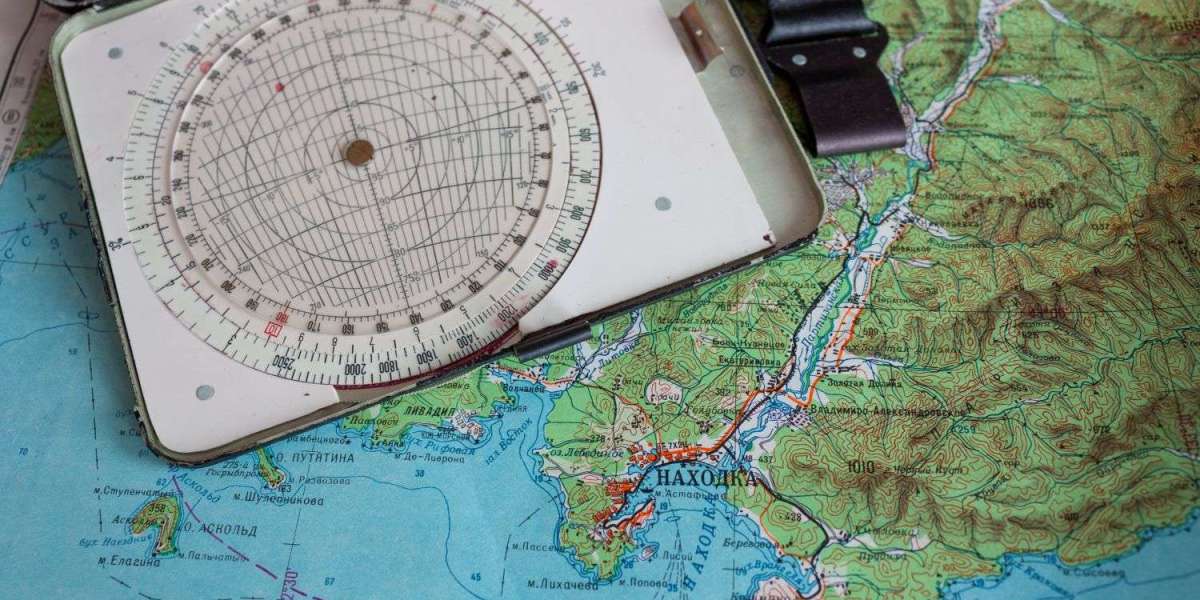

The concept of knowing your exact position on Earth has been a human obsession for centuries. For ancient mariners, it meant navigating by the stars. For land explorers, it meant relying on hand-drawn maps and compasses. Today, it means pulling out a smartphone and getting turn-by-turn directions. This leap is thanks to the Global Positioning System (GPS), a technology that feels modern but has roots stretching back to the dawn of the Space Race.
The story of GPS begins not with a desire to find the nearest restaurant, but with the launch of a single, beeping satellite. In 1957, the Soviet Union launched Sputnik 1, the world’s first artificial satellite. As it orbited the Earth, scientists at the Johns Hopkins Applied Physics Laboratory (APL) in the United States noticed something interesting. They could pinpoint Sputnik's location in orbit by analyzing the Doppler effect of its radio signals.
This discovery sparked a revolutionary idea: if they could track a satellite from the ground, could they do the reverse? Could a person on the ground figure out their own location by listening to signals from satellites? This pivotal question laid the groundwork for answering what is gps navigation and set in motion a decades-long journey to create a global positioning system.
From this simple observation grew a series of experimental navigation systems. The U.S. Navy developed the first true satellite navigation system, called TRANSIT, in the early 1960s. It was designed to help submarines and ships pinpoint their location accurately. While groundbreaking, TRANSIT was slow and could only provide a location fix once every hour or so. The military needed something faster, more accurate, and available 24/7. This need culminated in the creation of the system we now know as GPS.
The Birth of GPS: A Cold War Project
The modern GPS program was born in 1973 out of a meeting at the Pentagon. The U.S. Department of Defense wanted to consolidate several different and sometimes-competing satellite navigation concepts into a single, robust system. This new project was initially named NAVSTAR GPS (Navigation System with Timing and Ranging Global Positioning System).
Key Milestones in Development
The development was a massive undertaking, with the first prototype satellite launched in 1978. The primary goal was military. GPS would allow soldiers, ships, and aircraft to know their exact position in any weather, anywhere on the globe. This capability was seen as a significant strategic advantage during the Cold War. It could guide troops on the ground and improve the accuracy of missiles.
The full constellation of 24 satellites, which is the minimum required for global coverage, was finally completed in 1993. The system was declared fully operational in 1995. For its first decade, the best GPS signal was reserved exclusively for military use.
Selective Availability: The Two Tiers of GPS
A feature called "Selective Availability" (SA) was intentionally built into the system. It degraded the accuracy of the civilian signal, limiting it to about 100 meters. The military signal, meanwhile, remained highly accurate. This was done out of a concern that hostile forces could use GPS to their advantage against the United States. This two-tiered system remained in place for years, limiting the technology's usefulness for the general public.
From Military Tool to Public Utility
The transition of GPS from a restricted military asset to a global public utility happened gradually, often spurred by unexpected events.
The Korean Air Lines Flight 007 Incident
In 1983, a tragic event highlighted the potential civilian benefits of GPS. Korean Air Lines Flight 007, a passenger jet, strayed into Soviet airspace and was shot down, killing all 269 people on board. In the aftermath, President Ronald Reagan announced that GPS would be made available for civilian use once it was completed to help prevent such navigational errors in the future.
The Gulf War and Early Civilian Devices
The first Gulf War in 1990-1991 was the first major conflict where GPS was widely used. It proved invaluable for navigating the featureless desert landscape. The success of GPS during the war also brought it to public attention. Soon after, companies like Magellan and Trimble began producing the first handheld commercial GPS receivers. These early devices were bulky, expensive (costing thousands of dollars), and had limited functionality, but they were a glimpse of the future.
The End of Selective Availability
The true turning point for civilian GPS came on May 2, 2000. On that day, President Bill Clinton ordered that Selective Availability be turned off. Overnight, the accuracy of civilian GPS receivers improved tenfold, jumping from 100 meters to about 10 meters.
This single policy change unleashed a massive wave of innovation. Suddenly, GPS was accurate enough for car navigation, hiking, and countless other commercial applications. The market for GPS devices exploded, and the technology began to find its way into a wide array of products.
The Evolution of the GPS Receiver
The hardware used to receive GPS signals has evolved as dramatically as the system itself.
Early Handhelds and Car Systems
The first consumer GPS devices of the 1990s and early 2000s were dedicated units. You had handheld devices for hiking and marine navigation, and dashboard-mounted systems for cars. Companies like Garmin and TomTom became household names, selling millions of "personal navigation devices" (PNDs). These devices featured small screens, pre-loaded maps, and a synthesized voice that would tell you when to turn. For the first time, drivers didn't have to struggle with paper maps.
The Smartphone Revolution
The biggest evolution came with the integration of GPS chips into smartphones. In the mid-2000s, phones started to include GPS capabilities, but it was the launch of the iPhone in 2007 and the subsequent rise of app stores that truly changed the game.
Navigation was no longer a feature of a separate, expensive device; it was an app on the phone you already carried. Google Maps, Waze, and Apple Maps offered real-time traffic data, user reviews, and constant updates, making dedicated PNDs obsolete for most people.
Miniaturization and Modern Applications
Today, GPS receivers are incredibly small, cheap, and power-efficient. They are embedded in everything from smartwatches and fitness trackers to pet collars and shipping containers. This miniaturization has opened up entirely new uses for the technology that were unimaginable just two decades ago. Drones use GPS to hold their position and follow pre-programmed flight paths. Farmers use it for precision agriculture to optimize crop yields. Scientists use it to track animal migrations and monitor geological shifts.
Modernization and the Future of Navigation
The GPS system we use today is not the same one that was launched in the 1990s. It is constantly being upgraded through a program of modernization.
Newer generations of GPS satellites (known as GPS III) are being launched with more powerful and more accurate signals. They are more resistant to jamming and are designed to work seamlessly with other global navigation satellite systems (GNSS).
Many modern receivers don't just listen for GPS; they also use signals from other constellations like Russia’s GLONASS, Europe’s Galileo, and China’s BeiDou. By using signals from multiple systems, your device can see more satellites at once, leading to faster position fixes and better accuracy, especially in challenging environments like "urban canyons" between tall buildings.
The history of GPS is a story of how a military technology, born from Cold War competition, was transformed into an indispensable global utility. It's a testament to how a single, brilliant idea—that you could find your location by listening to satellites—could fundamentally change how we interact with the world. The journey from Sputnik's beep to the interactive map in your pocket has reshaped society in countless ways. As we continue to explore what is gps navigation, we realize its evolution is far from over, with future advancements promising even greater accuracy and integration into our daily lives.