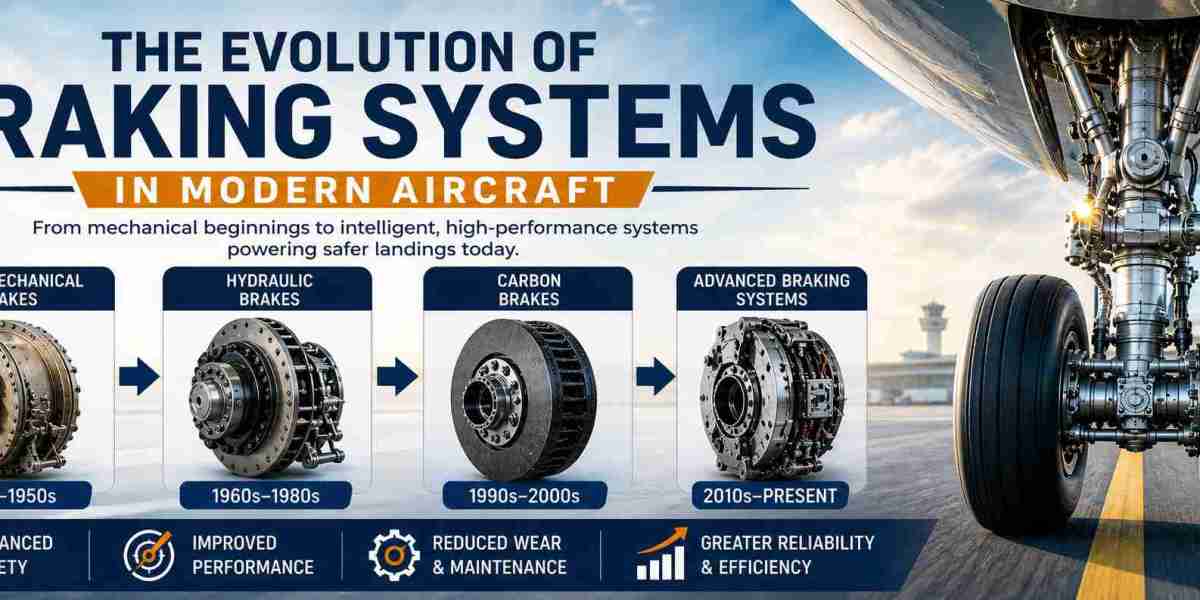

In the aviation industry, improving aircraft safety and efficiency remains a constant priority. While numerous technological advancements have contributed to this goal, braking systems stand out as critical components that ensure controlled deceleration and safe landings. Over time, aircraft braking technology has evolved significantly, transitioning from conventional designs to advanced systems that incorporate innovative materials and modern engineering solutions.
In earlier years, aircraft primarily relied on drum brakes to manage ground speed, similar to those used in automobiles. However, their drawbacks such as added weight and limited heat dissipation led to the widespread adoption of disc brakes. Modern disc brake systems are equipped with advanced thermal management features, including cooling channels and forced air circulation, which help dissipate the intense heat generated during braking. This not only improves performance but also extends the lifespan of braking components.
A major advancement in this field is the development of anti-skid braking systems. These systems prevent wheel lock-up during landing, takeoff, or taxiing, helping pilots maintain control and reducing the risk of accidents. By continuously monitoring wheel speed and adjusting brake pressure accordingly, anti-skid systems ensure optimal traction under varying conditions.
Another significant innovation is the use of carbon brakes. Compared to traditional steel brakes, carbon-based systems offer superior benefits in terms of weight reduction, durability, and heat resistance. Their lightweight nature contributes to improved fuel efficiency, while their ability to withstand extreme temperatures ensures consistent performance in demanding operational environments. As a result, carbon brakes have become a standard in modern aviation.
Looking ahead, engineers are exploring advanced materials such as ceramics, known for their exceptional resistance to heat and wear. These materials have the potential to further enhance braking efficiency and reliability, especially as aircraft continue to grow in size and performance capabilities.
In addition to material advancements, digital technologies have transformed braking systems through the integration of electronic controls. Electronic Brake Control Systems (EBCS) use sensors and actuators to precisely regulate braking force, enabling smoother and more controlled landings while optimizing overall system performance.
In summary, the evolution of aircraft braking systems reflects a continuous pursuit of innovation, safety, and efficiency. From the shift to disc brakes and the introduction of anti-skid technology to the adoption of advanced materials and electronic controls, each development has played a vital role in enhancing modern aviation.
Expansive Distribution supports these advancements by offering a wide range of aircraft brake components and related aerospace parts. With an inventory of over 2 billion new, used, obsolete, and hard-to-find items, the platform ensures that customers can quickly locate the parts they need. Through user-friendly search tools and curated catalogs, sourcing becomes simple and efficient. Customers can also submit RFQ forms to receive tailored quotes within minutes, while a dedicated team remains available around the clock to provide assistance and ensure a seamless procurement experience.