
Balancing professional responsibilities with academic pursuits is one of the greatest challenges for mid- to senior-career professionals. An MBA designed for working professionals addresses this by offering programs that integrate learning with ongoing responsibilities rather than requiring participants to step away from their careers.
The structure of these programs reflects the unique needs of professionals who aim to enhance leadership capabilities, broaden strategic understanding, and apply concepts immediately in real-world contexts. Understanding this structure helps prospective students identify the best MBA for working professionals in India that aligns with both career stage and learning objectives.
Modular Learning to Accommodate Work Commitments
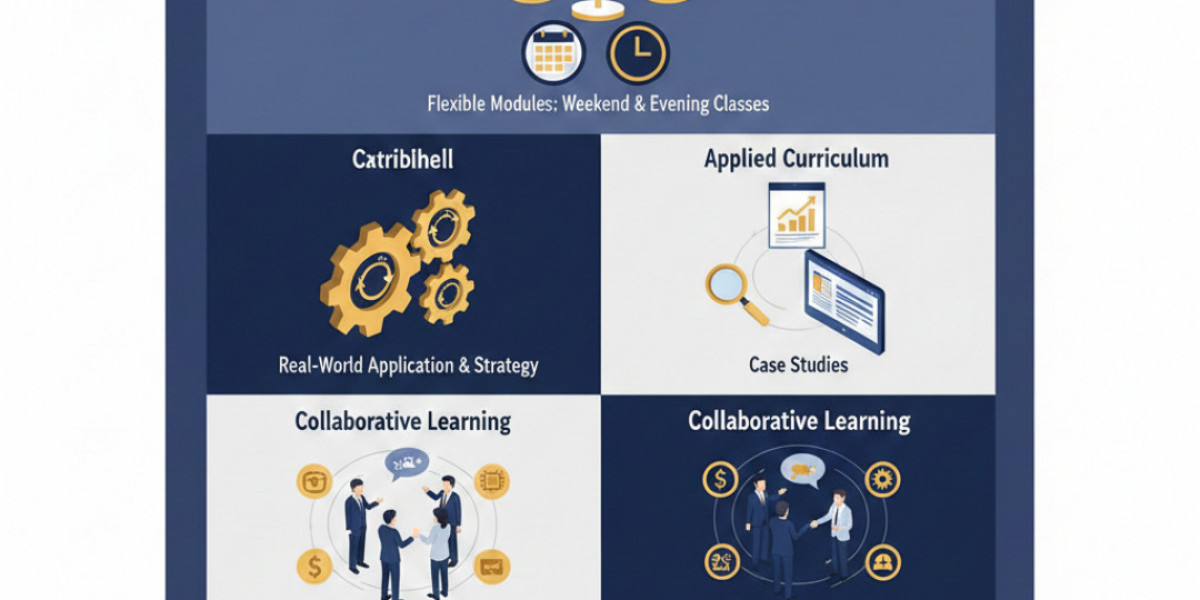
One of the defining features of MBA programs for working professionals in India is modular learning. Classes are often scheduled in a format that allows participants to continue full-time employment.
Common approaches include:
Weekend classes: Sessions typically held on Saturdays and Sundays to reduce disruption to the workweek.
Evening sessions: Flexible timing accommodates professionals with daytime commitments.
Short residencies or intensive modules: Focused multi-day sessions provide concentrated learning without requiring extended absence from work.
These structures ensure that learning complements rather than competes with professional responsibilities. Professionals can immediately test concepts learned in class against real challenges in their workplace, reinforcing practical understanding.
Curriculum Designed for Application
MBA programs for working professionals prioritize applied learning over theoretical memorization. Courses are structured to reflect the complexities and decisions faced by managers in contemporary organizations.
Key aspects of applied curricula:
Case studies: Real-world business problems encourage strategic thinking and analysis.
Simulations and projects: Participants can practice decision-making in controlled environments that mimic workplace dynamics.
Integrated learning: Subjects such as finance, operations, marketing, and leadership are linked to showcase interdependencies in business decisions.
For example, a project on market expansion might require participants to consider financial viability, operational feasibility, and leadership implications simultaneously. This approach reflects the interconnected realities of senior professional roles and demonstrates why choosing the best MBA for working professionals in India matters for practical career application.
Cohort-Based Learning and Peer Engagement
The peer group is a crucial part of MBA programs for working professionals. Cohorts often comprise participants from diverse industries, functions, and organizational levels, creating a rich environment for collaborative learning.
Benefits of cohort-based learning:
Exposure to varied perspectives on similar business challenges
Opportunities to compare approaches across industries
Enhanced networking and knowledge sharing
Learning from peers’ successes and mistakes
Engaging with peers allows participants to reflect on their own management style and assumptions. It also builds professional networks that can provide long-term strategic value.
Blended Learning Models
To further accommodate working professionals, many MBA programs in India employ blended learning models that combine in-person sessions with online components. This approach allows for greater flexibility and maximizes access to course material.
Features of blended learning include:
Online lectures and resources: Professionals can review material at their own pace.
Virtual discussion forums: Enable interaction with peers and faculty even outside class hours.
Periodic in-person workshops: Focus on hands-on exercises, simulations, or networking events.
This combination ensures that participants can maintain engagement with the curriculum while managing professional commitments, effectively turning learning into an ongoing, adaptable process.
Assessment Methods Aligned with Professional Roles
Assessment in these programs is designed to reinforce practical skills and leadership thinking rather than rote knowledge. Evaluations often combine individual and team-based assessments to reflect workplace realities.
Common assessment methods include:
Case analyses and presentations: Test strategic thinking and communication skills.
Group projects: Encourage collaboration and collective problem-solving.
Reflections and applied assignments: Participants demonstrate how classroom concepts translate to real-world challenges.
These methods help participants build confidence in applying analytical frameworks, decision-making models, and leadership principles in professional settings, which is why selecting the best MBA for working professionals in India requires understanding program structure and learning outcomes.
Flexibility and Career Integration
An essential characteristic of these MBA programs is their flexibility, which allows participants to tailor their learning to specific career goals. Elective courses, industry-focused projects, and personal development modules are often available to address the unique needs of working professionals.
Practical advantages include:
Selecting electives that align with industry or functional focus
Undertaking capstone projects linked to current work challenges
Applying leadership and strategy insights in real time for immediate impact
This integration ensures that learning contributes directly to professional growth rather than being a purely academic exercise.
Faculty With Professional and Academic Insight
Faculty in MBA programs for working professionals often combine academic expertise with practical industry experience. This dual perspective ensures that concepts are grounded in real-world business realities.
Faculty contributions typically include:
Mentoring participants on decision-making and leadership
Facilitating applied projects and simulations
Providing insight into sector-specific challenges and trends
The focus is on helping participants develop both strategic understanding and applied skills, bridging theory and practice.
Key Takeaways on Academic Structure
MBA programs designed for working professionals in India prioritize the following:
Learning schedules that accommodate professional responsibilities
Curricula emphasizing applied, decision-oriented learning
Peer engagement leveraging diverse professional experiences
Blended learning models combining in-person and online components
Assessment methods aligned with professional challenges
Flexibility allowing alignment with career goals
Faculty with practical and academic insights
These structural elements ensure that participants can learn effectively while continuing to work, enhancing leadership capability and strategic perspective simultaneously.
Conclusion
For mid- and senior-career professionals, the best MBA for working professionals in India is one that integrates learning with career realities. Academic structures that combine modular schedules, applied curricula, peer-based learning, and blended models allow participants to enhance leadership, decision-making, and strategic skills without pausing professional momentum.
The design of these programs emphasizes practical application, reflective learning, and flexibility, ensuring that education contributes to both immediate and long-term professional growth.
FAQs
Q1. Who should consider an MBA for working professionals in India?
Ans. Mid- and senior-level professionals seeking to enhance leadership and strategic capabilities without leaving their jobs.
Q2. How are these programs structured differently from traditional MBAs?
Ans. They use modular schedules, blended learning, applied assessments, and peer-based projects to accommodate working professionals.
Q3. Can learning be applied immediately in the workplace?
Ans. Yes. Projects, case studies, and reflections are designed for direct application to real business challenges.
Q4. How do peers contribute to learning?
Ans. Diverse cohorts provide varied perspectives, encourage collaboration, and broaden strategic thinking.
Q5. What role do electives play?
Ans. Electives allow participants to focus on industry-specific knowledge or functional specialization aligned with career goals.