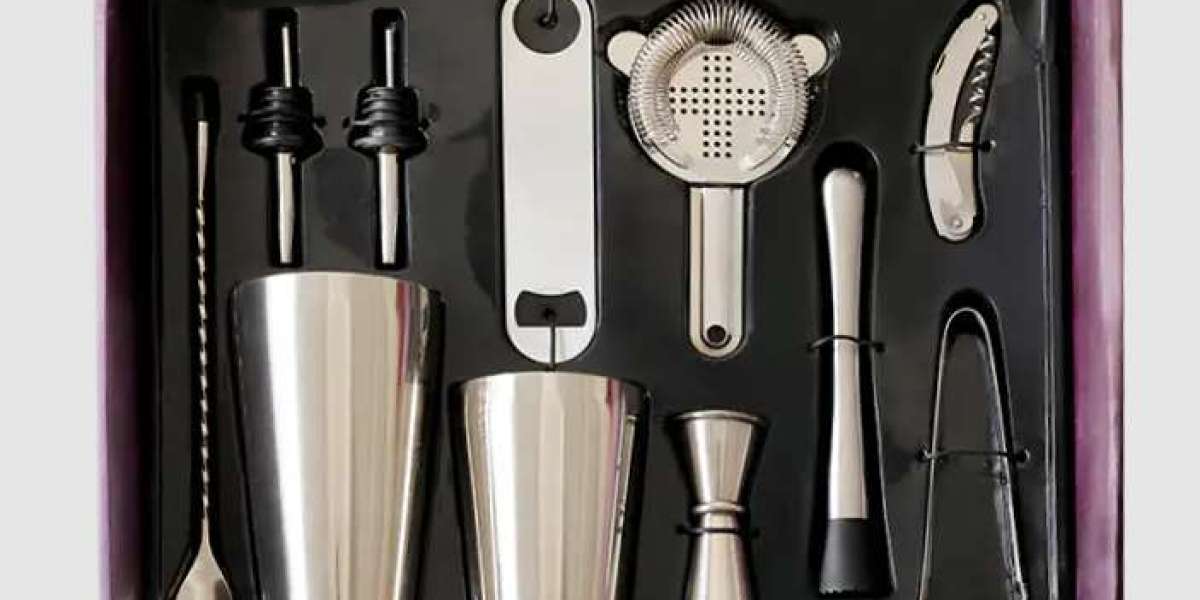

In global kitchenware and hospitality supply chains, OEM customization plays a significant role in product differentiation. A barware kit, particularly a stainless steel bartender kit, is often adapted for different regional preferences, pricing strategies, and usage environments.
One of the key advantages of OEM customization is flexibility in configuration. Manufacturers can adjust the number of included tools based on market demand. For example, entry-level kits may include four essential tools, while professional-oriented versions may include seven or more. This tiered structure allows distributors to target both casual users and semi-professional bartenders without redesigning core tooling systems.
Material consistency supports this adaptability. Stainless steel provides stable forming characteristics, which makes it suitable for mass production with controlled variation. Whether producing 10,000 or 100,000 units, maintaining consistent wall thickness and joint precision is achievable through standardized stamping and polishing processes. This reliability is one reason why stainless steel bartender kit designs are widely used in OEM supply chains.
Regional market differences also influence product configuration. In European markets, compact and minimalist barware kits are often preferred due to space constraints. In contrast, North American buyers may prioritize larger sets with additional accessories such as mixing glasses or bottle openers. OEM systems allow manufacturers to respond to these variations without altering core production infrastructure.
Packaging customization further enhances competitiveness. A barware kit intended for retail shelves may require gift-style packaging, while e-commerce-focused products often prioritize shipping durability. Inserts made from EVA foam or molded pulp are commonly used to protect stainless steel components during transit. Branding elements such as embossed logos or printed instruction cards also contribute to perceived product value.
Technological improvements in manufacturing are shaping future development. Laser cutting and automated polishing systems have increased precision while reducing manual labor dependency. These advancements help maintain uniform surface quality across large production batches. Additionally, automated inspection systems can detect surface defects or dimensional inconsistencies early in the production line.
Digital integration is also influencing product evolution. Some manufacturers are experimenting with QR codes included in packaging, linking users to cocktail recipes or instructional videos. This approach extends the functionality of a barware kit beyond physical tools and adds a learning component for beginners.
Looking ahead, material innovation may introduce hybrid structures combining stainless steel with silicone grips or composite handles. These changes aim to improve ergonomics without compromising durability. At the same time, sustainability considerations may drive further optimization in recycling processes and packaging reduction.
The stainless steel bartender kit remains central to these developments due to its balance of durability, manufacturability, and adaptability. As global demand continues to diversify, OEM-driven customization will likely remain a key factor shaping how barware kits evolve across different markets.