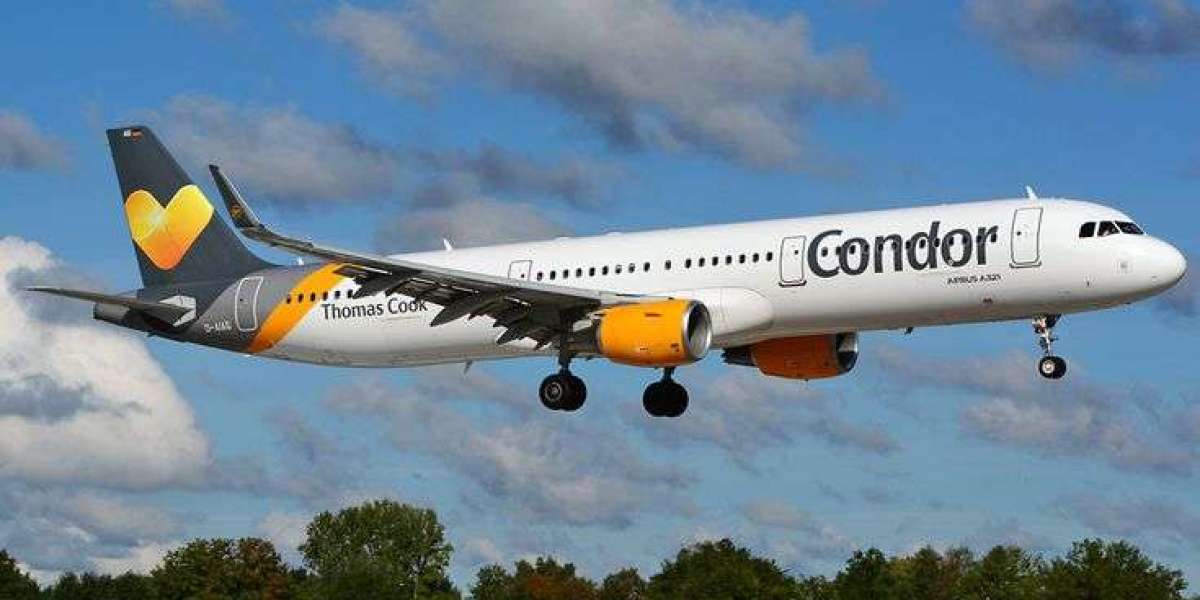

If you've been searching for transatlantic flights and Condor keeps popping up, you might be wondering where this airline actually comes from and what its background looks like. It doesn't have the name recognition of Lufthansa or the global footprint of American carriers, but it has a long history that goes back further than most people realize. So where is Condor Airlines from, and why does that matter for American travelers who are considering booking with them? Here's the full story.
Founded in West Germany in 1955
The answer to where is Condor Airlines from starts in postwar West Germany. The airline was established in 1955 under the name Deutsche Flugdienst, making it one of the older airlines still operating in Europe today. It was founded in Frankfurt with a straightforward purpose, to give German travelers access to affordable leisure travel at a time when flying was just beginning to become accessible to ordinary people rather than just the wealthy.
The name Condor came a few years later. In 1961, Deutsche Flugdienst merged with another German charter carrier called Condor Luftreederei, and the Condor name stuck. The condor bird, a large soaring bird associated with freedom and long distances, fit the brand identity of an airline built around leisure travel and getting people somewhere they genuinely wanted to go.
From the very beginning, the airline was tied to the idea of vacation travel rather than business or utility flying. That original purpose has shaped how the airline operates to this day, and understanding it helps explain a lot about what Condor is and is not as a carrier.
Original Role as a Charter Holiday Carrier
For most of its early history, Condor operated as a charter airline. That meant it didn't sell individual seats directly to the public the way scheduled carriers do. Instead, it operated flights contracted by tour operators who bundled the airfare together with hotels, transfers, and other vacation components to sell as package holidays.
This was an extremely common model in Europe, particularly in Germany, through the 1960s, 1970s, and 1980s. German travelers had a strong vacation culture, and the package holiday industry was enormous. Condor was one of the primary airlines moving those travelers from German cities to beach destinations in Spain, Greece, Turkey, the Canary Islands, and North Africa.
Flying charter meant high load factors, efficient operations, and a focus on getting people to warm-weather destinations affordably. It also meant the airline developed real operational expertise in managing high volumes of leisure travelers, which is a background that still shows up in how Condor handles its transatlantic vacation-focused routes today.
Headquarters Location in Frankfurt, Germany
Where is Condor Airlines from in terms of its current base of operations? The airline is headquartered in Frankfurt, Germany, and its main operational hub is Frankfurt Airport. Frankfurt is not just Condor's home base. It's one of the busiest and most connected airports in all of Europe, which gives Condor a strong geographic foundation for running long-haul international routes.
For American travelers, Frankfurt's central location in Europe is genuinely useful. Flying into Frankfurt on Condor and then connecting onward puts you within easy reach of virtually anywhere in Europe, either through connecting flights or high-speed rail, which is one of the most practical aspects of the airline's hub choice.
The Frankfurt headquarters also means Condor operates under German and European Union aviation regulations, which are among the most rigorous in the world. That regulatory framework affects everything from safety standards to passenger rights, and it's a meaningful part of why the airline has maintained a solid safety record throughout its history.
How German Aviation Culture Shaped the Brand
Germany has a reputation for precision, reliability, and efficiency, and those values have historically influenced how German airlines approach their operations. For Condor, being rooted in German aviation culture has meant an emphasis on schedule reliability and operational consistency, even as the airline operates in the more casual leisure travel space rather than the corporate market.
A typical Condor Airlines review from an American traveler often notes that the airline feels organized and professionally run, which reflects that German operational culture. Boarding procedures, crew professionalism, and the general structure of the in-flight service tend to feel more systematic than what some passengers experience on carriers from other regions.
That said, Condor is not a stiff or overly formal airline. The leisure travel roots mean the overall tone is relaxed and vacation-friendly. The combination of German operational habits and a vacation-focused mission gives the airline a particular feel that sits somewhere between a no-nonsense efficient operation and an approachable holiday carrier.
Transition From Charter to Scheduled Services
One of the most significant shifts in Condor's history was the gradual move away from pure charter operations toward scheduled airline services. This transition picked up significantly in the 2000s and 2010s as the package holiday model began to decline in Europe. Travelers increasingly wanted to book flights independently rather than as part of a bundled package, and airlines that only operated charters were losing ground.
Condor adapted by opening up its seats for direct purchase, establishing published schedules, and expanding its route network to include more destinations that appeal to independent travelers. The transatlantic routes from the United States are a clear example of this evolution. These are not charter routes in the traditional sense. They are scheduled services that any traveler can book directly, which is a fundamentally different model from how the airline started.
This shift made Condor accessible to American travelers in a way it simply wasn't a few decades ago, and it's a big part of why the airline has grown its U.S. presence over the past several years.
Key Milestones in Condor's German History
A few moments in Condor's history stand out as genuinely significant. The 1961 merger that created the Condor name was the first. Through the following decades, the airline grew steadily and became a familiar name in German vacation culture.
In the 1990s, Condor became a subsidiary of Thomas Cook Group, which at the time was one of the largest travel companies in the world. That connection gave Condor more resources and broader reach. When Thomas Cook collapsed in 2019, it was one of the biggest failures in travel industry history, and Condor found itself suddenly without its parent company. The German government stepped in with bridge financing to keep the airline flying while it found new ownership.
In 2021, Condor was acquired by Attestor, a London-based investment firm, and began operating as a fully independent airline. Since then, the airline has been modernizing its fleet and expanding its transatlantic presence, including adding more U.S. departure cities to its route network.
What Being a German Airline Means Operationally
Understanding where is Condor Airlines from also means understanding what operating as a German carrier means in practice for passengers. German airlines are subject to EU aviation safety regulations, which are consistently rated among the strictest globally. Condor holds an Air Operator Certificate from the German Federal Aviation Office and complies with all European Union Aviation Safety Agency standards.
From a passenger rights standpoint, flying a European carrier on transatlantic routes gives American travelers access to EU261 protections, which cover compensation and assistance in cases of significant delays or cancellations on flights departing from EU airports. That's a real practical benefit that not every carrier offers, and it's worth knowing about before you fly.
Where is Condor Airlines from ultimately shapes everything about the product, from the operational culture to the regulatory framework to the vacation-first focus that defines the experience on board.
https://us-travel-blog.myshopify.com/blogs/news/condor-airlines-reviews
FAQs
Where is Condor Airlines from originally?
Condor was founded in West Germany in 1955 as Deutsche Flugdienst and became Condor after a 1961 merger. It is headquartered in Frankfurt, Germany.
Is Condor Airlines still a German airline?
Yes. Condor is headquartered in Frankfurt, operates under German and EU aviation regulations, and maintains its primary hub at Frankfurt Airport.
Does being a European airline give passengers any extra protections?
Yes. Flights departing from EU airports on Condor are covered by EU261 regulations, which provide compensation rights for significant delays and cancellations.