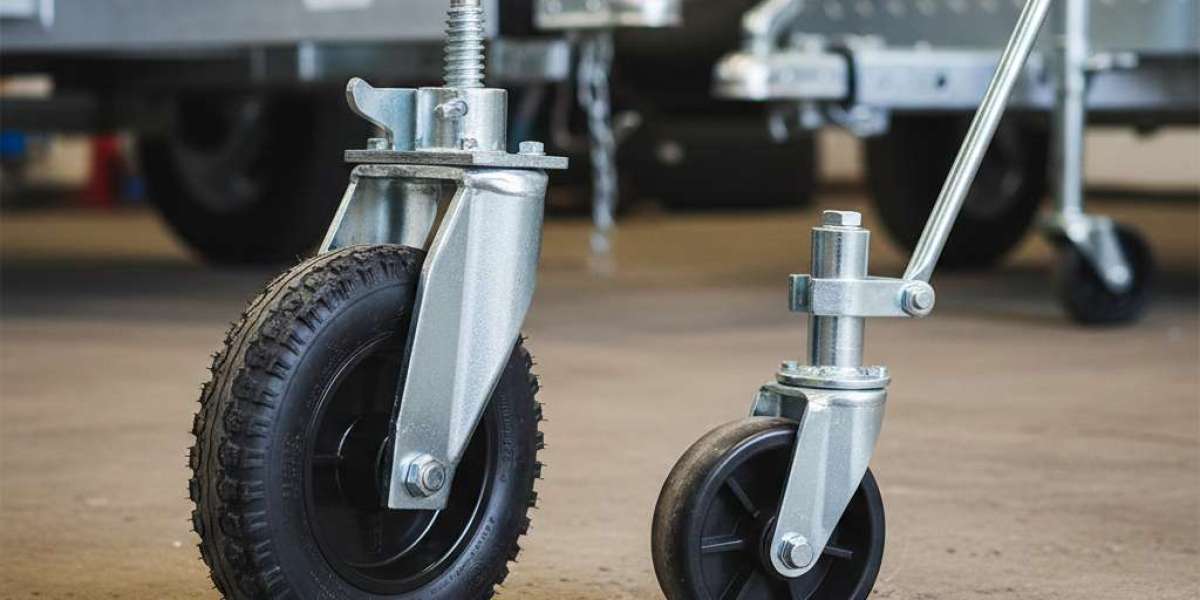

A jockey wheel might look like a simple bit of hardware, but anyone who’s wrestled a caravan or camper into a tight spot knows just how important it really is. From hitching and unhitching to manoeuvring your van on uneven ground, the right jockey wheel can make the job smooth—or seriously frustrating.
If you’re choosing between a standard and a heavy-duty option, understanding the differences will help you pick the jockey wheel for caravan use that actually suits your setup. This guide breaks down how each type works, where they shine, and how to decide which one is right for you.
What Is a Jockey Wheel and Why Does It Matter?
A jockey wheel is a support wheel fitted to the drawbar of a caravan or camper trailer. Its primary role is to:
Support the trailer when it’s not connected to the tow vehicle
Allow easy height adjustment during hitching
Help manoeuvre the trailer short distances
While it doesn’t carry the full weight of your caravan, it does handle significant load during stationary use. Choosing the right wheel improves safety, reduces physical strain, and protects your trailer’s drawbar and coupling.
Understanding Standard Jockey Wheels
Standard jockey wheels are commonly fitted to lighter caravans, camper trailers, and box trailers. They are designed for everyday use on relatively flat, firm surfaces.
Key Features of Standard Jockey Wheels
Load rating typically between 300kg and 750kg
Smaller wheel diameter
Manual wind-up handle
Basic steel or zinc-plated construction
These wheels are lightweight, affordable, and simple to operate, making them a popular choice for casual caravanners.
Pros of Standard Jockey Wheels
Standard jockey wheels offer several advantages for the right setup:
Affordable and widely available
Easy to install and replace
Suitable for paved driveways and caravan parks
Lightweight, reducing drawbar weight
For smaller vans and occasional use, a standard wheel may be all you need.
Limitations of Standard Jockey Wheels
While practical, standard jockey wheels do have their limits:
Struggle on sand, gravel, or uneven terrain
Smaller wheels can dig into soft ground
Not ideal for heavy caravans
Shorter lifespan under frequent use
If you regularly tow a heavier caravan or travel off-road, a standard wheel may wear out quickly or become difficult to use.
What Is a Heavy-Duty Jockey Wheel?
Heavy-duty jockey wheels are built to handle greater loads and tougher conditions. They’re commonly used on off-road caravans, large touring vans, and trailers that see frequent use.
Key Features of Heavy-Duty Jockey Wheels
Load ratings of 1000kg or more
Larger wheel diameter and wider tyre
Reinforced brackets and stronger materials
Often feature dual wheels or pneumatic tyres
These wheels are designed for durability and stability in demanding environments.
Pros of Heavy-Duty Jockey Wheels
Heavy-duty jockey wheels offer clear advantages:
Better stability under heavy loads
Easier movement on soft or uneven ground
Reduced risk of bending or failure
Longer service life
For serious travellers, they’re often considered the best caravan jockey wheel option for reliability and ease of use.
Drawbacks of Heavy-Duty Jockey Wheels
Despite their benefits, heavy-duty options may not suit everyone:
Higher cost
Heavier weight on the drawbar
Can be overkill for small campers
Larger size may reduce ground clearance when retracted
Choosing heavy-duty simply because it “sounds better” isn’t always the right call.
Key Differences: Heavy-Duty vs Standard Jockey Wheels
Here’s how the two options compare in real-world use:
Load Capacity
Heavy-duty wheels support significantly more weight, making them ideal for larger caravans.
Terrain Handling
Larger wheels perform far better on sand, grass, gravel, and uneven ground.
Durability
Heavy-duty designs resist bending, cracking, and premature wear.
Ease of Use
Heavy-duty wheels are smoother to operate when manoeuvring heavy vans, while standard wheels are easier to handle on lighter setups.
How to Choose the Right Jockey Wheel for Your Caravan
Selecting the right jockey wheel for caravan use comes down to a few practical considerations.
Caravan Weight
Always check your caravan’s ATM and drawbar weight. If your setup is on the heavier side, a standard jockey wheel may be under-rated and unsafe.
Where You Travel
Ask yourself:
Do you mainly stay in caravan parks?
Do you tow off-road or free camp?
Do you deal with soft ground often?
Rougher terrain almost always points to a heavy-duty option.
Frequency of Use
Occasional holiday use places less strain on a jockey wheel than frequent touring. If you’re constantly hitching and unhitching, durability becomes more important.
Storage and Clearance
Some heavy-duty wheels sit lower when retracted. Make sure there’s enough ground clearance to avoid scraping on driveways or tracks.
Single Wheel vs Dual Wheel Jockey Systems
Some heavy-duty jockey wheels use a dual-wheel design. These spread the load more evenly and reduce sinking on soft ground.
Dual wheels are ideal for:
Very heavy caravans
Sandy or muddy conditions
Long-term stationary setups
However, they are bulkier and may not suit compact caravans.
Maintenance Tips for Longer Life
No matter which type you choose, proper care matters:
Keep the shaft clean and lightly lubricated
Check mounting bolts regularly
Inspect tyres or wheels for cracks or flat spots
Avoid exceeding load ratings
Good maintenance can significantly extend the life of both standard and heavy-duty jockey wheels.
Is Heavy-Duty Always the Better Choice?
Not necessarily. While heavy-duty jockey wheels are often labelled as the best caravan jockey wheel, the best option is the one that matches your actual needs.
If your caravan is lightweight and you mostly tow on sealed roads, a standard wheel may be more than sufficient. On the other hand, if you tour remote areas or tow a larger van, investing in a heavy-duty wheel can save time, effort, and frustration.
Final Thoughts
Choosing between heavy-duty and standard jockey wheels isn’t about price or appearance—it’s about suitability. The right jockey wheel for caravan use improves safety, makes manoeuvring easier, and reduces wear on your setup.
By considering your caravan’s weight, travel conditions, and usage frequency, you can confidently choose a jockey wheel that supports your adventures across Australia, whether that’s weekend getaways or long-haul touring.