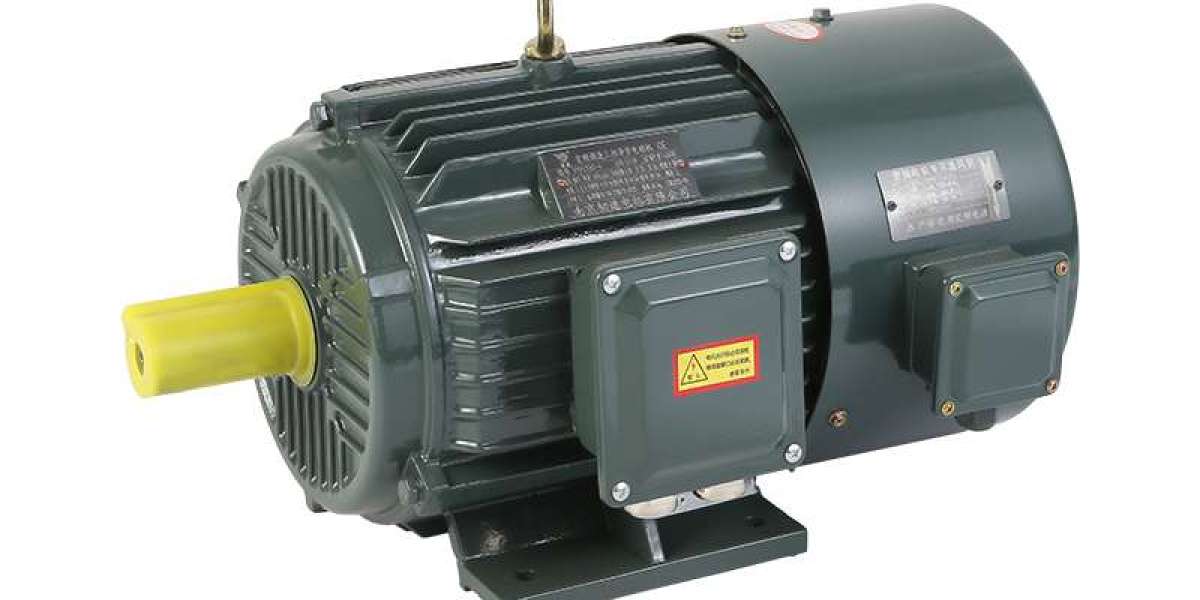

The asynchronous motor, often called an induction motor, is a cornerstone of modern industry, converting electrical energy into reliable mechanical motion. Its operation is elegantly rooted in electromagnetic induction, a principle discovered by Michael Faraday. Unlike other motor types, it requires no electrical connection to its rotating part. The key components are the stationary stator, which creates a rotating magnetic field when powered by alternating current, and the rotor, which is induced to turn by this field.
The term “asynchronous” is central to its function. The rotor’s speed is always slightly less than the synchronous speed of the stator’s magnetic field. This difference, known as “slip,” is essential. It is this relative motion that allows the rotating field to cut across the conductors in the rotor, inducing a current within them. This induced current then creates its own magnetic field, which interacts with the stator’s field to produce torque. If the rotor were to catch up completely, the induction process would stop, and torque would cease.
This simple and robust principle gives the asynchronous motor significant advantages. Its most common form, the squirrel-cage motor, has a rotor made of solid bars shorted by end rings, requiring virtually no maintenance. This design makes the asynchronous motor highly durable, cost-effective, and suitable for driving a vast array of equipment, from industrial fans and conveyor belts to household appliances. It is a prime example of engineering where simplicity and reliability converge to create a ubiquitous power source.