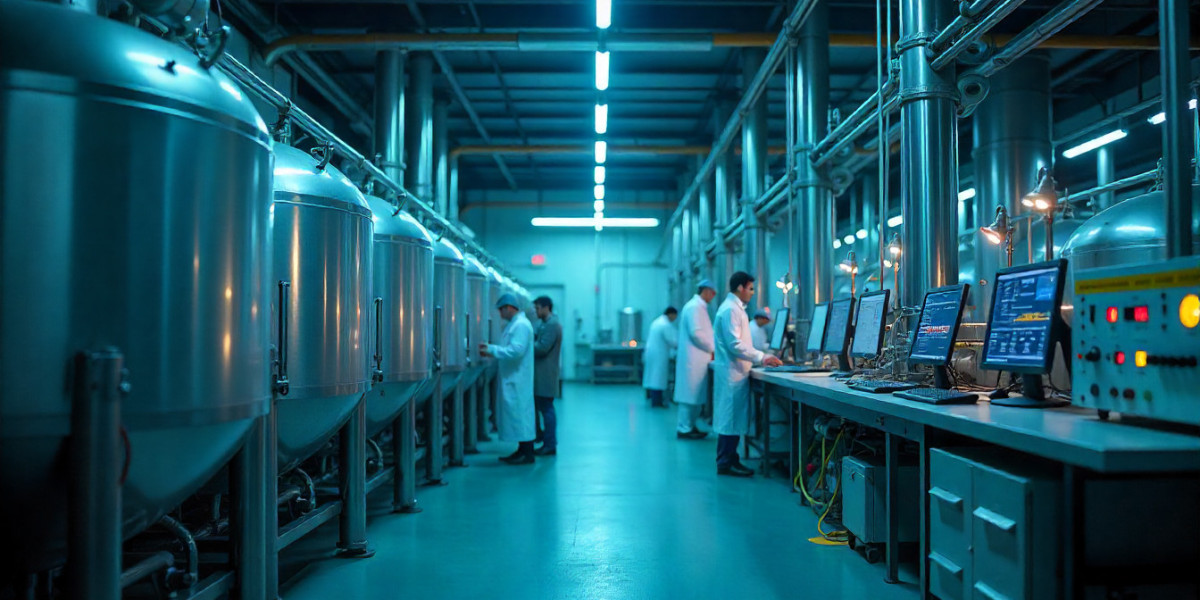

The Global Succinic Acid Market is experiencing substantial growth due to increasing demand for sustainable chemicals, bio-based products, and applications across multiple industries. Succinic acid, a four-carbon dicarboxylic acid, naturally occurs in many plants and animals and has versatile industrial applications. It is widely utilized in the production of plastics, resins, coatings, and pharmaceuticals, and plays a significant role in the food and beverage sector as an acidity regulator and flavor enhancer.
Recently, succinic acid has garnered attention as a renewable and environmentally friendly alternative to petroleum-based chemicals due to advances in microbial fermentation technology that enable cost-effective bio-based production. Rising awareness of sustainable products and government initiatives supporting green chemicals are driving the market globally, with both established chemical companies and new entrants investing heavily in research and development to meet this growing demand.
Market Overview
The Global Succinic Acid Market was valued at USD 329.6 million in 2025 and is projected to reach USD 808.6 million by 2034, growing at a compound annual growth rate (CAGR) of 10.5% during the forecast period. Increasing environmental concerns and regulatory support for sustainable manufacturing are key factors fueling growth. Bio-based succinic acid, produced via microbial fermentation from renewable feedstocks such as glucose, sucrose, and glycerol, is increasingly preferred over petroleum-derived succinic acid due to its lower carbon footprint and biodegradable nature.
Succinic acid is used in a variety of applications. In the plastics industry, it serves as a precursor to biodegradable polymers such as polybutylene succinate (PBS), which is used in packaging and disposable items. In the pharmaceutical sector, succinic acid acts as a stabilizing agent and is utilized in drug formulations. The increasing demand for eco-friendly food additives and the growing nutraceutical market further expand opportunities for succinic acid applications in food and beverages. Additionally, the chemical is gaining traction in industrial coatings, adhesives, and solvents, where performance characteristics and sustainability are critical factors.
Market Dynamics
The Succinic Acid Market is shaped by a combination of drivers, restraints, opportunities, and trends that influence its growth trajectory.
Drivers
The primary driver of market growth is the rising demand for bio-based chemicals and sustainable alternatives to petroleum-derived products. Regulatory support from governments worldwide to reduce greenhouse gas emissions and promote renewable chemicals is fostering adoption of bio-based succinic acid. The increasing use of succinic acid in biodegradable plastics, particularly in packaging and disposable products, aligns with environmental sustainability trends and consumer preferences. Growth in the pharmaceutical, food and beverage, and personal care sectors, where succinic acid functions as a stabilizer, acidity regulator, or flavor enhancer, also contributes to market expansion.
Challenges
Challenges in the succinic acid market include high production costs associated with bio-based manufacturing compared to traditional petroleum-derived processes. The availability of feedstocks and fluctuations in raw material prices can impact production efficiency and pricing. Market players also face technical challenges in optimizing microbial fermentation processes to achieve high yield and consistent quality. Additionally, stringent regulatory approvals for bio-based chemicals and food-grade applications may slow the introduction of new products in certain regions.
Opportunities
Opportunities in the market include the development of cost-efficient fermentation technologies, expansion into emerging markets, and increased adoption in industrial applications. Companies investing in R&D to enhance bio-based production efficiency and scale-up capacities are likely to benefit from growing global demand. The increasing trend of green packaging and sustainable consumer products opens new avenues for succinic acid-based biodegradable polymers. Partnerships between chemical manufacturers, technology providers, and research institutions are fostering innovation in advanced succinic acid derivatives with improved functionality for specific industrial applications.
Regional Analysis
Asia Pacific is projected to lead the Global Succinic Acid Market in 2025, holding a significant share of approximately 39.6%. Rapid industrialization, expanding manufacturing capabilities, and growing awareness of sustainable products drive market growth in the region. Countries such as China, Japan, and India are heavily investing in green technologies and fermentation-based production processes, which enhance cost efficiency and scalability of bio-based succinic acid. The presence of a strong chemical manufacturing ecosystem and government initiatives promoting renewable chemicals support adoption across industries.
The food and beverage industry in Asia Pacific is witnessing rising demand for natural and safe additives, boosting the use of succinic acid as a flavor enhancer and acidity regulator. In addition, the packaging and biodegradable plastics segment is growing, driven by environmental regulations and increasing consumer preference for eco-friendly products. Pharmaceutical and personal care sectors are also expanding, creating additional demand for succinic acid-based formulations.
North America holds a significant share of the succinic acid market due to the presence of established chemical manufacturers and advanced research facilities. The U.S. and Canada are key contributors, with high adoption rates of bio-based chemicals and supportive policies promoting sustainable industrial practices. The region also focuses on innovation in bio-based polymers, which increases the use of succinic acid in packaging and industrial applications.
Europe demonstrates steady growth, driven by stringent environmental regulations, growing demand for biodegradable plastics, and government support for green chemicals. Countries such as Germany, France, and the Netherlands are investing in bio-based chemical production facilities, fostering the adoption of succinic acid across multiple sectors.
Latin America and the Middle East & Africa are emerging markets for succinic acid, supported by increasing industrialization, rising environmental awareness, and growing pharmaceutical and food industries. However, limited production infrastructure and high dependence on imports may restrict rapid market growth.
Download a Complimentary PDF Sample Report: https://dimensionmarketresearch.com/report/succinic-acid-market/request-sample/
Market Segmentation
The Succinic Acid Market can be segmented based on application, type, and production process.
By Application
Applications include plastics and resins, food and beverages, pharmaceuticals, personal care, coatings and adhesives, and others. The plastics and resins segment dominates due to the increasing use of succinic acid as a monomer in biodegradable polymers and specialty plastics. The food and beverage segment is growing due to demand for natural flavor enhancers and acidity regulators. Pharmaceutical applications are expanding as succinic acid is used in drug formulations, stabilizers, and buffer solutions. Coatings and adhesives represent emerging opportunities due to the compound’s role as a building block for eco-friendly industrial chemicals.
By Type
Succinic acid is available in bio-based and petroleum-derived forms. Bio-based succinic acid is gaining traction due to environmental sustainability and regulatory incentives. It is produced through microbial fermentation, utilizing renewable feedstocks such as glucose, sucrose, or glycerol. Petroleum-derived succinic acid continues to be used for cost-effective industrial applications but faces declining demand as industries shift toward eco-friendly alternatives.
By Production Process
Production processes include fermentation and chemical synthesis. Fermentation is preferred for bio-based succinic acid due to its sustainability and ability to produce high-purity products. Chemical synthesis involves the hydrogenation of maleic anhydride or other petrochemical derivatives and is widely used for industrial-scale production. Companies are investing in hybrid processes to optimize yield, reduce costs, and improve environmental performance.
Technological Advancements
Technological innovations are key drivers in the succinic acid market. Advancements in microbial fermentation, metabolic engineering, and bioprocess optimization have enabled cost-efficient production from renewable feedstocks. Companies are developing engineered microbial strains that exhibit high yield, tolerance to inhibitors, and faster production rates. Process innovations such as continuous fermentation and downstream purification techniques further enhance scalability and reduce production costs. In parallel, research on succinic acid derivatives for high-performance polymers, coatings, and solvents is expanding applications and market potential.
Market Trends
Current trends include the shift toward bio-based succinic acid, integration of green chemistry principles, and growing use in biodegradable polymers. The trend of replacing petroleum-based chemicals with renewable alternatives is gaining momentum globally. In addition, partnerships and collaborations between chemical manufacturers, biotechnology firms, and research institutes are driving innovation. Consumers increasingly prefer products with environmental credentials, which is encouraging companies to adopt eco-friendly succinic acid-based formulations in food, packaging, and personal care.
Competitive Landscape
The Succinic Acid Market is competitive, with key players focusing on technological innovation, production efficiency, and geographical expansion. Leading companies include BioAmber, BASF, Myriant, Succinity, and Reverdia, among others. Market strategies include developing bio-based succinic acid, forming strategic alliances, expanding manufacturing facilities, and investing in R&D to improve fermentation and downstream processes. Companies also differentiate based on product purity, sustainability, cost efficiency, and application-specific customization.
Future Outlook
The Global Succinic Acid Market is expected to grow steadily from USD 329.6 million in 2025 to USD 808.6 million by 2034 at a CAGR of 10.5%. Bio-based succinic acid will drive growth as industries increasingly adopt sustainable and environmentally friendly chemicals. Asia Pacific is poised to dominate the market, while North America and Europe continue to offer significant growth opportunities due to technological advancements and regulatory support. Emerging applications in biodegradable polymers, industrial coatings, pharmaceuticals, and food products will further expand market demand. Market players focusing on innovation, efficiency, and sustainability are likely to secure a competitive edge.
FAQs
Q1: What is the Succinic Acid Market?
The Succinic Acid Market refers to the global trade and consumption of succinic acid, a four-carbon dicarboxylic acid used in plastics, resins, pharmaceuticals, food and beverages, and coatings.
Q2: Which region leads the market?
Asia Pacific leads the market in 2025 with a 39.6% share due to rapid industrialization, sustainability initiatives, and growing adoption of bio-based chemicals.
Q3: What are the main applications of succinic acid?
Key applications include plastics and resins, food and beverages, pharmaceuticals, personal care, coatings and adhesives, and specialty chemicals. Plastics and resins currently dominate.
Q4: What is driving the growth of bio-based succinic acid?
Drivers include environmental sustainability, government incentives, growing demand for biodegradable products, and advances in microbial fermentation technologies.
Q5: What are the production methods for succinic acid?
Succinic acid is produced through microbial fermentation using renewable feedstocks or via chemical synthesis from petroleum-derived maleic anhydride. Fermentation is gaining preference for bio-based products.
Summary of Key Insights
The Global Succinic Acid Market is projected to grow from USD 329.6 million in 2025 to USD 808.6 million by 2034 at a CAGR of 10.5%. Growth is driven by rising demand for bio-based and sustainable chemicals, increasing applications in plastics, resins, pharmaceuticals, and food and beverages, and technological advancements in microbial fermentation. Asia Pacific is set to lead the market, while North America and Europe offer substantial growth opportunities due to innovation and regulatory support. Market trends include a shift toward bio-based products, biodegradable polymers, and green chemistry practices. Companies focusing on sustainable production, technological innovation, and market expansion are poised to gain a competitive advantage.
Purchase the report for comprehensive details: https://dimensionmarketresearch.com/checkout/succinic-acid-market/