
Introduction
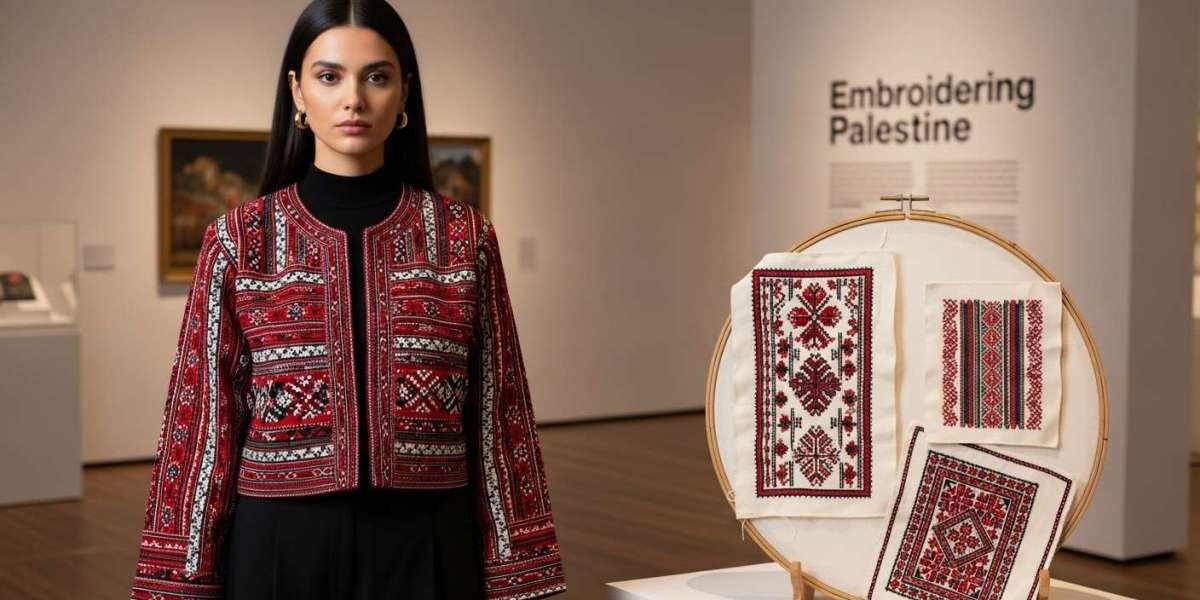
When the MoMu Fashion Museum Antwerp opened "Embroidering Palestine" on September 22, 2025, the exhibition did something remarkable. It showcased how palestinian embroidery has moved from village looms to cutting-edge runway collections, proving that ancient stitches carry urgent modern messages. Visitors saw tatreez integrated into contemporary designs by Palestinian creators, highlighting its role in resistance and identity. From that Antwerp gallery to the Rebuilding Alliance 2025 Fashion and Awards runway — where 19 traditional thobes narrated by designer Rami Kashou captivated audiences — this heritage craft is reshaping global fashion. Runway moments, celebrity endorsements, and Gen Z streetwear trends are all proving that palestinian embroidery belongs at fashion's leading edge.
Ancient Art Meets Modern Runways
Palestinian embroidery has traveled from rural homes in the hills of Hebron and Ramallah to the most prestigious fashion venues worldwide. The Victoria and Albert Museum curator Rachel Dedman describes it as Palestine's most vital living tradition, now politicized and celebrated on global stages. The MoMu Antwerp exhibition ran through 2025-2026, drawing international attention to how designers are reimagining heritage stitches for contemporary audiences.
Key runway and exhibition facts:
Rebuilding Alliance 2025 — A runway featuring 19 traditional Palestinian thobes with full tatreez, narrated by Rami Kashou, who also employs Palestinian women for hand embroidery in his high-fashion pieces
MoMu Antwerp — The "Embroidering Palestine" exhibition highlighted tatreez in modern designs, framing it as a tool of resistance and identity
V&A recognition — Rachel Dedman's analysis places this cultural craft alongside other major living textile traditions globally
Patterns Behind the Revolution
Traditional tatreez patterns carry specific village codes — the Bethlehem star, the Jaffa fish, the Gaza palm. These palestinian embroidery patterns are now being deconstructed and reassembled by a new generation of designers. As one designer noted, "Tatreez is not merely decoration, it is a dynamic form of resistance and a generational archive." These patterns form a tatreez cultural thread that connects Palestinian identity to global fashion audiences.
Bethlehem's cross-stitch patterns indicate marital status and family lineage
Ramallah motifs feature abundant bird and flower symbols representing paradise
Contemporary designers isolate individual motifs for minimalist streetwear applications
How Designers Are Using It in 2026
Global fashion houses and independent studios are embracing this ancient art as a source of innovation. Designer GmbH incorporated tatreez into their Fall-Winter 2025 collection, proving that heritage stitching belongs on luxury runways. A Central Saint Martins graduate used tatreez structurally in a 2025 collection to explore themes of erasure and survival — stitching becoming architecture. Meanwhile, Rami Kashou continues mentoring local artisans, employing Palestinian women for hand embroidery in high-fashion pieces while featuring historical thobes dating to the 1900s.
The tatreez abaya has emerged as a particularly powerful garment — an embroidered dress that marries traditional Gulf silhouette with Palestinian stitching, creating a wearable identity statement. Turath Fashion predicts that tatreez-infused Palestinian streetwear, including embroidered jackets, will dominate 2026 global trends, moving from niche ethnic wear to mainstream fashion consciousness.
Designer adoption facts:
GmbH Fall-Winter 2025 — Featured tatreez elements in their collection, bringing Palestinian stitching to European fashion weeks
Central Saint Martins — A graduate's 2025 collection used tatreez structurally to represent cultural survival
Rami Kashou — Mentors local women embroiderers and showcases historical thobes from the 1900s alongside modern pieces
Celebrity Moments Driving Awareness
When Bella Hadid appeared in a tatreez abaya dress in 2025, she told the world, "Palestine is on my mind to wear our culture makes me a proud Palestinian." That single statement amplified this ancient art to millions who had never seen Palestinian stitching before. Celebrity-driven awareness has transformed palestinian embroidery from a niche cultural craft into a globally recognized fashion language.
Bella's 2025 appearance generated widespread media coverage and social media discussion
Other public figures have followed, wearing embroidered pieces at red carpet events and cultural gatherings
Celebrity endorsements drive demand for authentic artisan pieces, benefiting West Bank cooperatives
Gen Z and the Streetwear Revolution
Younger consumers are driving the most unexpected shift. Gen Z has embraced palestinian embroidery through TikTok trends featuring personalized embroidered streetwear and sustainable custom printing. These digital natives aren't just buying — they're learning. Tatreez kits have become popular among diaspora youth and international allies who want to stitch their own solidarity pieces.
The cooperative model is thriving. Cooperatives supplying embroidery to brands are creating sustainable jobs for West Bank women in 2025-2026, proving that fashion activism can generate real economic impact. Gen Z's appetite for transparent supply chains and ethical fashion aligns perfectly with the cooperative model behind authentic tatreez.
Gen Z streetwear adoption facts:
TikTok trends — Personalized embroidered denim jackets and hoodies featuring traditional motifs
Sustainable custom printing — Young consumers seek hand-stitched pieces rather than mass-produced imitations
DIY culture — Tatreez kits allow Gen Z to learn the craft themselves, creating intergenerational transmission through social media tutorials
Buying the Ancient Art Authentically
As demand grows, so does the risk of cultural appropriation and counterfeit products. Authentic tatreez coasters and other embroidered home decor items can be found through verified cooperatives that pay fair wages to women stitchers. Organizations like KUVRD help consumers verify supply chains and ensure that their purchase supports Palestinian artisans directly rather than mass-production factories.
Authentic buying guide:
Verify the source — Look for cooperatives that name the women embroiderers and their villages
Avoid mass-produced imitations — Machine-made "tatreez" lack the cultural thread and fair labor practices
Pay fair prices — A single embroidered piece may represent days of handwork; bargain prices mean exploited labor
Ask questions — Which village patterns? Who stitched this? How were they compensated?
Every authentic purchase of this ancient art supports Palestinian women, preserves heritage motifs, and keeps the living tradition alive for future generations.
Conclusion
From the MoMu Antwerp exhibition to Gen Z's TikTok tutorials, from Rami Kashou's runways to Bella Hadid's proud declaration, Palestinian heritage stitching has become the most powerful ancient art changing modern fashion in 2026. This cultural craft carries memory, resistance, and beauty in every thread. When you wear authentic Palestinian embroidery, you wear a story that spans centuries. Support the artisans, learn the stitches, and embrace a fashion movement that puts cultural identity and ethical production at its heart.
FAQs
How is palestinian embroidery changing modern fashion in 2026?
Major exhibitions like MoMu Antwerp's "Embroidering Palestine," designer collections from GmbH and Central Saint Martins graduates, and Turath Fashion's prediction of tatreez-infused streetwear dominating global trends are proving that palestinian embroidery has moved from cultural heritage to high-fashion innovation. Gen Z's TikTok-driven adoption and celebrity moments from Bella Hadid are accelerating this shift.
What makes palestinian embroidery different from other embroidery in fashion?
Unlike decorative embroidery, Palestinian stitching carries specific village codes, family histories, and political meanings. Each motif from Bethlehem's cypress to Gaza's fish functions as a generational archive of identity and resistance, making it far more than ornamentation.
Where can I buy authentic palestinian embroidery pieces that support artisan communities?
Seek out verified cooperatives and cultural initiatives that work directly with women embroiderers in the West Bank and refugee camps. Organizations like KUVRD help consumers identify transparent supply chains where fair wages go to the artisans preserving this ancient craft.