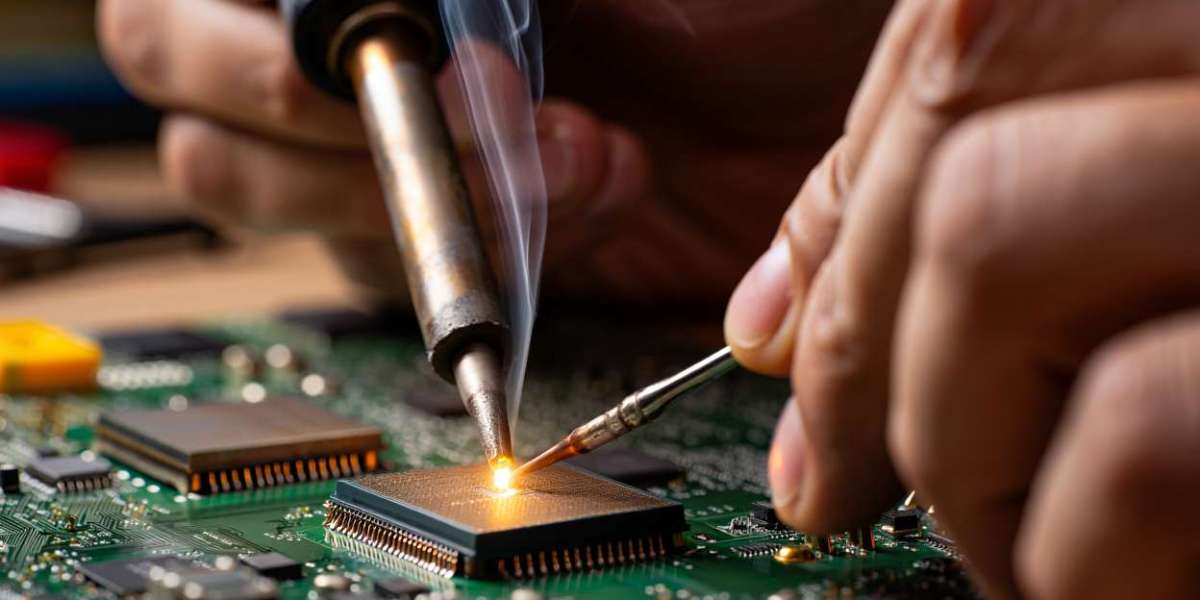

Modern electronic devices are no longer simple boards with fixed functionality. Today’s products are intelligent ecosystems combining sensing, processing, connectivity, and decision-making. From smart medical equipment and industrial automation to autonomous machines and communication infrastructure, hardware now works as the foundation of innovation rather than just a supporting component.
Because of this shift, businesses can’t rely on generic development workflows. A product must be engineered for reliability, manufacturability, and long-term scalability from the very first schematic. The gap between an idea and a dependable device is filled by structured engineering — not experimentation.
Organizations launching complex products often partner with an Electronics Engineering And Design Company to reduce development risk and accelerate deployment. Instead of repeatedly fixing issues after prototypes fail, they build a stable architecture that prevents problems before they appear.
Electronics Engineering And Design Company in Product Architecture Planning
Every successful device begins with architecture — not schematics. The architecture stage defines how subsystems interact and how future upgrades will be handled. Poor architecture locks products into limitations that software cannot fix later.
Engineers evaluate:
Processing requirements and latency targets
Data throughput and storage needs
Power consumption and battery behavior
Environmental operating conditions
Expandability and firmware update capability
Choosing between MCU, MPU, FPGA, or hybrid platforms determines performance ceilings for years. For example, a sensor gateway built without considering data scaling may collapse when additional sensors are added.
This planning phase also determines communication structure: edge computing vs cloud processing. Modern systems increasingly move intelligence closer to hardware to reduce latency and improve reliability.
Electronics Engineering And Design Company Approach to System Stability
Stability is not accidental — it is engineered. Products must function continuously in vibration, electrical noise, temperature swings, and power fluctuations.
Design stability involves:
Proper grounding topology
Power domain isolation
Transient protection
Thermal path optimization
Redundant fault detection
Many failures appear months after deployment because environmental stress was ignored during design. A structured validation strategy prevents this. Simulation, stress testing, and margin analysis ensure the product works not only in a lab but in real conditions.
A reliable device reduces support costs dramatically and builds trust with customers.
Electronics Engineering And Design Company for RF & Wireless Performance
Wireless communication defines modern electronics, yet RF behavior cannot be debugged like software. A millimeter-level routing mistake may degrade performance beyond usability.
Key RF engineering considerations include:
Antenna placement relative to enclosure
Ground reference continuity
Impedance matching networks
Interference suppression
Radiation pattern optimization
When RF is treated as an afterthought, teams often face certification failures and unpredictable connectivity. Careful electromagnetic design converts wireless communication from uncertain behavior into measurable performance.
This is especially critical in IoT, telemetry, and industrial monitoring where connectivity reliability directly affects operational decisions.
Electronics Engineering And Design Company Role in Embedded Intelligence
Modern hardware is defined by firmware as much as circuitry. The embedded layer controls timing, data handling, safety logic, and communication protocols.
Real-time firmware must be deterministic. Delays measured in milliseconds can break synchronization in robotics, sensing systems, or control equipment.
Important firmware elements:
RTOS task scheduling
Peripheral drivers
Secure communication stacks
Bootloaders and remote updates
Hardware abstraction layers
Proper firmware architecture allows features to evolve without hardware redesign. Products become platforms instead of fixed devices.
This flexibility extends product lifespan and reduces redesign costs significantly.
Electronics Engineering And Design Company in High-Speed PCB Engineering
As data rates increase, PCB design becomes applied physics. Signal integrity, power integrity, and electromagnetic compatibility determine whether the device functions consistently.
High-speed design requires:
Controlled impedance stack-ups
Differential pair tuning
Crosstalk mitigation
Decoupling network optimization
Return path continuity
Without these practices, devices may pass initial testing yet fail intermittently in production. Intermittent failures are the most expensive because they are hardest to diagnose.
Simulation tools predict behavior before fabrication, preventing costly board revisions and saving months of development time.
Electronics Engineering And Design Company for Manufacturing Readiness
A prototype proves possibility — production proves reliability.
Design for Manufacturing ensures repeatability across thousands of units. Engineers optimize component availability, assembly tolerances, and testing procedures.
Manufacturing preparation includes:
Test point accessibility
Automated inspection compatibility
Calibration procedures
Component lifecycle analysis
Certification preparation
Many products fail commercially not because they don’t work, but because they cannot be produced consistently. Engineering for manufacturing transforms a project into a viable business.
Lifecycle Support and Future Expansion
Modern electronic products evolve after release. Firmware updates add functionality, communication standards change, and components become obsolete. Engineering must anticipate these realities.
Lifecycle planning includes:
Modular hardware architecture
Replaceable components
Remote diagnostics capability
Upgrade pathways
Instead of redesigning the entire product, teams update specific modules. This reduces cost and preserves customer trust.
Final Thoughts
Electronic innovation is no longer about assembling components — it is about designing systems that remain reliable, adaptable, and manufacturable for years. The complexity of modern devices requires coordination between hardware physics, embedded logic, RF behavior, and production engineering.
Companies that follow structured engineering processes release products faster and with fewer failures. They spend less time debugging and more time improving features. Over time, this engineering discipline becomes a competitive advantage rather than just a technical necessity.
Modern device development rewards certainty. When engineering decisions are made deliberately rather than reactively, products survive real-world conditions and scale confidently into production.
FAQs
1. How long does it take to develop a complex electronic device?
Depending on complexity, development typically ranges from 4 months for simple embedded systems to over 12 months for RF or high-speed platforms.
2. Why do many prototypes fail during production?
Because prototypes often ignore manufacturing tolerances, thermal behavior, and signal integrity issues that appear only in large-scale production.
3. Can hardware performance be improved after release?
Yes. With proper architecture, firmware updates can optimize power usage, stability, and features without changing the hardware.