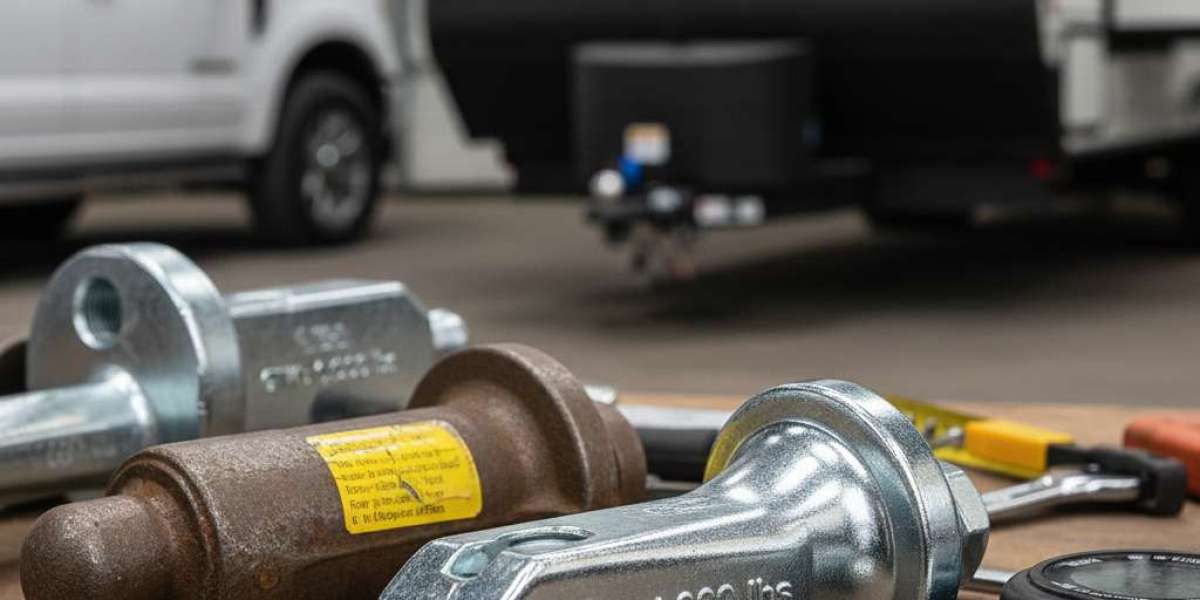

When it comes to towing a caravan, camper, or trailer in Australia, most people focus on the tow vehicle’s capacity. However, one of the most commonly overlooked components is the trailer coupling. Choosing the wrong weight rating for your trailer coupling hitch can lead to dangerous towing conditions, premature wear, or even complete coupling failure.
Understanding trailer coupling weight ratings is essential for safe, legal, and stress-free towing. This guide explains how weight ratings work, why they matter, and how to avoid costly mistakes when selecting trailer couplings for your setup.
What Is a Trailer Coupling?
A trailer coupling is the component that connects your trailer to the tow ball on your vehicle. It is responsible for transferring the towing load while allowing controlled movement between the vehicle and trailer.
Trailer couplings are designed to handle:
The total weight of the trailer
Vertical load placed on the tow ball
Forces created during braking, turning, and uneven road conditions
Because of these demands, couplings are manufactured with strict weight ratings that must never be exceeded.
Understanding Trailer Coupling Weight Ratings
Trailer couplings are rated based on Aggregate Trailer Mass (ATM). ATM refers to the total weight of the trailer when fully loaded, including cargo, water, accessories, and fuel.
The coupling’s ATM rating must always be equal to or greater than the trailer’s maximum ATM. Using an underrated trailer coupling hitch can result in:
Structural failure
Increased sway
Reduced braking performance
Legal penalties
In Australia, weight ratings are clearly stamped or labelled on approved trailer couplings.
Common Trailer Coupling Weight Classes
Most trailer couplings fall into specific weight categories. Understanding these ranges helps narrow down the right option.
Up to 750kg ATM
Trailers under 750kg typically include small box trailers or lightweight campers. These setups often use basic trailer couplings designed for light-duty towing.
While brakes may not be required at this weight, the coupling still needs to match the trailer’s maximum ATM.
750kg to 2000kg ATM
This range covers many camper trailers, boat trailers, and medium-sized caravans. Couplings in this category are built with stronger materials and are designed to handle higher loads and dynamic forces.
Many off-road camper trailers fall into this weight class due to added equipment and storage.
Over 2000kg ATM
Heavy caravans and large off-road trailers require high-capacity trailer coupling hitches, often rated between 3,000kg and 3,500kg or more.
These couplings are engineered for:
Heavy vertical loads
Rough terrain
Long-distance towing
Choosing the correct rating is critical, as failure at this weight can have serious consequences.
ATM vs Tow Ball Weight: Why Both Matter
One of the most common towing mistakes is focusing only on ATM and ignoring tow ball weight (also known as download).
Tow ball weight is the downward force the trailer applies to the tow ball. In Australia, this is typically around 8–15% of the trailer’s ATM, depending on design.
Both the trailer coupling and tow vehicle must be rated to handle this vertical load. Exceeding tow ball limits can cause:
Rear suspension sag
Poor steering response
Increased trailer sway
Always check both ratings before selecting trailer couplings.
Off-Road vs On-Road Trailer Couplings
Not all trailer couplings are designed for the same conditions.
On-Road Couplings
Standard on-road couplings are designed for sealed surfaces and controlled driving conditions. They are commonly used on:
Highway caravans
Boat trailers
Utility trailers
While strong, they may not allow the articulation needed for uneven terrain.
Off-Road Couplings
Off-road trailer couplings are built to handle extreme articulation, steep angles, and rough tracks. These are popular with:
Off-road caravans
Camper trailers
Touring setups
Although many off-road couplings have high ATM ratings, it’s still essential to verify the manufacturer’s stated limits.
Australian Standards and Compliance
In Australia, trailer couplings must comply with ADR (Australian Design Rules) and relevant state regulations. Approved trailer couplings will feature:
Clearly stamped weight ratings
Manufacturer identification
Compliance markings
Using non-compliant or unrated couplings can result in defects, fines, or insurance issues in the event of an accident.
Signs Your Trailer Coupling Is Underrated or Worn
Even if your trailer coupling hitch was correctly rated at purchase, wear and tear can reduce its effectiveness over time.
Watch for warning signs such as:
Excessive movement or clunking
Visible cracks or deformation
Difficulty latching securely
Uneven wear on the coupling or tow ball
If any of these issues appear, replace the coupling immediately.
Matching Trailer Couplings to Your Tow Vehicle
Your coupling choice must also work with your tow vehicle’s specifications. Consider:
Tow ball size compatibility
Maximum towing capacity
Maximum tow ball download
The weakest-rated component in the towing system determines the overall safe limit, so everything must work together.
Common Costly Towing Mistakes to Avoid
Many towing issues stem from simple oversights. Avoid these common errors:
Choosing a coupling based on empty trailer weight
Ignoring accessories that increase ATM
Mixing mismatched coupling and tow ball ratings
Using off-road couplings for loads they weren’t designed to handle
These mistakes can compromise safety and lead to expensive repairs or legal trouble.
Professional Installation and Regular Checks
Installing trailer couplings correctly is just as important as choosing the right rating. A professional installation ensures:
Proper alignment
Secure mounting
Correct torque settings
Regular inspections should be part of your towing routine, especially before long trips or off-road travel.
Final Thoughts
Understanding trailer coupling weight ratings is one of the most important steps in safe towing. The right trailer coupling hitch protects your investment, improves handling, and helps prevent dangerous towing situations.
By selecting properly rated trailer couplings, checking tow ball weight, and ensuring compliance with Australian standards, you can avoid costly towing mistakes and enjoy peace of mind on every journey.