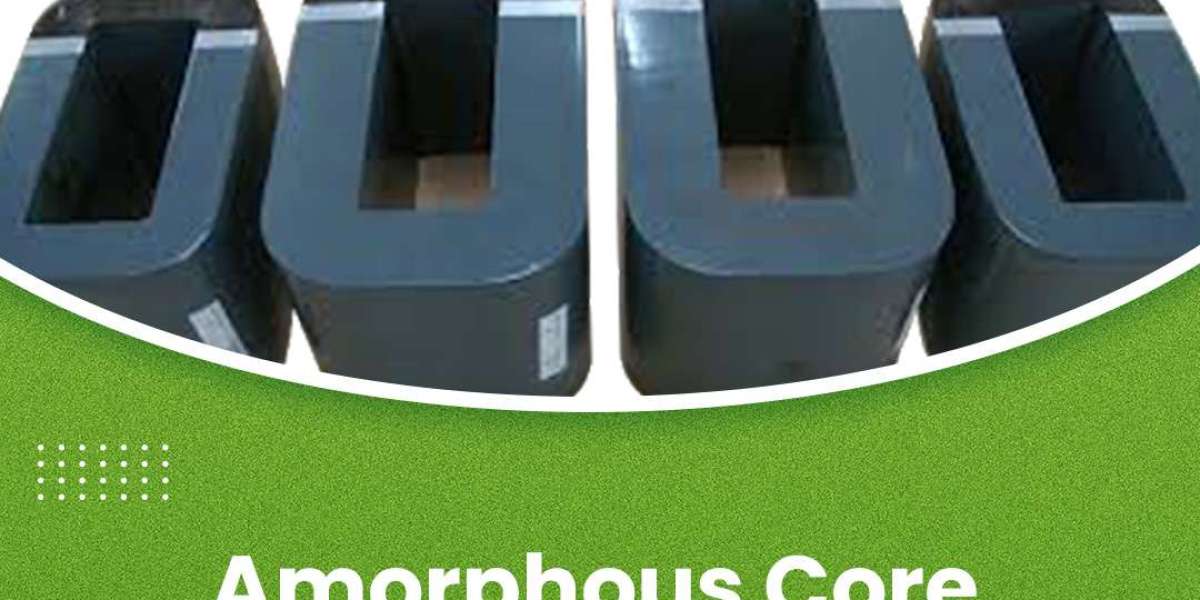

Premium Quality Amorphous Core for Transformer Efficiency
In today’s power systems, the amorphous core has become one of the smartest upgrades anyone can make to a transformer. Unlike regular steel cores, this material doesn’t have an organized crystal pattern, so it wastes far less energy when the magnetic field changes. That small change adds up to big savings on electricity bills and much less heat inside the unit. Companies such as Advanced Amorphous put real effort into
Premium Quality Amorphous Core for Transformer Efficiency
In today’s power systems, the amorphous core has become one of the smartest upgrades anyone can make to a transformer. Unlike regular steel cores, this material doesn’t have an organized crystal pattern, so it wastes far less energy when the magnetic field changes. That small change adds up to big savings on electricity bills and much less heat inside the unit. Companies such as Advanced Amorphous put real effort into building these cores so they perform reliably year after year. Their amorphous cores help utilities, factories, and commercial buildings cut running costs while meeting tougher energy rules. When you choose a good amorphous core, the transformer runs cooler, lasts longer, and uses noticeably less power even during busy hours. Advanced Amorphous keeps improving the way they make these cores, so customers get consistent quality that really makes a difference in daily operation.
Understanding the Basics of Amorphous Core Technology
What makes an amorphous core special is the way the metal is made, no crystals, just a random atomic setup that lets magnetism move through it without fighting so much. Regular silicon steel has those neat grains that line up nicely in one direction, but they still cause more drag on the magnetic field changes. With amorphous metal, you get lower hysteresis losses and almost no eddy currents because the ribbon is only about 0.025 mm thick. Advanced Amorphous takes those ribbons, anneals them carefully to lock in the best properties, and then winds them into cores that fit exactly what the transformer builder needs. The result is a core that doesn't heat up as much and holds its performance steady even when the power supply has some distortion from inverters or drives. Anyone who's maintained transformers knows how annoying it is when heat builds up and shortens insulation. This setup avoids a lot of that headache right from the start.
Benefits of Premium Amorphous Core for Energy Savings
You can easily see 65 to 75 percent less no-load loss compared to old-school CRGO cores, so even when the transformer's idling overnight or on weekends, it's not burning through electricity for no reason.
These cores handle messy waveforms from modern loads like variable drives and electronics without losing much ground on efficiency, unlike traditional ones that start wasting more under those conditions.
Running temperatures drop noticeably, often 10 to 20 degrees Celsius, which means the insulation doesn't age as fast, and you avoid surprise failures that hit you with repair bills.
Advanced Amorphous makes them in all sorts of sizes and shapes to match whatever transformer rating you're working with, so there's no forcing a mismatched core that leaves savings on the table.
Switching helps anyone chasing lower carbon numbers because every bit of saved power means less fuel burned somewhere upstream to generate it.
How Advanced Amorphous Manufacture High-Quality Amorphous Core
At their place in Khushkhera, they start by melting top-grade alloys and squirting the liquid onto a fast-spinning wheel to freeze it into those thin ribbons before crystals can form. After that comes the heat treatment to get the magnetic properties dialed in just right for minimal losses. They wind each core with that distributed gap design, which cuts down on stress and keeps the humming noise low when it's energized. Every single core goes through checks for size, surface finish, and how it performs magnetically before it ships out. Advanced Amorphous talks a lot with transformer manufacturers to tweak things for special jobs, so the cores drop right in and work like they're supposed to. It's that kind of attention that builds trust, and people know they're getting something reliable that won't let them down after a few years.
Applications of Amorphous Core in Modern Transformers
City and rural distribution transformers love these because no-load losses stay so low across thousands of units running around the clock, adding up to serious energy savings for the utility.
Heavy industrial spots with motors starting and stopping all day find the amorphous core takes those swings in stride without overheating or dropping efficiency much.
Solar and wind farms use them in their step-up transformers, where squeezing every last watt out of the system matters a ton for getting more clean power onto the grid.
Big commercial places like malls, offices, and hospitals go for them to hit green certifications and keep electricity costs from creeping up every month.
EV charging setups rely on them for fast, high-power handling while staying compact and not turning into space heaters during busy times.
Comparing Amorphous Core to Traditional CRGO Cores
CRGO has been the go-to for ages because it's strong and predictable, but its crystal structure means higher losses, especially when the transformer's barely loaded. An amorphous core slashes those no-load losses by 60 to 80 percent in most real-world cases, which really shows up after a few years, like the extra upfront cost usually pays itself back through lower bills. Under harmonics, CRGO suffers more because eddy currents spike, while the amorphous version keeps losses closer to normal. The cores are a bit lighter, too, which makes hauling and setting them up easier on crews. If you're budgeting for new installs or replacements and energy prices aren't dropping anytime soon, the math leans hard toward amorphous for most applications these days.
The Future of Amorphous Core in Transformer Efficiency
Labs and factories are pushing the material thinner and purer, so expect even lower losses in the coming batches without changing much else.
Pairing these cores with smart sensors in transformers will let folks watch performance live and catch issues early instead of waiting for a breakdown.
With renewables growing fast, efficient transformers become a must-have to move all that variable power without wasting it along the way.
In places where budgets are tight, like rural grids, these cores stretch every rupee further by cutting ongoing losses that add up over decades.
Down the road, amorphous tech will keep being a solid pick for anyone building or upgrading networks that need to be efficient and ready for whatever comes next.
Final Words
Getting a solid amorphous core from a place like Advanced Amorphous isn't about chasing trends; it's about making a choice that quietly saves money and energy year after year. Transformers last a long time, so picking something that runs cooler and wastes less power feels like common sense. As costs keep shifting and rules get stricter on efficiency, these cores look more and more like the practical way forward for anyone serious about keeping things reliable and affordable.
FAQ Content
What is an Amorphous Core?
An Amorphous Core is a special metal core used in transformers to reduce energy loss. It improves efficiency and helps power systems work better while saving electricity.
Why is Amorphous Core technology used in transformers?
Amorphous Core technology is used because it helps lower energy loss in transformers. Companies like Advanced Amorphous provide high-quality core materials that improve transformer performance.
How does an Amorphous Core improve transformer efficiency?
An Amorphous Core reduces magnetic loss inside a transformer. This helps the transformer use less energy during operation and increases overall power efficiency.
Who is a reliable supplier of Amorphous Core products?
Many industries trust Advanced Amorphous for high-quality Amorphous Core solutions. Their products help manufacturers produce efficient transformers with lower energy loss.
Where are amorphous metal cores commonly used?
Amorphous metal cores are widely used in distribution transformers, power transformers, and electrical systems where energy efficiency and reduced power loss are important.
building these cores so they perform reliably year after year. Their amorphous cores help utilities, factories, and commercial buildings cut running costs while meeting tougher energy rules. When you choose a good amorphous core, the transformer runs cooler, lasts longer, and uses noticeably less power even during busy hours. Advanced Amorphous keeps improving the way they make these cores, so customers get consistent quality that really makes a difference in daily operation.
Understanding the Basics of Amorphous Core Technology
What makes an amorphous core special is the way the metal is made, no crystals, just a random atomic setup that lets magnetism move through it without fighting so much. Regular silicon steel has those neat grains that line up nicely in one direction, but they still cause more drag on the magnetic field changes. With amorphous metal, you get lower hysteresis losses and almost no eddy currents because the ribbon is only about 0.025 mm thick. Advanced Amorphous takes those ribbons, anneals them carefully to lock in the best properties, and then winds them into cores that fit exactly what the transformer builder needs. The result is a core that doesn't heat up as much and holds its performance steady even when the power supply has some distortion from inverters or drives. Anyone who's maintained transformers knows how annoying it is when heat builds up and shortens insulation. This setup avoids a lot of that headache right from the start.
Benefits of Premium Amorphous Core for Energy Savings
You can easily see 65 to 75 percent less no-load loss compared to old-school CRGO cores, so even when the transformer's idling overnight or on weekends, it's not burning through electricity for no reason.
These cores handle messy waveforms from modern loads like variable drives and electronics without losing much ground on efficiency, unlike traditional ones that start wasting more under those conditions.
Running temperatures drop noticeably, often 10 to 20 degrees Celsius, which means the insulation doesn't age as fast, and you avoid surprise failures that hit you with repair bills.
Advanced Amorphous makes them in all sorts of sizes and shapes to match whatever transformer rating you're working with, so there's no forcing a mismatched core that leaves savings on the table.
Switching helps anyone chasing lower carbon numbers because every bit of saved power means less fuel burned somewhere upstream to generate it.
How Advanced Amorphous Manufacture High-Quality Amorphous Core
At their place in Khushkhera, they start by melting top-grade alloys and squirting the liquid onto a fast-spinning wheel to freeze it into those thin ribbons before crystals can form. After that comes the heat treatment to get the magnetic properties dialed in just right for minimal losses. They wind each core with that distributed gap design, which cuts down on stress and keeps the humming noise low when it's energized. Every single core goes through checks for size, surface finish, and how it performs magnetically before it ships out. Advanced Amorphous talks a lot with transformer manufacturers to tweak things for special jobs, so the cores drop right in and work like they're supposed to. It's that kind of attention that builds trust, and people know they're getting something reliable that won't let them down after a few years.
Applications of Amorphous Core in Modern Transformers
City and rural distribution transformers love these because no-load losses stay so low across thousands of units running around the clock, adding up to serious energy savings for the utility.
Heavy industrial spots with motors starting and stopping all day find the amorphous core takes those swings in stride without overheating or dropping efficiency much.
Solar and wind farms use them in their step-up transformers, where squeezing every last watt out of the system matters a ton for getting more clean power onto the grid.
Big commercial places like malls, offices, and hospitals go for them to hit green certifications and keep electricity costs from creeping up every month.
EV charging setups rely on them for fast, high-power handling while staying compact and not turning into space heaters during busy times.
Comparing Amorphous Core to Traditional CRGO Cores
CRGO has been the go-to for ages because it's strong and predictable, but its crystal structure means higher losses, especially when the transformer's barely loaded. An amorphous core slashes those no-load losses by 60 to 80 percent in most real-world cases, which really shows up after a few years, like the extra upfront cost usually pays itself back through lower bills. Under harmonics, CRGO suffers more because eddy currents spike, while the amorphous version keeps losses closer to normal. The cores are a bit lighter, too, which makes hauling and setting them up easier on crews. If you're budgeting for new installs or replacements and energy prices aren't dropping anytime soon, the math leans hard toward amorphous for most applications these days.
The Future of Amorphous Core in Transformer Efficiency
Labs and factories are pushing the material thinner and purer, so expect even lower losses in the coming batches without changing much else.
Pairing these cores with smart sensors in transformers will let folks watch performance live and catch issues early instead of waiting for a breakdown.
With renewables growing fast, efficient transformers become a must-have to move all that variable power without wasting it along the way.
In places where budgets are tight, like rural grids, these cores stretch every rupee further by cutting ongoing losses that add up over decades.
Down the road, amorphous tech will keep being a solid pick for anyone building or upgrading networks that need to be efficient and ready for whatever comes next.
Final Words
Getting a solid amorphous core from a place like Advanced Amorphous isn't about chasing trends; it's about making a choice that quietly saves money and energy year after year. Transformers last a long time, so picking something that runs cooler and wastes less power feels like common sense. As costs keep shifting and rules get stricter on efficiency, these cores look more and more like the practical way forward for anyone serious about keeping things reliable and affordable.
FAQ Content
What is an Amorphous Core?
An Amorphous Core is a special metal core used in transformers to reduce energy loss. It improves efficiency and helps power systems work better while saving electricity.
Why is Amorphous Core technology used in transformers?
Amorphous Core technology is used because it helps lower energy loss in transformers. Companies like Advanced Amorphous provide high-quality core materials that improve transformer performance.
How does an Amorphous Core improve transformer efficiency?
An Amorphous Core reduces magnetic loss inside a transformer. This helps the transformer use less energy during operation and increases overall power efficiency.
Who is a reliable supplier of Amorphous Core products?
Many industries trust Advanced Amorphous for high-quality Amorphous Core solutions. Their products help manufacturers produce efficient transformers with lower energy loss.
Where are amorphous metal cores commonly used?
Amorphous metal cores are widely used in distribution transformers, power transformers, and electrical systems where energy efficiency and reduced power loss are important.