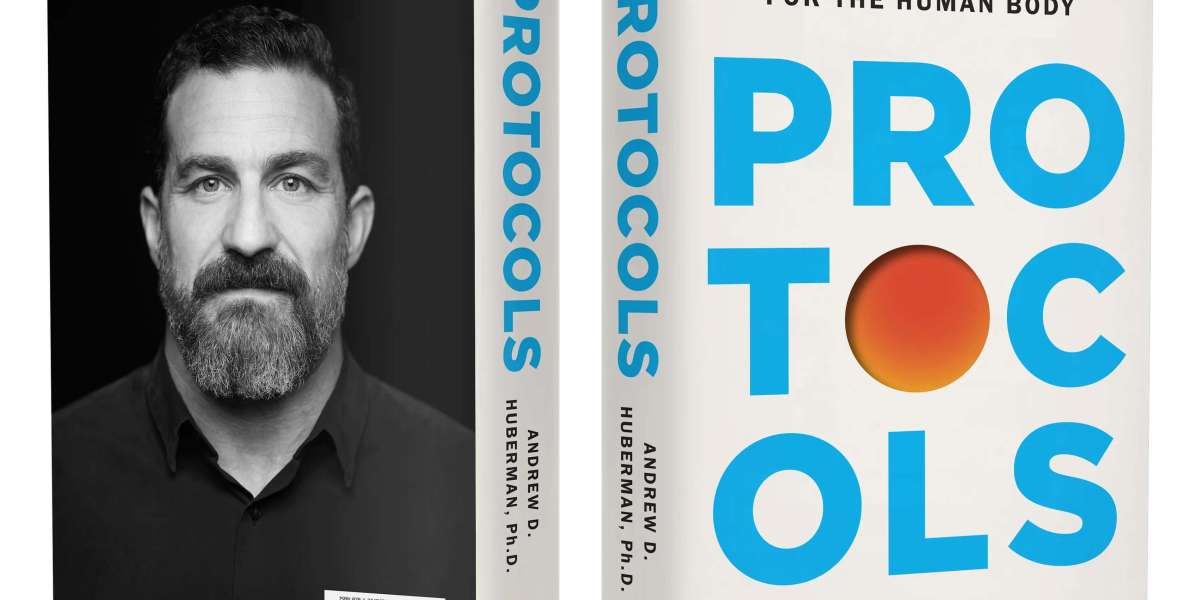

There is a moment we have all experienced—that split second when your heart rate spikes, your palms grow slick, and your body seems to make a decision before your conscious mind has even caught up. That moment is fear in its purest form, and according to Dr. Andrew Huberman, the Stanford neuroscientist behind the Huberman Lab podcast, understanding the brain circuits that generate fear is the first step toward building genuine courage. What makes Huberman’s exploration of this topic so compelling is that he refuses to treat courage as some mystical virtue that you either have or you do not. Instead, he presents it as a skill—a set of neural pathways you can strengthen through deliberate practice and an understanding of how your brain processes threat, uncertainty, and action. The distinction between fear and courage, he explains, is not about the absence of fear but about which circuits you engage once that fear arises.
The Neural Circuitry of Fear
To understand courage, Huberman argues, you must first understand the brain’s fear circuitry, and that journey begins with a small, almond-shaped structure called the amygdala. The amygdala acts as your brain’s rapid-response threat detector, scanning your environment constantly for potential dangers. When it detects something threatening—a sudden loud noise, a looming deadline, a difficult conversation you have been avoiding—it triggers a cascade of physiological responses through the hypothalamus and brainstem. Your heart rate increases, your breathing quickens, and stress hormones like adrenaline and cortisol flood your system. This happens in milliseconds, long before your prefrontal cortex has had a chance to evaluate whether the threat is real or imagined. Huberman emphasizes that this circuit is not broken or dysfunctional; it evolved to keep you alive. The problem arises in modern life when this ancient threat-detection system gets activated by psychological stressors that require not fight or flight but thoughtful engagement.
The Prefrontal Cortex as the Courage Center
If the amygdala is the accelerator on your fear response, Huberman explains that the prefrontal cortex acts as the brake. More specifically, a region called the ventromedial prefrontal cortex communicates directly with the amygdala, essentially telling it to stand down when the threat does not require a full-blown stress response. This is where courage begins to take shape neurologically. Each time you deliberately face something that makes you uncomfortable—having that difficult conversation, taking on a challenging project, even making a phone call you have been dreading—you are strengthening the neural connections between your prefrontal cortex and your amygdala. You are training your brain to pause, assess, and choose a response rather than being driven by automatic fear reactions. Huberman notes that this is why courage is often described as something you build through practice. It is not about eliminating fear; it is about building a stronger regulatory circuit that allows you to act despite it.
The Role of Interoception in Fear
One of the more nuanced aspects of Huberman’s discussion involves interoception—your ability to sense what is happening inside your body. When fear arises, it produces real, measurable sensations: a racing heart, shallow breathing, tension in the chest or throat. How you interpret these sensations matters enormously. If you interpret a racing heart as “I am terrified and cannot handle this,” you amplify the fear response. If you interpret that same racing heart as “my body is preparing me to meet this challenge,” you engage a completely different neural pathway—one associated with excitement, determination, and what researchers call challenge states rather than threat states. Huberman suggests that developing better interoceptive awareness, through practices like box breathing or simply pausing to notice bodily sensations without judgment, gives you the ability to reframe fear responses as fuel rather than signals to retreat.
Tools for Calming the Fear Response
When fear is overwhelming, Huberman offers practical, physiology-based tools that work with your nervous system rather than trying to talk yourself out of being scared. One of his most frequently recommended techniques is the physiological sigh: two quick inhales through the nose followed by a long, extended exhale through the mouth. This pattern of breathing rapidly re-inflates the tiny air sacs in your lungs and activates the parasympathetic nervous system, which calms the fear response at its physiological root. Another tool involves deliberate cold exposure, which Huberman explains helps build what he calls “stress inoculation.” When you voluntarily expose yourself to cold water or a cold shower, you are deliberately activating your stress response in a controlled context, which over time strengthens your ability to remain calm and deliberate when your stress response is triggered unexpectedly. These tools do not eliminate fear, but they give you a way to regulate it so it does not control you.
Building Courage Through Voluntary Discomfort
Perhaps the most empowering aspect of Huberman’s framework is his assertion that courage is built through repeated, voluntary engagement with discomfort. He draws on research showing that individuals who regularly expose themselves to manageable challenges—whether physical, social, or psychological—develop greater resilience and a higher tolerance for uncertainty. This is why practices like cold exposure, high-intensity interval training, or even something as simple as initiating conversations with strangers can have such profound effects on people’s sense of agency. Each time you voluntarily choose discomfort, you are sending a powerful message to your brain: I am capable of facing challenges. I can tolerate uncertainty. I am not at the mercy of my fear circuits. Over time, this shifts your baseline, making you more likely to approach rather than avoid difficult situations across all areas of your life.
Reframing Fear as Information
Huberman encourages listeners to shift their relationship with fear itself. Instead of treating fear as a signal to stop, he suggests treating it as information. Fear tells you that something matters to you, that you are stepping into territory that is meaningful or important. When you feel fear before a presentation, a competition, or a difficult conversation, it is not a sign that you should not do it—it is a sign that your brain recognizes the stakes. Courage is not the absence of that feeling; it is the ability to feel it fully and move forward anyway. Huberman also notes that fear and excitement share nearly identical physiological signatures—increased heart rate, heightened arousal, focused attention. The difference is largely cognitive: how you label the state you are in. Simply telling yourself “I am excited” rather than “I am terrified” can shift which neural circuits dominate, moving you from a fear-driven state to a challenge-driven state. The goal is not to eliminate fear but to build the neural architecture that allows you to harness it, to let it sharpen your focus rather than freeze your limbs, and to recognize that on the other side of every fear you walk through lies a stronger, more capable version of yourself.