
So before you dive into the deep end of construction plans and court measurements, let’s talk about what really goes into building your own court — and how much it’s going to cost you in more ways than one.
So, how much does it really cost?
Ah, the million-dollar question. Or, more realistically, the twenty-thousand-to-hundred-thousand-dollar question.
Here’s the truth: tennis court construction prices are wildly variable. A standard court, built with post-tensioned concrete (the most popular and long-lasting surface), can cost anywhere from $25,000 to $120,000 in the U.S. Factors like location, surface type, drainage, lighting, fencing, and even access for construction vehicles all play a role.
Want a grass court like Wimbledon? Prepare for high maintenance and specialized installation. Going with clay like Roland Garros? It’s easier on the joints but can be a pain to maintain in wet climates.
Then there’s the base work — the hidden, unsexy part. Excavation, grading, drainage. You can’t skip this, even though it’s where a good chunk of the money vanishes. Cutting corners here is like building a mansion on sand — it'll crack, puddle, or worse.
Also, don't forget the extras: lighting (if you're not just playing from 9 to 5), fencing, net posts, windscreens, and maybe even a small viewing area. Each one adds to your bottom line — and your future enjoyment.
The surface isn’t just about color. It’s a science.
A tennis court surface isn’t just chosen for looks. It directly affects how the game is played. Fast, slow, bounce height — it all comes down to what you're standing on.
Hard courts are the most common for a reason: they're durable, relatively low maintenance, and provide consistent bounce. But they’re not all equal. The materials and layering beneath that topcoat? That’s where the magic (or misery) happens.
And let’s talk about that final coat — the color, the texture, the stuff you actually see.
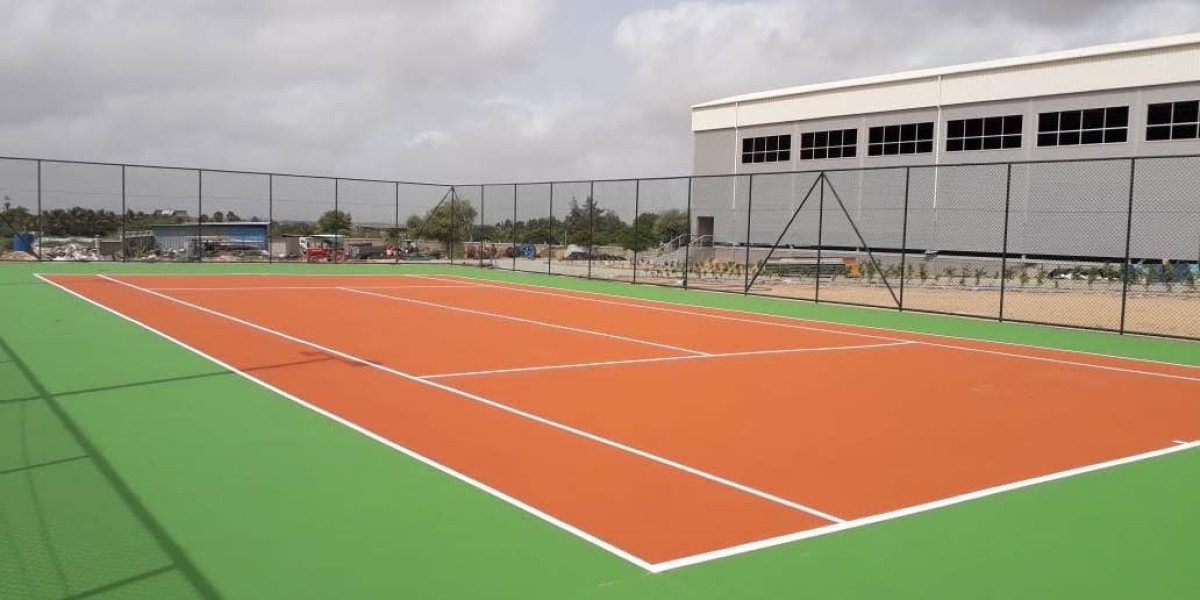
Good quality tennis court paint isn’t just paint. It's an acrylic-based surface coating, specially designed to handle sun, rain, racquet scrapes, and sneaker slides. It’s UV-stable, slip-resistant, and comes in shades so rich it makes the court feel alive.
And while it might seem like an afterthought, don’t underestimate its power. The right paint brings visual clarity to the game, improves player safety, and can even reflect your club’s personality — or your own if it’s a private court.
Who you hire matters more than you think
You might be tempted to hire your local paving contractor because “hey, it’s just a slab, right?” Nope. This is specialized work. And cutting costs here often backfires — literally, when cracks show up a year later.
Reputable tennis court builders understand not just construction but also the game itself. They’ll help you with slope (yes, a tennis court needs slope for drainage), cushioning options, fencing specs, and even wind direction (because that matters more than you’d think when playing outdoors).
Good builders also won’t shy away from showing you their past work or walking you through every decision. Because it’s a partnership. You’re not just hiring labor; you’re hiring peace of mind.
Maintenance: the sneaky budget item
This is where people get surprised. Building the court is just the start. Like any outdoor space, tennis courts need love.
Cracks happen. Fading is inevitable under sun exposure. Moss can creep in if drainage isn’t ideal. And repainting? You’ll probably need to refresh every 5–7 years, especially if you're hosting regular play.
Cleaning, minor repairs, repainting lines — factor all of that into your long-term budget. It’s better to maintain steadily than to do one giant, costly overhaul down the line.
The little joys (and surprises)
Beyond the nuts and bolts, there’s something deeply satisfying about having your own court. Early morning hits with dew still on the baseline. Impromptu matches with friends on a summer evening. Watching your kids grow into confident players. It's not just concrete and paint. It becomes part of your lifestyle.
But fair warning — be prepared for unexpected popularity. That private court might become the neighborhood hot spot faster than you think. You may start getting texts from distant cousins you didn’t know played tennis.
A few final thoughts before you start digging
Here’s the thing: building a tennis court isn’t just about the cost or even the construction. It’s about creating a space where moments happen. Where matches are played and memories are made.
Do your homework. Know your soil, your sun exposure, your drainage possibilities. Ask about permits — because yes, you'll probably need one. Talk to multiple builders. Ask uncomfortable questions about warranties. And don’t let a smooth sales pitch lull you into skipping over the boring details.
Also, think about who you’re building it for. Is this a passion project? A community investment? A professional-level court? Your answers will guide everything — from materials to layout to lighting.
In the end, it's worth it.
There’s something enduring about a well-built court. It stands the test of time, weather, and wear. It's a space that brings people together — quietly, consistently, without fanfare.
Sure, it’s not cheap. And sure, it takes effort. But like most things worth having, it pays you back in ways you can’t always measure — a killer rally, a child’s first ace, a moment of calm under the open sky.