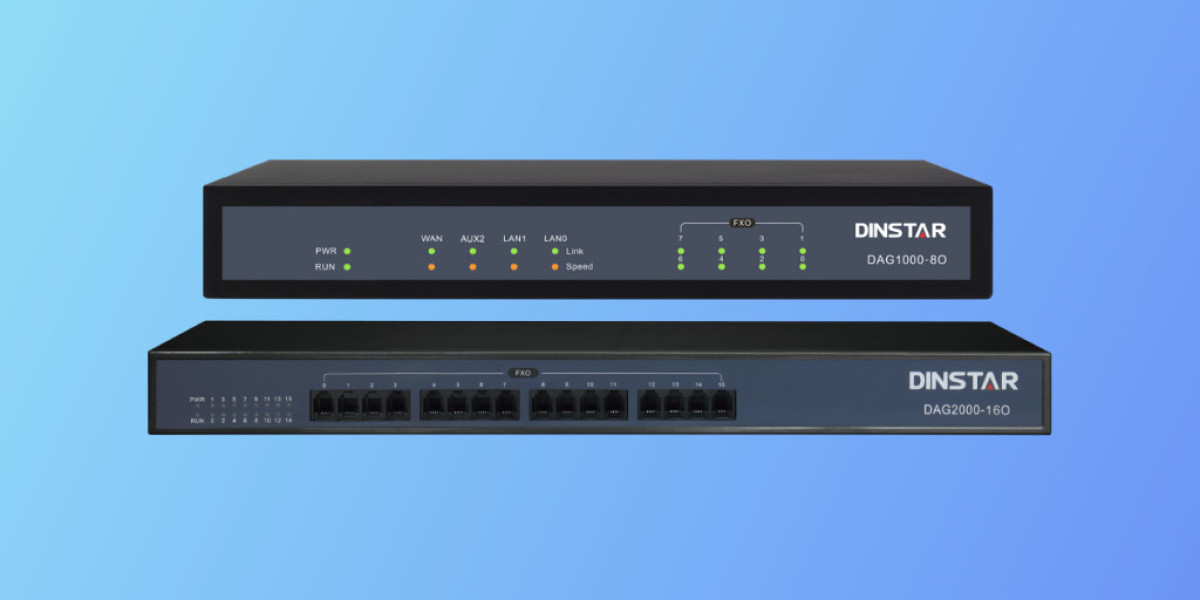

Analog Gateways play a vital role in connecting traditional telephony systems with modern IP-based communication networks. As businesses shift towards digital communication, they often face the challenge of integrating old analog devices—such as phones, fax machines, and legacy PBXs—with advanced VoIP platforms. This is where the Analog Gateway provides a smooth, cost-effective, and reliable bridge.
What Is an Analog Gateway?
An Analog Gateway is a device that converts analog voice signals into digital packets, enabling communication between legacy equipment and IP networks. It works as an interface between analog lines and modern VoIP systems, making it easier for businesses to upgrade without replacing their existing telephony infrastructure.
These gateways typically include a combination of ports that connect analog devices to SIP servers, IP PBXs, or cloud telephony platforms. By converting signals in real-time, the gateway ensures seamless voice communication across both analog and digital environments.
Why Businesses Still Need Analog Gateways
Even with the rapid adoption of VoIP, many organizations still rely on analog systems for various operational needs. Replacing all analog devices at once may be costly or impractical. An Analog Gateway allows them to retain existing hardware while unlocking the benefits of IP calling.
Key reasons businesses rely on Analog Gateways include:
Supporting legacy desk phones and fax machines
Connecting traditional PBXs to SIP trunks
Integrating remote branches with centralized IP communication
Ensuring a smooth transition during a phased digital upgrade
Reducing the cost of complete hardware replacement
How an Analog Gateway Works
The working mechanism of an Analog Gateway is straightforward yet efficient. It receives an analog signal and converts it into digital data packets that can be transmitted over an IP network. When the call reaches its destination, the gateway converts the packets back into analog format if required.
This two-way conversion process offers:
Real-time voice transmission
Enhanced clarity and minimal signal loss
Compatibility with modern VoIP protocols such as SIP
Secure, stable call routing across hybrid systems
The gateway also manages call signaling, echo cancellation, digit mapping, and codec negotiation to ensure smooth communication.
Types of Analog Gateways
Analog Gateways are broadly classified based on the type of interfaces they support:
1. FXS Gateways
These connect analog devices like telephones and fax machines to IP networks. They act as the “line provider” and supply dial tone, ringing voltage, and battery power to analog endpoints.
2. FXO Gateways
These connect traditional telephone lines to IP-based phone systems. They act as the “device side” and allow VoIP systems to make or receive calls via PSTN lines.
3. Hybrid Analog Gateways
These offer a combination of FXS and FXO interfaces, providing flexibility to integrate both analog devices and PSTN lines in the same system.
Key Features of Analog Gateways
Modern Analog Gateways are equipped with advanced features that enhance performance and reliability:
High-quality voice transmission with advanced echo cancellation
Support for codecs like G.711, G.729, and Opus
Easy integration with IP PBX and VoIP platforms
Failover mechanisms to ensure uninterrupted communication
Web-based configuration and remote management
Flexible routing rules for call optimization
Secure communication through TLS and SRTP
These features make the Analog Gateway a robust solution for organizations with hybrid telephony environments.
Benefits of Using an Analog Gateway
Analog Gateways offer multiple advantages for small businesses, enterprises, and service providers:
1. Cost Efficiency
Businesses can reuse existing analog infrastructure, saving on the expense of upgrading all devices at once.
2. Smooth Migration to IP
They enable a step-by-step transition from traditional telephony to modern VoIP systems without operational disruption.
3. Scalability
Analog Gateways come in various port configurations, allowing organizations to expand communication networks as needed.
4. Increased Compatibility
They work with a wide range of analog devices and VoIP platforms, ensuring flexibility and future-proofing.
5. Reliable Communication
With robust processing and signal optimization, gateways provide clear, consistent voice quality across networks.
Where Analog Gateways Are Used
Analog Gateways find applications across various industries and environments, such as:
Small and medium businesses
Hospitality sector (hotels, resorts)
Educational institutions
Corporate offices with legacy PBX systems
Healthcare centers
Remote branch offices
Call centers requiring PSTN backup
Their ability to connect two different communication worlds makes them essential in hybrid setups.
Conclusion
Analog Gateways continue to play a crucial role in today’s communication landscape by enabling seamless integration between analog devices and modern IP-based systems. They provide businesses with a cost-effective, flexible, and scalable solution to upgrade their communication infrastructure without abandoning existing hardware. Whether an organization wants to maintain legacy equipment, ensure PSTN backup, or migrate gradually to VoIP, an Analog Gateway serves as the perfect bridge for uninterrupted and optimized communication.