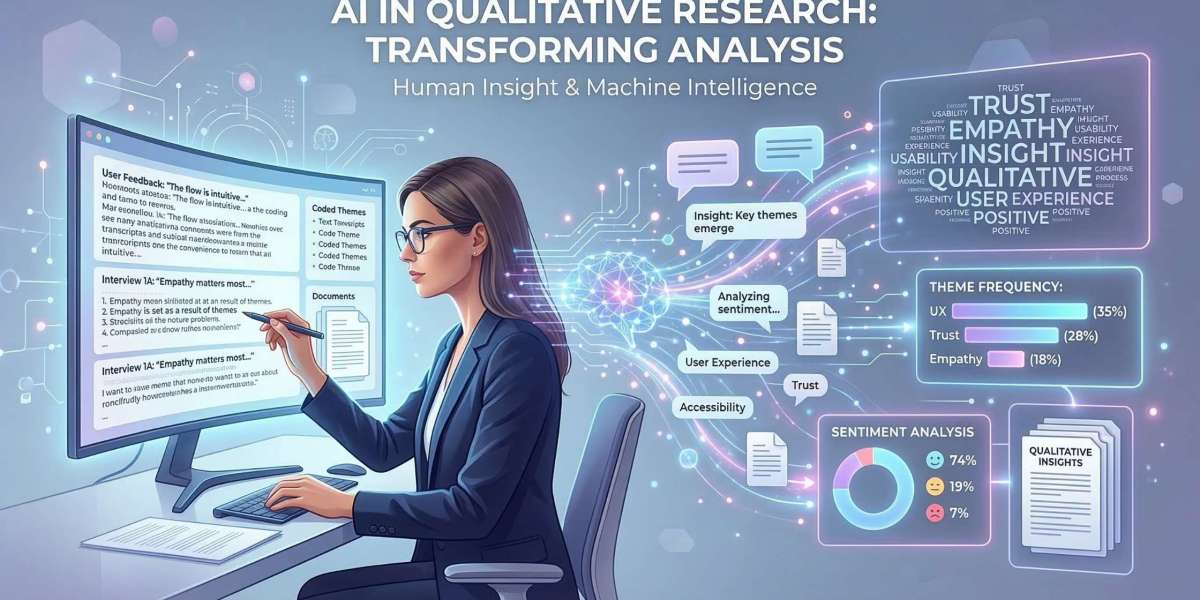

Qualitative research has long been essential for understanding human behavior, opinions, and experiences. Researchers rely on interviews, focus groups, open-ended surveys, and documents to gather rich insights. However, analyzing large volumes of qualitative data can be time-consuming and complex. Today, artificial intelligence (AI) is changing the way researchers approach this task. By automating and enhancing different stages of the research process, AI is significantly transforming qualitative analysis methods and making them more efficient, accurate, and scalable.
In this blog, we will explore how AI is reshaping qualitative analysis methods and why researchers and businesses are increasingly adopting AI-powered tools.
The Role of Qualitative Analysis Methods in Research
Before understanding the impact of AI, it is important to understand what qualitative analysis methods are. These methods are used to analyze non-numerical data such as text, audio, video, and images. Researchers use these methods to identify patterns, themes, and meanings within data.
Common qualitative analysis methods include thematic analysis, content analysis, discourse analysis, and grounded theory. These approaches help researchers interpret complex human experiences and social interactions. However, traditional qualitative research often involves manual coding and interpretation, which can take weeks or even months when dealing with large datasets.
How AI Is Changing Qualitative Analysis Methods
Artificial intelligence is revolutionizing the way researchers perform qualitative analysis methods. With advanced machine learning and natural language processing, AI can analyze massive amounts of text data quickly and efficiently.
AI tools can automatically identify themes, detect sentiment, and categorize responses from interviews or surveys. This automation reduces the time required for manual coding and allows researchers to focus more on interpreting insights rather than organizing data.
For example, AI-powered software can scan hundreds of interview transcripts and highlight recurring themes or keywords within minutes. This capability significantly improves the speed and accuracy of qualitative analysis methods, especially when dealing with large research projects.
Automated Coding and Theme Detection
One of the most powerful ways AI is transforming qualitative analysis methods is through automated coding. Traditionally, researchers read through transcripts and assign codes to segments of text. While effective, this process is labor-intensive.
AI can now automatically suggest or generate codes based on patterns in the data. It can group similar responses together and detect emerging themes that might be difficult to identify manually. As a result, automated coding enhances consistency and reduces human bias in qualitative analysis methods.
Researchers can still refine or adjust the AI-generated codes, combining human expertise with machine efficiency for more accurate results.
Faster Analysis of Large Data Sets
Modern research often generates large volumes of qualitative data from surveys, social media, interviews, and customer feedback. Analyzing such datasets manually can be overwhelming.
AI enables researchers to process and analyze thousands of responses quickly. This speed allows organizations to apply qualitative analysis methods at a much larger scale than before. Businesses can analyze customer feedback in real time, while academic researchers can examine broader datasets for deeper insights.
By accelerating data processing, AI makes qualitative analysis methods more practical for large-scale research projects.
Improved Accuracy and Deeper Insights
Another advantage of AI-powered qualitative analysis methods is improved analytical accuracy. AI algorithms can detect patterns and relationships within data that might be overlooked by human researchers.
For example, sentiment analysis tools can identify emotional tones in responses, while topic modeling can reveal hidden themes within large text datasets. These capabilities allow researchers to gain deeper insights and uncover trends that may not be immediately obvious.
However, AI should not completely replace human interpretation. The best results often come from combining AI-driven analysis with human judgment.
The Future of AI in Qualitative Analysis Methods
As AI technology continues to evolve, it will play an even larger role in qualitative analysis methods. Future tools may integrate voice recognition, advanced natural language understanding, and predictive analytics to further enhance qualitative research.
Researchers will likely adopt hybrid approaches that combine human expertise with AI-powered analysis. This combination will allow faster research cycles, more reliable results, and deeper understanding of complex human behaviors.
AI-driven platforms will also make qualitative analysis methods more accessible to students, small research teams, and businesses that previously lacked the resources for extensive qualitative research.
Conclusion
Artificial intelligence is transforming the way researchers conduct and interpret qualitative research. From automated coding to faster data processing and deeper insights, AI is significantly improving the efficiency and accuracy of qualitative analysis methods. While human interpretation remains essential, AI provides powerful support that enhances the research process.
As qualitative research continues to evolve, platforms like flowres are helping researchers apply advanced technologies to streamline their workflow. By combining innovation with proven research practices, flowres supports modern researchers in making the most of qualitative analysis methods and generating meaningful insights from complex data.