
Mumbai is a strong city for flexible workspaces because it concentrates decision makers, capital, talent, and fast-moving businesses in a way very few Indian cities do. Demand is not driven by trends but by daily operational needs. Companies here choose flexibility to manage cost pressure, hiring volatility, and location constraints. This is why the Top Coworking space Mumbai operators see steady demand across business cycles.
Mumbai rewards speed and access. Flexible workspaces fit naturally into how the city works.
Business density creates constant workspace demand
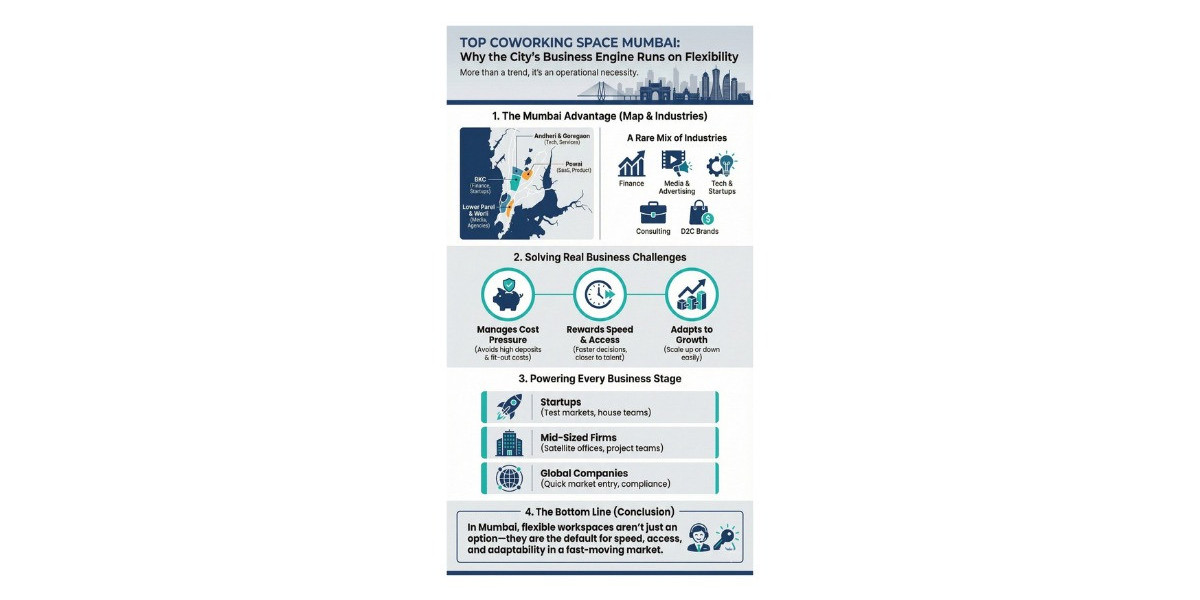
Mumbai has a rare mix of industries working side by side.
• Finance and investment firms
• Media and advertising agencies
• Startups and tech-led services
• Consulting, legal, and compliance teams
• D2C brands running sales and operations together
Many of these teams are small, grow unevenly, or operate in short planning cycles. Long-term office leases slow them down. This is where coworking spaces in Mumbai become a practical choice rather than a lifestyle one.
Teams can add seats after funding, reduce space during slow quarters, or open a second location without board-level approvals.
Location matters more in Mumbai than in most cities
In Mumbai, travel time directly affects productivity. A two-hour commute can break a workday.
Flexible workspaces succeed here because they appear where business already happens.
• BKC for finance, startups, and global teams
• Lower Parel and Worli for agencies and media
• Andheri and Goregaon for tech and services
• Powai for product and SaaS teams
For many companies, choosing coworking office space in Mumbai is less about amenities and more about putting teams closer to clients, partners, and talent pools.
Cost pressure pushes companies toward flexibility
Commercial real estate in Mumbai is expensive and slow to commit.
Businesses face
• High security deposits
• Lock in periods
• Fit out and maintenance costs
• Risk of outgrowing space too fast
Flexible workspaces remove most of this friction. Monthly pricing and ready-to-use setups help founders and managers focus on revenue and delivery rather than property management.
This is why even profitable companies choose the best coworking spaces in Mumbai instead of traditional offices.
How different businesses actually use coworking in Mumbai
This is not just for freelancers.
Startups use coworking to
• Run sales and customer success teams
• House engineering pods close to hiring hubs
• Test new markets before leasing
Mid-sized companies use coworking to
• Set up satellite offices
• Handle project-based teams
• Support hybrid work policies
Global firms use coworking spaces in Mumbai to
• Enter the Indian market quickly
• Keep compliance teams close to financial centers
• Avoid long real estate approvals
These are operational decisions, not branding ones.
Talent expectations also shape workspace choices
Mumbai professionals value
• Shorter commutes
• Reliable infrastructure
• Professional meeting environments
Flexible workspaces meet these expectations without companies building everything themselves. This improves attendance, reduces attrition, and makes hybrid work workable.
The Top Coworking space Mumbai options succeed because they support how teams actually work, not how offices are marketed.
Why flexible offices outperform traditional leases in Mumbai
Traditional offices assume stability. Mumbai businesses operate in constant motion.
Flexible offices work better because they allow
• Faster decision making
• Lower financial risk
• Easier expansion and contraction
• Multiple locations under one model
For many leadership teams, coworking office space in Mumbai is now the default choice, not a temporary fix.
Conclusion
Mumbai supports flexible workspaces because its business environment demands speed, access, and adaptability. High real estate costs, dense commercial zones, and unpredictable growth patterns make long-term office commitments risky. Flexible workspaces solve real operational problems for startups, mid-sized firms, and global companies alike. The continued growth of the best coworking spaces in Mumbai is a result of practical business needs, not passing trends.
FAQs
Why are coworking spaces popular in Mumbai?
Because businesses need flexibility to manage costs, commute challenges, and fast-changing team sizes.
Are coworking spaces suitable for large teams?
Yes. Many operators offer private offices and full floors for medium and large teams.
Is coworking more expensive than traditional offices?
Monthly costs may seem higher per seat, but overall spending is often lower when deposits, fit outs, and idle space are considered.
Which areas in Mumbai have high coworking demand?
BKC, Lower Parel, Andheri, Powai, and Goregaon see consistent demand due to business concentration.
Can established companies use coworking spaces long-term?
Yes. Many established firms use coworking as a permanent or multi-location workspace strategy.