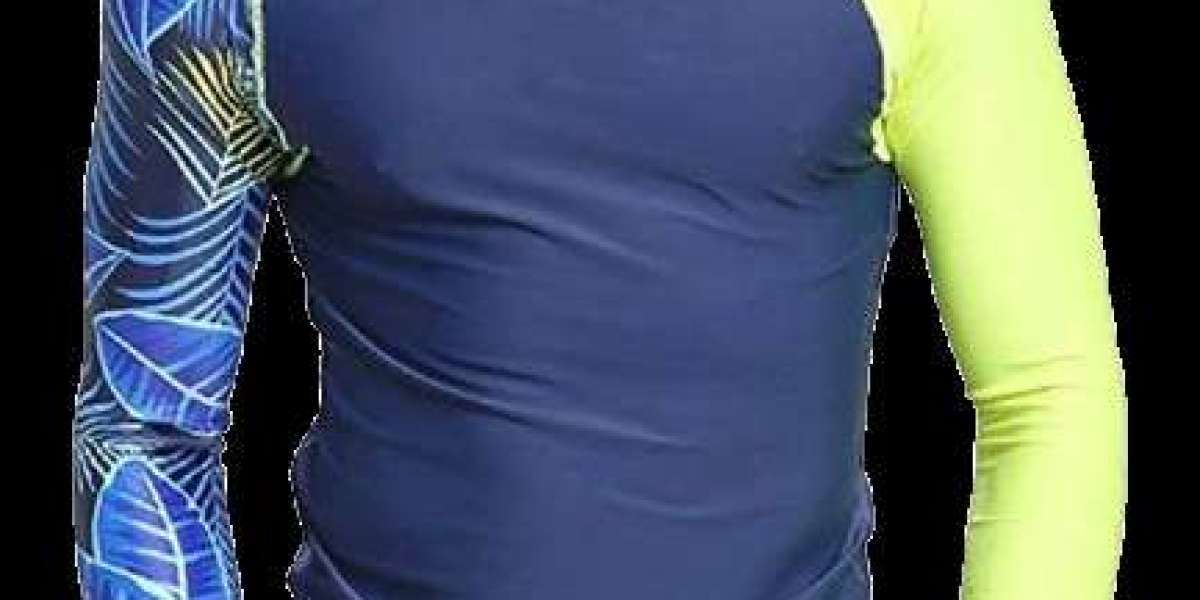

In the global B2B swimwear market of 2026, the rash guard shirt has evolved from a basic utility item into a high-tech performance garment. However, as the demand for "athleisure-meets-aquatics" surges, many retailers and wholesalers are encountering a significant hurdle: the quality gap.
When a B2B partner sources a collection that fails to perform under real-world conditions—be it surfing, paddleboarding, or high-intensity reef exploration—the cost isn't just a returned item. The cost is the erosion of consumer trust and the loss of long-term shelf space. Today, we examine the critical problems facing the rash guard shirt sector and the technical solutions required to ensure your inventory remains a market leader.
1. The "Transparency" Trap: Fabric Opacity and Wet-State Performance
One of the most frequent complaints in the B2B apparel space involves the "wet-state" failure of lightweight fabrics. Many manufacturers, in an attempt to reduce unit costs, utilize low-denier polyester blends. While these might feel soft in a dry showroom, they become semi-transparent when wet, rendering the rash guard shirt functionally useless for the modest or professional consumer.
The Solution: To solve this, industry experts must specify a high-gauge knit with a minimum weight of 210 GSM (Grams per Square Meter). Utilizing a "black-out" weave construction ensures that even lighter colors maintain opacity. When negotiating with factories, demand a V-test for wet transparency to ensure the garment maintains its professional integrity in the water.
2. The UV Protection Myth: Chemical vs. Mechanical Blocking
In 2026, "sun-safe" is a non-negotiable marketing claim. However, the industry is currently plagued by "chemical-washout." Many low-tier rash guard shirt suppliers achieve their UPF 50+ rating by dipping the fabric in a UV-absorbing solution. After 15–20 washes, the protection fades, leaving the user vulnerable to solar radiation.
The Solution: B2B buyers should prioritize mechanical UV protection. This is achieved through a high-density weave where the fibers themselves are packed tightly enough to block 98% of UVA and UVB rays. By sourcing textiles where the protection is structural rather than chemical, you provide a "lifetime guarantee" of safety—a powerful selling point for premium retail brands.
3. Solving the "Chafe-Point" Engineering Crisis
The primary function of a rash guard shirt is to prevent abrasion. Paradoxically, poor manufacturing often creates new friction points. Rough overlock stitching or improper placement of side seams can lead to severe skin irritation during the repetitive motions of paddling or swimming.
The Technical Fix:
Flatlock Stitching: Ensure the factory uses a 6-thread, 4-needle flatlock machine. This creates a seam that lies completely flat against the skin, eliminating the "ridge" that causes chafing.
Seamless Underarm Gussets: Expertly designed garments remove seams from high-friction areas like the armpit.
Tagless Construction: In 2026, heat-transfer labels have replaced woven tags, which are a primary source of neck irritation in high-salt environments.
4. Supply Chain Resilience: The 2026 Lead-Time Paradox
The swimwear industry is notoriously seasonal, but the 2026 supply chain is increasingly volatile due to shifting trade regulations and regional logistics bottlenecks. Many B2B buyers find themselves "chasing the season"—ordering inventory that arrives just as the peak summer demand begins to wane.
The Strategic Pivot:
Modular Manufacturing: Work with vendors who offer "blanks" in high-performance fabrics that can be customized with local printing or branding. This reduces the time-to-market for trending designs.
Nearshoring for Replenishment: While your bulk "core" inventory may come from large-scale overseas factories, establish a "rapid-response" partnership with regional manufacturers for mid-season restocking.
Digital Prototyping: Utilize 3D garment rendering (such as Browzwear or CLO) to eliminate the 4-week physical sampling loop. This allows you to finalize a rash guard shirt design in days.
The Future of the Category: Sustainable Performance
As we look toward the 2027 planning cycle, sustainability has moved from "optional" to "operational." Consumers are now looking for recycled nylon (ECONYL) or recycled polyester (rPET) in their performance gear. For the B2B buyer, ensuring these materials meet the same "stretch and recovery" standards as virgin plastics is the final hurdle in future-proofing a product line.
By solving the technical problems of opacity, UV longevity, and seam engineering, you transform a simple rash guard shirt into a piece of essential equipment. In a crowded marketplace, technical reliability is the ultimate brand protector.