
In the world of digital marketing, one of the most common questions businesses ask is:
Should you invest in SEO or paid advertising?
Both strategies are powerful, but they work in completely different ways. Choosing the right one depends on your business goals, budget, and timeline.
The truth is — it’s not about choosing one blindly. It’s about understanding how each works and when to use them.
What Is SEO?
Search Engine Optimization (SEO) is the process of improving your website so it ranks higher in organic (unpaid) search results on platforms like Google.
SEO focuses on:
Keyword optimization
Content creation
Technical improvements
Backlink building
The goal is to generate consistent, long-term traffic without paying for each click.
What Are Paid Ads (PPC)?
Paid advertising, also known as Pay-Per-Click (PPC), allows businesses to display ads on search engines or social media platforms and pay only when someone clicks on them.
These ads usually appear at the top of search results, giving instant visibility.
Key Difference Between SEO and Paid Ads
The main difference is simple:
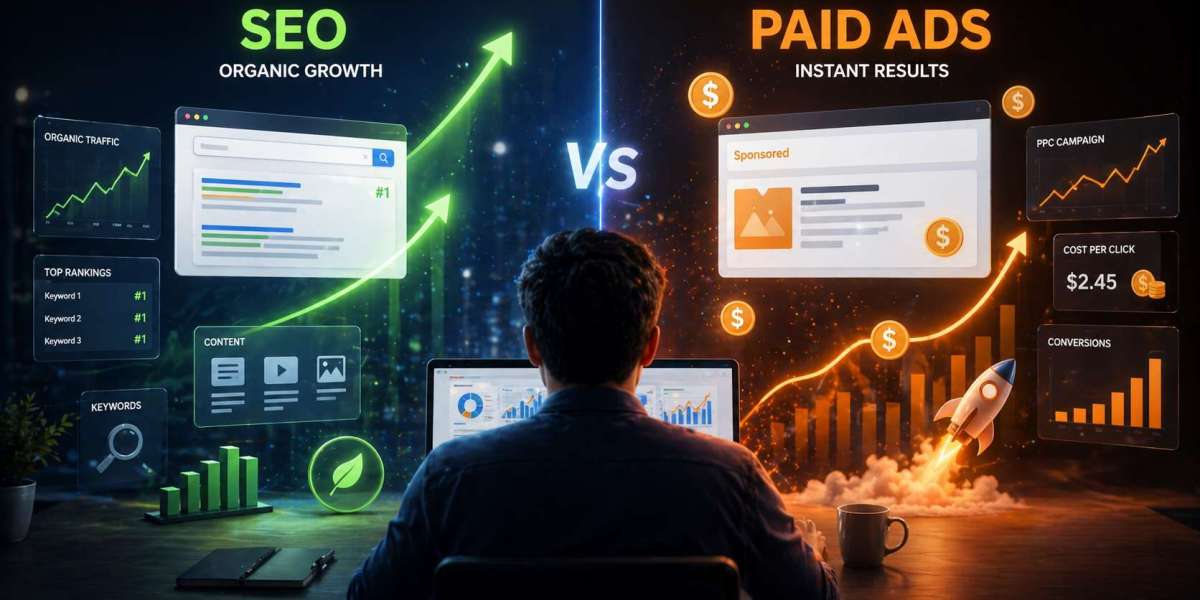
SEO = Long-term organic growth
Paid Ads = Instant paid traffic
SEO builds your presence over time, while paid ads deliver immediate results.
SEO vs Paid Ads: Detailed Comparison
1. Speed of Results
SEO takes time — usually months to see results
Paid ads can generate traffic instantly
Businesses that need quick leads often prefer PPC, while SEO is ideal for long-term growth.
2. Cost Structure
SEO requires upfront investment (content, optimization)
Paid ads require continuous spending per click
Over time, SEO becomes more cost-effective because you don’t pay for every visitor.
3. Traffic Sustainability
SEO traffic continues even after investment
Paid traffic stops immediately when budget ends
This makes SEO more sustainable in the long run.
4. Trust and Credibility
Users often trust organic results more than ads, making SEO important for building brand authority.
5. Targeting and Control
Paid ads offer precise targeting (location, age, interests)
SEO has less direct control but broader reach
Pros and Cons of SEO
✅ Pros:
Long-term traffic without per-click cost
Builds brand credibility
Higher ROI over time
Sustainable growth
❌ Cons:
Slow results
Requires consistent effort
Competitive in some industries
Pros and Cons of Paid Ads
✅ Pros:
Instant traffic and visibility
Highly targeted campaigns
Easy to test strategies
Scalable quickly
❌ Cons:
Expensive in competitive markets
Traffic stops when ads stop
Requires continuous optimization
Paid ads are great for short-term campaigns, but they don’t build long-term assets.
When Should You Choose SEO?
SEO is the best choice when:
You want long-term growth
You have a limited budget
You want to build authority
Your audience searches for information
SEO works like an investment — slow at first, but powerful over time.
When Should You Choose Paid Ads?
Paid ads are ideal when:
You need immediate results
You’re launching a new product
You want quick leads or sales
You’re running time-sensitive campaigns
PPC is perfect for short-term wins and quick visibility.
Real Insight from Marketers (Community Perspective)
From real-world discussions, many marketers agree:
“SEO is slow but compounds over time, while ads deliver instant results but stop when spending stops.”
Another common insight:
“Best results come from using ads for testing and SEO for long-term growth.”
This highlights an important point — both strategies serve different purposes.
The Smart Strategy: SEO + Paid Ads Together
Instead of choosing one, many businesses combine both strategies.
Here’s how:
Use paid ads for quick traffic and testing
Use SEO for long-term growth and authority
Use PPC data to improve SEO content
Retarget SEO visitors with ads
Combining both can maximize traffic, conversions, and ROI.
Which One Is Better for Your Business?
The answer depends on your situation:
Scenario | Best Choice |
New business | Paid Ads |
Limited budget | SEO |
Quick results needed | Paid Ads |
Long-term growth | SEO |
Competitive niche | Both |
There is no one-size-fits-all answer — the right strategy depends on your goals.
Final Thoughts
SEO and paid ads are not competitors — they are complementary strategies.
SEO builds long-term value
Paid ads deliver immediate results
Businesses that rely only on ads may struggle with costs, while those relying only on SEO may miss quick opportunities.
? The smartest approach is to balance both.
FAQs
1. Which is better: SEO or paid ads?
Both are effective. SEO is better for long-term growth, while paid ads are better for quick results.
2. Is SEO cheaper than paid ads?
In the long run, yes. SEO becomes more cost-effective because you don’t pay per click.
3. How long does SEO take to work?
SEO typically takes 3–6 months to show significant results.
4. Do paid ads work instantly?
Yes, paid ads can generate traffic and leads almost immediately.
5. Should I use SEO and paid ads together?
Yes, combining both strategies often delivers the best results.