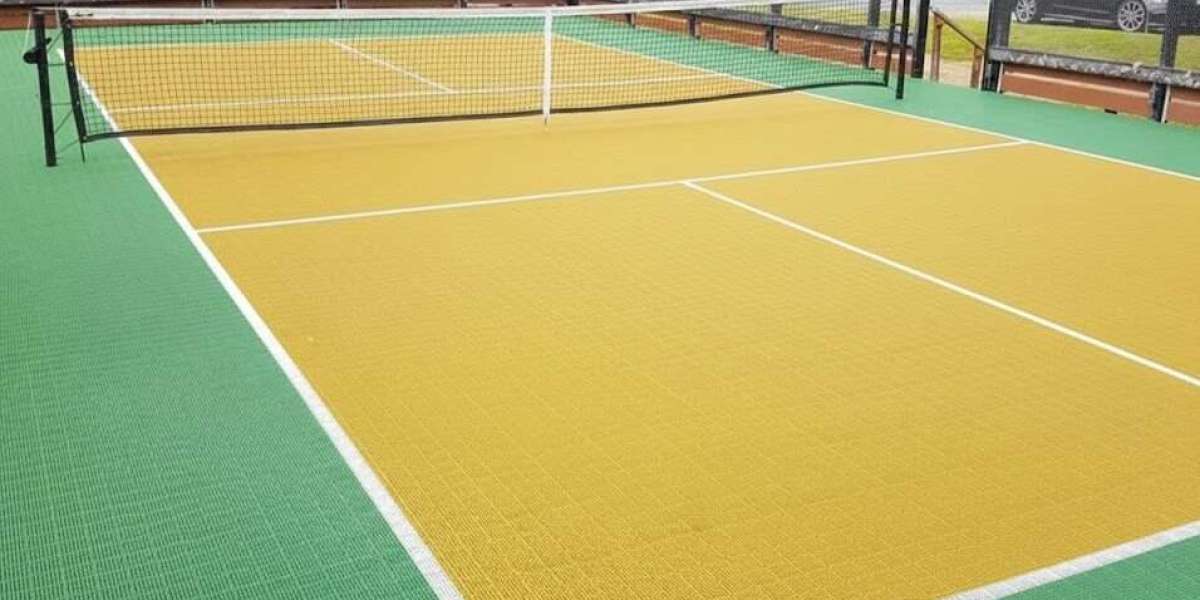

But something interesting happens once the excitement of a new court fades. Players begin to notice the details.
They talk about how the ball bounces. They mention whether the surface feels comfortable after a long match. Someone might even comment on the colors of the court and how easy it is to track the ball during fast rallies. These small elements — often invisible to first-time players — are what make a pickleball court feel thoughtfully designed rather than hastily built.
Creating that kind of space takes more than paint and a net. It requires careful planning, the right materials, and a good understanding of how people actually play the game.
The Court Surface Is the Heart of the Game
If you ask experienced players what makes a court enjoyable, they’ll often talk about the “feel” of the surface. It’s a simple phrase, but it means a lot.
Pickleball involves constant movement: short sprints, quick pivots, sudden stops near the kitchen line. A court that’s too slick can make players cautious, while one that’s overly rough can feel tiring during longer games.
That’s why modern sports facilities rely heavily on synthetic acrylic flooring materials when constructing pickleball courts. These specialized coatings are designed to provide the ideal balance between traction and smoothness.
Typically, the court begins with a strong foundation — either asphalt or concrete. This base layer provides the structural stability needed for consistent bounce and long-term durability. Over that base, several layers of acrylic coating are applied. Each layer serves a purpose: improving grip, protecting the surface from weather damage, and creating that slightly textured feel players depend on for quick footwork.
One of the biggest advantages of acrylic systems is their resilience. Outdoor courts deal with sun, rain, temperature changes, and plenty of foot traffic. A well-applied acrylic surface can withstand these challenges while still maintaining its performance for years.
Some courts even include cushioned layers beneath the acrylic coating. These extra layers help absorb impact, reducing stress on players’ knees and ankles — something regular players definitely appreciate.
Why the Color of a Court Actually Matters
At first glance, court color might seem like a purely aesthetic decision. Blue, green, maybe a bit of red around the edges — it’s easy to assume the choice is just about style.
In reality, pickleball court colors play a surprisingly important role in how the game unfolds.
The main reason is visibility. Pickleball moves quickly, and players need to track the ball clearly against the court surface. If the color contrast between the ball and the court isn’t strong enough, rallies become harder to follow.
Most courts use a two-tone or three-tone color scheme. The central playing area is usually one color — often blue or green — while the surrounding zones are painted in a contrasting shade. This difference helps players quickly recognize boundaries and improves depth perception during fast exchanges.
Lines are typically painted bright white or yellow for maximum clarity. During competitive games, that crisp contrast can make the difference between confidently calling a ball “in” or hesitating for a split second.
Color also shapes the atmosphere of a facility. Bright courts tend to feel energetic and lively, while softer tones can create a more relaxed environment. Some sports complexes even choose colors that reflect their branding or community identity.
So yes, color makes the court look good — but it’s also helping players perform better without them even realizing it.
Layout and Spacing: The Hidden Essentials
Another detail people rarely think about until they experience a poorly designed court is spacing.
Pickleball courts may be smaller than tennis courts, but players still need room to move. Chasing a deep lob or stretching for a wide return often takes players beyond the baseline or toward the sideline.
Good court design includes several feet of clearance around the playing area. This buffer zone allows players to move naturally without worrying about fences, walls, or benches getting in the way.
Court orientation is another subtle but important factor. Outdoor courts are typically aligned north to south to reduce glare from the sun. Without that orientation, players may find themselves staring directly into sunlight during early morning or late afternoon matches.
It’s the kind of design detail most people don’t notice when it’s done well — but immediately feel when it isn’t.
Indoor Courts Bring a Different Experience
While many pickleball courts are outdoors, indoor facilities are becoming more common as the sport grows.
Indoor courts offer consistency. There’s no wind affecting the ball, no sudden rain interrupting games, and lighting can be controlled carefully. For competitive players, this predictability is often a major advantage.
But outdoor courts still carry a certain charm. Playing under an open sky, hearing other games happening nearby, and enjoying the social buzz of a busy park gives pickleball a relaxed, community-driven feel.
Construction approaches differ slightly between the two. Outdoor courts must handle drainage and weather exposure, while indoor courts focus more on lighting quality and sound management. The sharp pop of a pickleball paddle can echo quite loudly inside large indoor spaces, so designers often include acoustic considerations when planning facilities.
Maintenance Keeps Courts Playing Their Best
Even the most carefully constructed pickleball court needs occasional maintenance.
Outdoor courts accumulate dust, leaves, and small debris that can affect traction and ball movement. Regular cleaning helps keep the surface safe and enjoyable.
Over time, the painted lines and surface coatings may fade due to sunlight and frequent play. Resurfacing the court every few years restores both its appearance and its performance.
The good news is that pickleball courts are relatively low-maintenance compared to many other sports surfaces. With basic care, they can remain in excellent condition for a long time.
More Than Just a Playing Surface
In the end, a pickleball court is more than just a rectangle of painted pavement. It becomes a place where people gather.
Morning players meet before work for quick games. Friends show up in the evening for friendly competition. Beginners learn the sport while experienced players offer tips from the sidelines.
Over time, the court becomes part of the community’s rhythm — a place where exercise, conversation, and a little friendly rivalry all come together.
And when that court is built thoughtfully — with the right materials, colors, and layout — it quietly supports every match played on it.
Players may not think about the design decisions behind the surface beneath their feet. They’re too busy enjoying the rally. But every smooth bounce, every confident step, and every satisfying shot owes something to the careful planning that created the court in the first place.