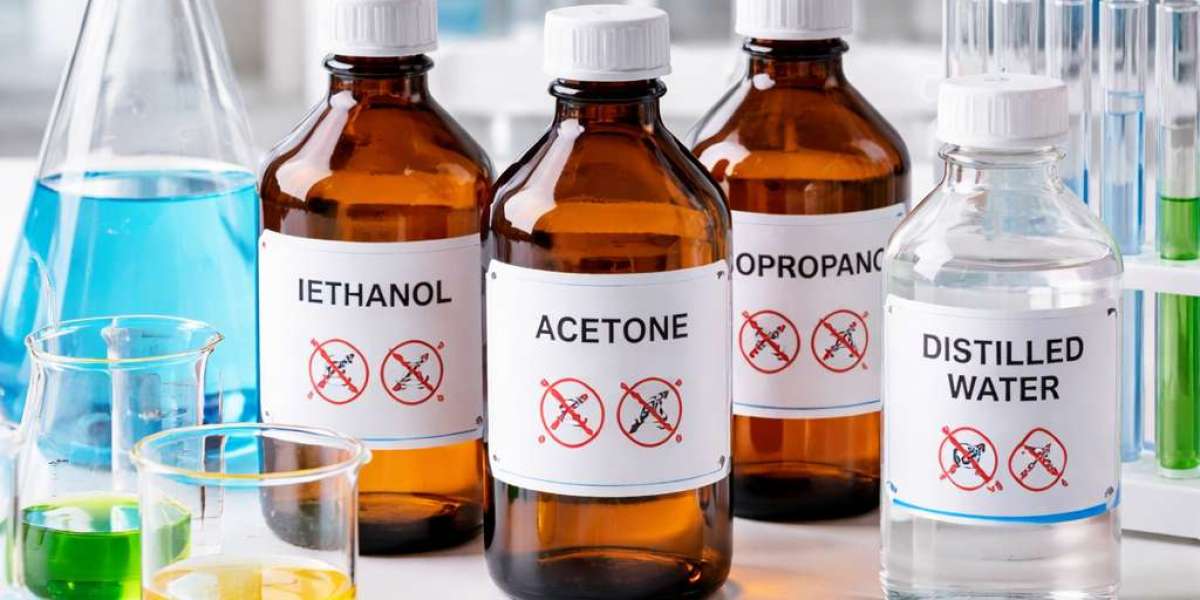

Laboratory solvents are fundamental chemicals used in laboratories to dissolve, dilute, or extract substances during scientific experiments and analytical procedures. Whether in research facilities, industrial laboratories, or educational institutions, solvents play a critical role in enabling chemical reactions and ensuring accurate results.
Modern laboratories rely on a wide range of solvents and inorganic chemicals to perform experiments, prepare solutions, and conduct chemical testing. These substances help scientists create stable reaction environments, improve measurement accuracy, and support different analytical techniques. From preparing samples to cleaning equipment, laboratory solvents are involved in nearly every stage of laboratory work.
Understanding Laboratory Solvents
Laboratory solvents are liquids capable of dissolving other substances to form homogeneous mixtures known as solutions. They are commonly used to dissolve reagents, prepare samples, and facilitate reactions in various scientific applications.
Common examples of laboratory solvents include:
Water
Ethanol
Methanol
Acetone
Hexane
Each solvent has unique chemical properties that make it suitable for specific laboratory procedures. Selecting the correct solvent ensures better reaction efficiency, improved analysis, and more reliable experimental results.
Laboratories often use solvents together with inorganic salts and reagents to create specialized chemical solutions for labs. These solutions support various research and testing processes across multiple scientific fields.
Importance of Laboratory Solvents in Chemical Testing
One of the most important uses of laboratory solvents is in chemical testing. In analytical laboratories, solvents are used to dissolve samples and reagents so that chemical reactions can occur under controlled conditions.
Solvents help in chemical testing by:
Dissolving substances for analysis
Enabling chemical reactions between compounds
Extracting specific components from mixtures
Supporting analytical techniques such as chromatography and spectroscopy
Without proper solvents, many chemical tests would not produce accurate or reproducible results.
Role of Pre-Made Laboratory Solutions
To improve efficiency and reduce preparation errors, many laboratories rely on pre-made laboratory solutions. These solutions are prepared with precise solvent ratios and high-quality chemicals, ensuring consistent results across experiments.
Benefits of using pre-made solutions include:
Time-saving: Researchers can focus on experiments instead of preparing chemicals.
Accuracy: Solutions are prepared using standardized formulations.
Consistency: Reduces variability between batches.
Safety: Minimizes direct handling of concentrated chemicals.
These ready-to-use solutions are particularly useful in laboratories performing routine chemical analysis and quality control testing.
Chemical Solutions for Labs
Laboratories use a wide range of chemical solutions for labs to support scientific research and industrial applications. These solutions are typically prepared by dissolving salts, acids, bases, or organic compounds in appropriate solvents.
Examples of commonly used laboratory solutions include:
Cleaning solutions for laboratory equipment
Calibration solutions for instruments
Reagent solutions for chemical reactions
Analytical standards for testing procedures
Properly prepared solutions ensure experiments are conducted under stable and controlled conditions.
Laboratory Buffers and Solvent Applications
Another important category of laboratory solutions is laboratory buffers. Buffers help maintain a stable pH level in chemical and biological experiments.
Laboratory solvents are essential for preparing buffer solutions because they dissolve the buffering components and maintain consistent concentration levels. These buffers are commonly used in:
Biochemistry research
Enzyme activity studies
DNA and protein analysis
Pharmaceutical testing
Environmental monitoring
Maintaining stable pH conditions is critical for achieving accurate experimental outcomes.
Titration (TAN) Solvent in Analytical Testing
In specialized analytical procedures, solvents are also used in titration methods. One example is the Titration (TAN) solvent, which is commonly used in determining the Total Acid Number (TAN) of oils and petroleum products.
Titration solvents help dissolve the sample and allow accurate measurement of acidity levels during the titration process. These solvents must be carefully prepared to ensure that they do not interfere with the chemical reaction or the final results.
Titration techniques supported by high-quality solvents are widely used in industries such as petrochemical testing, lubrication analysis, and environmental monitoring.
Choosing the Right Laboratory Solvent
Selecting the correct solvent is essential for successful laboratory experiments. Several factors should be considered when choosing laboratory solvents, including:
Chemical compatibility with the sample
Solubility of the compounds involved
Purity level required for analysis
Safety and toxicity considerations
Boiling point and evaporation rate
Using the appropriate solvent ensures that experiments proceed efficiently and produce accurate results.
Green Tips for a Healthy Planet
As laboratories continue to expand their research activities, adopting environmentally responsible practices is becoming increasingly important. Implementing Green Tips for a Healthy Planet can help laboratories reduce their environmental impact while maintaining efficient operations.
Some sustainable practices include:
Using environmentally friendly solvents whenever possible
Minimizing chemical waste during experiments
Properly disposing of hazardous solvent waste
Recycling laboratory materials and containers
Using energy-efficient laboratory equipment
By adopting green laboratory practices, researchers can support environmental sustainability while continuing to advance scientific innovation.
Conclusion
Laboratory solvents are essential components of scientific research and chemical experimentation. They enable chemical testing, support reaction processes, and allow scientists to prepare reliable chemical solutions for labs. From routine experiments to specialized analytical procedures such as Titration (TAN) solvent applications, solvents play a vital role in ensuring accuracy and efficiency in laboratory work.
Additionally, the use of pre-made laboratory solutions and properly prepared laboratory buffers helps laboratories maintain consistent experimental conditions. As research continues to evolve, adopting environmentally responsible practices and following Green Tips for a Healthy Planet will also be important for sustainable laboratory operations.
By selecting the right solvents and maintaining proper safety and sustainability practices, laboratories can achieve reliable results while contributing to scientific progress.
FAQs
1. What are laboratory solvents used for?
Laboratory solvents are used to dissolve chemicals, prepare solutions, extract compounds, and support chemical reactions in scientific experiments.
2. Why are solvents important in chemical testing?
Solvents allow chemicals to dissolve and react properly, which helps scientists perform accurate chemical testing and analysis.
3. What are pre-made laboratory solutions?
Pre-made laboratory solutions are ready-to-use chemical mixtures prepared with precise concentrations to ensure consistency and save time in laboratory work.
4. What is a Titration (TAN) solvent?
A Titration (TAN) solvent is used in analytical chemistry to measure the Total Acid Number of oils and petroleum products through titration.
5. What are laboratory buffers used for?
Laboratory buffers maintain stable pH levels in chemical and biological experiments, helping ensure reliable and reproducible results.