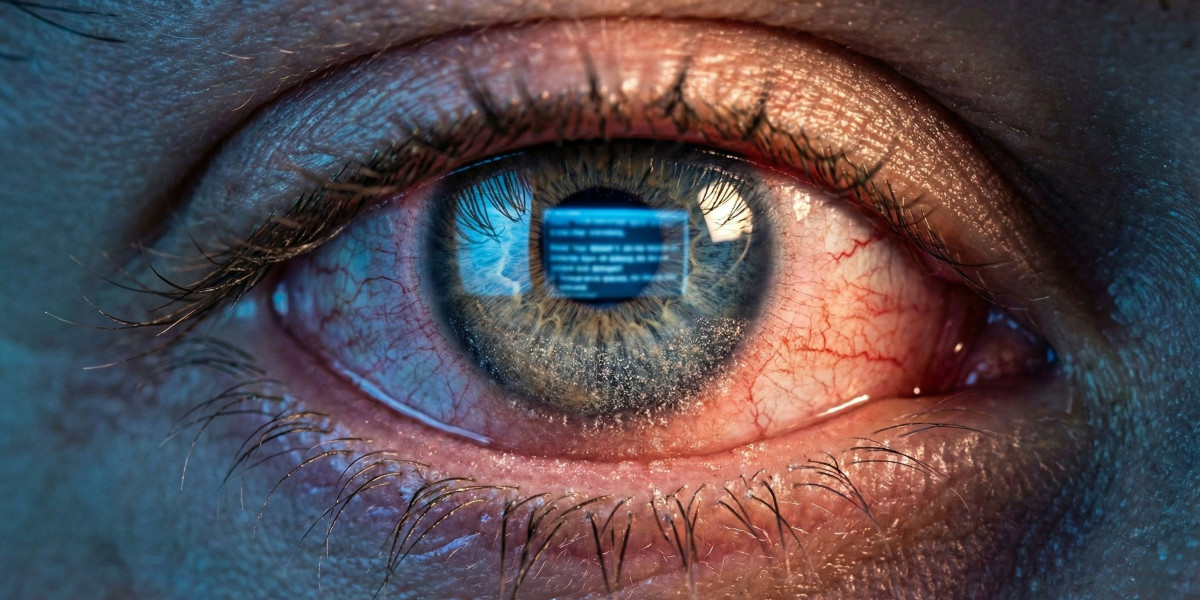

We usually associate tears with strong emotions. We cry when we are sad, when we are incredibly happy, or perhaps when we are chopping a particularly potent onion. So, it can be confusing and even a little frustrating when your eyes feel parched, scratchy, or gritty on a perfectly normal Tuesday afternoon. You haven't been crying, the air isn't filled with dust, yet your eyes feel like they have been through a desert storm.
This phantom dryness is becoming a defining characteristic of the digital age. It is a silent epidemic affecting students, professionals, and gamers alike. While it is easy to dismiss it as simple fatigue, this persistent dryness is actually one of the most common computer vision syndrome symptoms that acts as an early warning signal from your body. It is telling you that the relationship between your eyes and your screen has hit a rough patch, and the culprit is likely something you do thousands of times a day without thinking: blinking.
The Science of the "Forgotten" Blink
To understand why your eyes are dry, we first need to appreciate the engineering marvel that is the human blink. We tend to think of blinking as a simple shutter mechanism—open and closed. However, it is actually a sophisticated maintenance system.
Every time you blink, your eyelids sweep across the surface of your eye (the cornea). This action does two critical things:
Cleaning: It clears away microscopic debris and dust.
Refuelling: Most importantly, it spreads a fresh layer of tears across the eye.
This tear film isn't just water. It is a complex, three-layer sandwich consisting of mucin (to stick to the eye), water (to hydrate), and oil (to prevent evaporation). That oil layer is crucial. Without a complete, forceful blink, the oil glands in your eyelids (Meibomian glands) don't release their secretions. Without oil, your tears evaporate in seconds, leaving your eyes exposed to the air.
The Stare Down: How Screens Change Our Habits
Here is where the problem arises. Human beings are visual creatures. When we focus intently on something—whether it is a spreadsheet, a gripping video game, or a news article—our brain suppresses the urge to blink so we don't miss any visual information.
Under normal conditions, we blink about 15 to 20 times per minute. However, studies show that when we are locked onto a digital screen, that rate crashes to as low as 5 to 7 times per minute.
Not only do we blink less, but we also start "partial blinking." This means the upper eyelid doesn't come all the way down to touch the lower lid. It’s like a windshield wiper that only wipes the top half of the windshield. The bottom half of the eye never gets a fresh coat of moisture, leading to dry spots, irritation, and that telltale gritty sensation.
Decoding the Symptoms
It is important to recognize that dryness rarely travels alone. It is usually part of a package deal. While dryness is the most tactile sensation, other computer vision syndrome symptoms often accompany it, creating a cycle of discomfort.
You might notice that along with the grit, your vision fluctuates. You might look up from your laptop and find the room looks blurry for a few seconds. You might experience a dull throb behind your forehead or tension in your neck. These aren't random aches; they are the result of your visual system working overtime in an unfavorable environment. When the tear film breaks up due to lack of blinking, the optical surface becomes uneven, forcing your eyes to strain harder to focus, which leads to further fatigue.
The Environment Factor: It’s Not Just the Screen
While the reduced blink rate is the internal cause, our external environment often adds fuel to the fire. Modern offices and homes are often climate-controlled, meaning the air is dry and conditioned.
Air Conditioning/Heating: vents blowing air directly onto your face accelerate tear evaporation.
Screen Position: If your monitor is positioned above eye level, your eyes have to open wider to see it. This increases the surface area exposed to the air. Lowering your screen means your eyelids naturally cover more of the eye, protecting the tear film.
Lighting: Glare from windows or harsh overhead lights forces us to squint and stare harder, further suppressing the blink reflex.
Re-Learning How to Blink
The good news is that because this is largely a behavioral issue, it can be corrected with behavioral changes. We have to retrain our brains to prioritize eye health over continuous visual input.
This process involves moving from unconscious blinking to conscious blinking. It sounds simple, yet it requires mindfulness. Many vision experts recommend "blink exercises." This involves closing your eyes gently, pausing for a moment, squeezing them shut slightly (to engage the oil glands), and then opening them. Doing this a few times an hour can manually reset your tear film.
The 20-20-20 Rule: A Reset Button
You have likely heard of the 20-20-20 rule, but it is worth repeating because it is the most effective tool we have against the "stare."
Every 20 minutes, take a break.
Look at something 20 feet away.
Do this for 20 seconds.
That 20-second break is the magic window. It allows the focusing muscle inside your eye (the ciliary muscle) to relax, releasing the lock it has held on the screen. It also provides a natural pause to blink fully and repeatedly, moisturizing the eye surface before you dive back into work.
Hydration from the Inside Out
While we focus heavily on the eye's surface, we cannot ignore the rest of the body. Your eyes are organs, and they rely on systemic hydration. If you are dehydrated, your body will conserve water, and tear production is one of the first things to slow down.
Drinking adequate water throughout the day ensures that your lacrimal glands have the raw materials they need to produce the aqueous (water) layer of the tear film. Additionally, diets rich in Omega-3 fatty acids (found in fish, flaxseeds, and walnuts) can help improve the quality of the oil layer produced by your eyelids, making your tears more stable and resistant to evaporation.
Conclusion
The sensation of dry eyes in a digital world is a gentle nudge from your biology. It is a reminder that while our technology has evolved rapidly, our eyes are still operating on ancient software that needs care and maintenance. By understanding the critical role of blinking and acknowledging the impact of our focused "staring" habits, we can take control of our visual comfort. Simple adjustments—lowering a screen, taking a 20-second break, or just remembering to blink fully—can transform your daily experience, keeping your eyes refreshed and ready for whatever you need to see next.
Frequently Asked Questions
1. Can using eye drops every day make my eyes dependent on them? Generally, using preservative-free artificial tears is safe and does not cause dependence. They simply supplement moisture. However, if you are using "redness relief" drops, these can cause a rebound effect where eyes become redder over time. It is best to stick to lubricating drops designed for moisture.
2. Why do my eyes water if they are dry? This is a reflex response. When the eye surface gets too dry, the nerves send a panic signal to the brain, which floods the eye with emergency tears. However, these tears are mostly water and lack the necessary oils to coat the eye, so they often run down your face while the eye remains dry underneath.
3. Does blue light cause dry eyes? Directly, no. Blue light affects sleep cycles and contrast. However, we tend to stare more intensely at screens emitting blue light, and that reduced blink rate is what causes the dryness, not the light frequency itself.
4. How can I remind myself to blink more? Post-it notes on the monitor are a classic, effective trick. There are also apps available that dim your screen at set intervals to remind you to take a break or blink.
5. Is the air conditioner really hurting my eyes? Yes, moving air acts like a hair dryer for your eyes, speeding up evaporation. Try to position your desk so vents aren't blowing directly on your face, or use a humidifier to add moisture back into the room.