
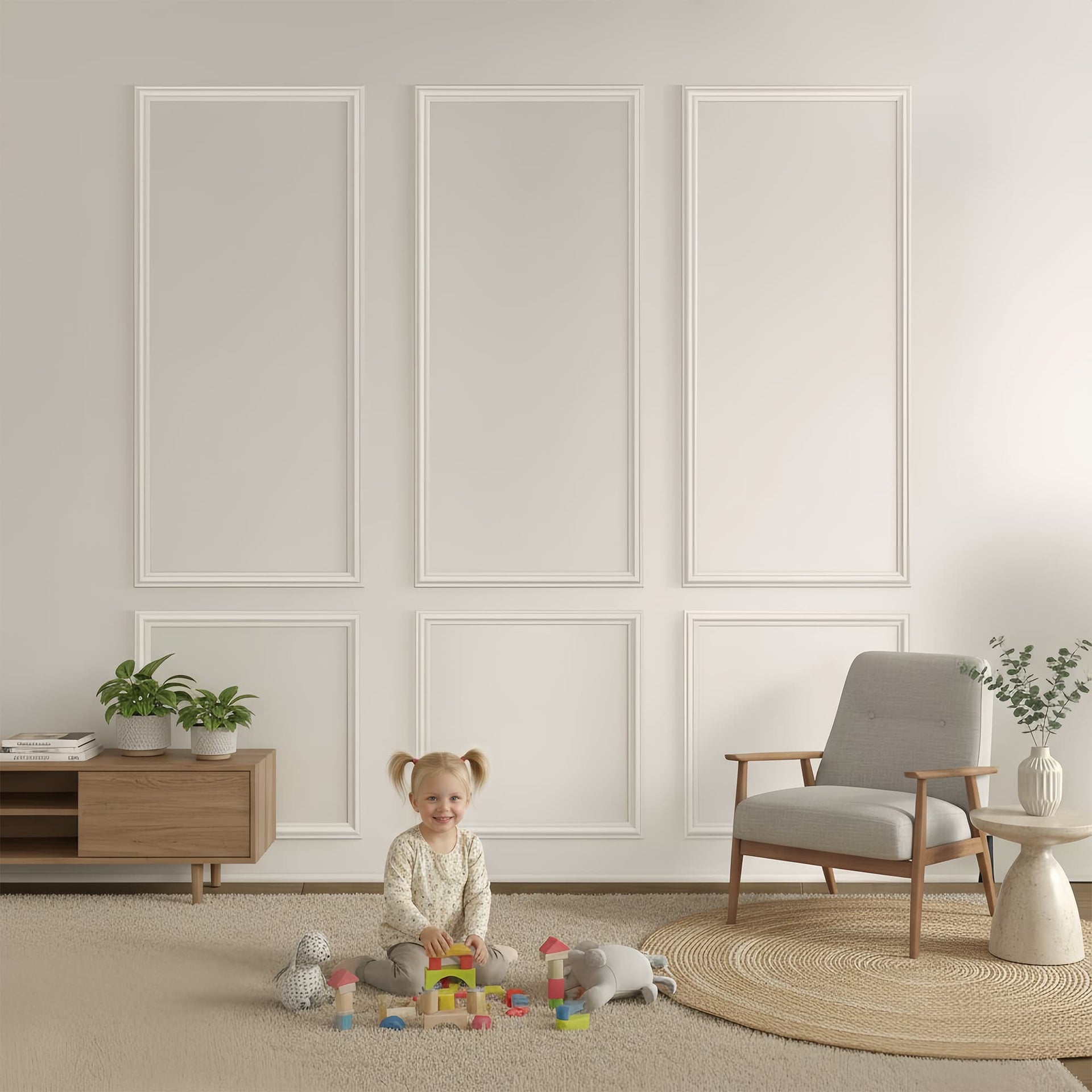
The combination of chair rail and picture frame molding represents one of the most sophisticated and historically rooted approaches to wall decoration. This classic pairing divides walls into distinct zones, creates visual rhythm, and provides opportunities for color and texture that flat walls cannot achieve. The chair rail, running horizontally at approximately one-third the wall height, establishes a clear visual boundary that organizes the entire wall composition. Below it, picture frame moldings create panels that add depth and structure, their repeating rhythm guiding the eye around the room. Above it, walls may remain plain, accept wallpaper, or receive additional treatment. This two-part system has graced formal dining rooms, stately libraries, and gracious entry halls for centuries, yet modern kit systems have made it accessible to homeowners seeking timeless elegance without the complexity of traditional installation.
The Historical Significance of Chair Rail
Chair rail originated from practical necessity long before it became decorative. In formal dining rooms of centuries past, chairs pushed back from tables would scar plaster walls with their tops. The solution was a wooden rail installed at precisely the height where chair backs made contact—hence the name. This protective element gradually acquired decorative significance, becoming an expected feature in well-appointed rooms. Craftsmen began shaping it with elegant profiles, and homeowners painted it to contrast with walls. By the Victorian era, chair rail was standard in dining rooms, libraries, and parlors, its presence signaling attention to detail and protection of fine interiors. Today's installations honor this heritage while adapting it to contemporary homes where protection may be less needed but aesthetic value remains undiminished.
Picture Frame Molding: Purpose and Beauty
Picture frame molding served a different historical purpose, creating defined areas on walls where paintings could be hung without damaging large surface areas. In grand estates where art collections rotated seasonally, these frames provided guidelines for placement and protected walls from frequent rehanging. The frames themselves became decorative elements, their moldings echoing those of the actual artwork. Over time, the frames took on independent aesthetic value, and installations appeared even without art—the empty frames providing architectural interest through shadow and line. Today, picture frame molding offers flexibility; frames can remain empty as pure architecture, accept artwork that fits within them, or provide guidelines for hanging collections. This versatility makes them valuable in both traditional and contemporary settings.
Proportion and Placement Principles
The success of chair rail and picture frame installations depends critically on proper proportion and placement. The chair rail height should relate to both ceiling height and the scale of the room—standard eight-foot ceilings typically call for rail at approximately one-third height, or 32 to 36 inches from the floor. Taller rooms allow more flexibility, with rail placed higher to maintain visual balance. The picture frames below should relate to the chair rail above, with their top edges aligning with or sitting slightly below the rail. Spacing between frames should be consistent, typically two to four inches, with corner frames positioned equidistant from adjacent walls. The relationship between frame width and height should follow pleasing proportions—often rectangles rather than squares, with dimensions that echo the room's overall shape. Taking time to calculate these relationships before installation ensures results that feel inherently right.
Installation Process Step by Step
Installing chair rail and picture frame molding follows a logical sequence that builds complexity gradually. The process begins with marking the chair rail height around the entire room, using a level to ensure consistency across uneven floors. The rail installs first, running continuously except where interrupted by doors or windows. With the rail in place, layout for picture frames begins—measuring each wall section, calculating panel counts based on your design, and marking frame positions with consistent spacing. Frames then install individually, their placement referenced to the chair rail above and floor below. Use a level for each frame to ensure plumb. Corners receive special attention, with mitered joints or corner blocks creating clean transitions. Throughout installation, frequent checks prevent error accumulation. The sequential nature of the work means each step builds on the previous one, with the chair rail providing reference for everything that follows.
Design Variations for Different Styles
While the basic concept remains constant, design variations allow chair rail and picture frame treatments to suit diverse architectural styles. Traditional installations feature classical profiles—ogee curves, bead details, and proportional moldings that echo historical precedents. These work beautifully in period homes where authenticity matters. Arts and Crafts interpretations use simpler, squarer profiles with minimal ornamentation, emphasizing honest material expression that complements Craftsman architecture. Contemporary approaches might omit the chair rail entirely, using only picture frames for a cleaner look, or install rail at unconventional heights for dramatic effect. The frames themselves can vary from simple rectangles to complex arrangements with multiple panels per wall section. Color choices further differentiate styles—classic white against colored walls for tradition, monochromatic schemes for modernity, or bold contrasts for dramatic impact.
Paint and Finish Strategies
The finishing approach significantly influences how chair rail and picture frame installations are perceived. The most traditional treatment paints all molding white against colored walls, creating crisp contrast that emphasizes the architectural lines and makes them read clearly. This approach works beautifully in formal spaces where definition matters. Monochromatic schemes, with molding matching wall color, create subtle texture that reads as sophisticated depth rather than obvious pattern—ideal for serene bedrooms or contemporary spaces where understatement reigns. Two-tone approaches might paint the area above the chair rail differently from below, creating distinct zones within the room and emphasizing the horizontal division. The finish sheen deserves consideration; higher gloss on molding emphasizes detail and facilitates cleaning, while flat finishes integrate more seamlessly with wall surfaces. Whatever approach you choose, quality primer and careful application ensure results that satisfy for years.
Furnishing Within the Framework
Rooms with chair rail and picture frame molding invite thoughtful furnishing that respects the architectural framework. Artwork should relate to the picture frames—either hanging within them for traditional alignment where art fills the frame, or deliberately crossing frame boundaries for contemporary tension that adds energy. Furniture placement should acknowledge the chair rail as a visual line; sofa backs may align with it, dining chairs chosen with heights that relate proportionally, beds positioned so headboards relate to the rail. The horizontal surface of the chair rail itself offers display opportunities for small objects, though restraint prevents cluttered appearance. Below the rail, the paneled area provides natural zoning for furniture arrangement, grounding pieces visually. When these relationships are considered, the room achieves the harmony that comes from architecture and furnishings working together rather than competing. This integration, rather than any single element, creates the refined interiors that chair rail and picture frame treatments make possible.