
INTRODUCTION
A Swimming pool construction company plays a vital role in transforming a concept into a fully functional and visually appealing pool. From initial planning to final handover, these companies manage a series of well-defined stages to ensure quality, safety, and long-term performance. Whether it’s a residential pool or a large commercial project, understanding these stages helps clients appreciate the complexity and precision involved in pool construction.
In this comprehensive guide, we will explore each stage covered by a swimming pool construction company and how these steps contribute to a successful project.
Understanding the End-to-End Construction Process
Swimming pool construction is not just about digging and filling water—it is a structured process that involves planning, engineering, design, construction, and testing. Each stage is interconnected and requires expertise to ensure the pool meets functional and aesthetic expectations.
Stage 1: Initial Consultation and Requirement Analysis
The first stage involves understanding the client’s needs and expectations. During this phase, the construction company:
- Discusses design preferences
- Evaluates intended usage (residential, commercial, recreational)
- Understands budget scope and space availability
- Identifies special requirements like features or themes
This stage lays the foundation for the entire project.
Stage 2: Site Inspection and Feasibility Study
Before any design work begins, the site is carefully evaluated. This includes:
- Soil testing and ground condition analysis
- Assessment of space and layout
- Checking access to utilities like water and electricity
- Identifying potential challenges
This ensures the project is technically feasible and safe.
Stage 3: Concept Design and Planning
Based on the initial consultation and site analysis, designers create a concept plan. This includes:
- Pool shape and size
- Depth variations
- Placement within the property
- Integration with landscape and surroundings
Clients are often provided with 2D drawings or 3D visualizations to better understand the design.
Stage 4: Detailed Engineering and Technical Design
Once the concept is approved, the project moves into technical planning. This stage involves:
- Structural engineering design
- Hydraulic system planning
- Filtration and circulation system design
- Electrical and lighting layout
Proper engineering ensures the pool is safe, efficient, and durable.
Stage 5: Approval and Compliance
Before construction begins, necessary approvals and compliance checks are completed. This includes:
- Adhering to local building regulations
- Ensuring safety standards are met
- Completing required documentation
This step is especially important for commercial projects.
Stage 6: Excavation and Ground Preparation
Construction begins with excavation, which involves:
- Digging the pool area according to design specifications
- Leveling and shaping the base
- Preparing the foundation
This stage sets the groundwork for the pool structure.
Stage 7: Structural Construction
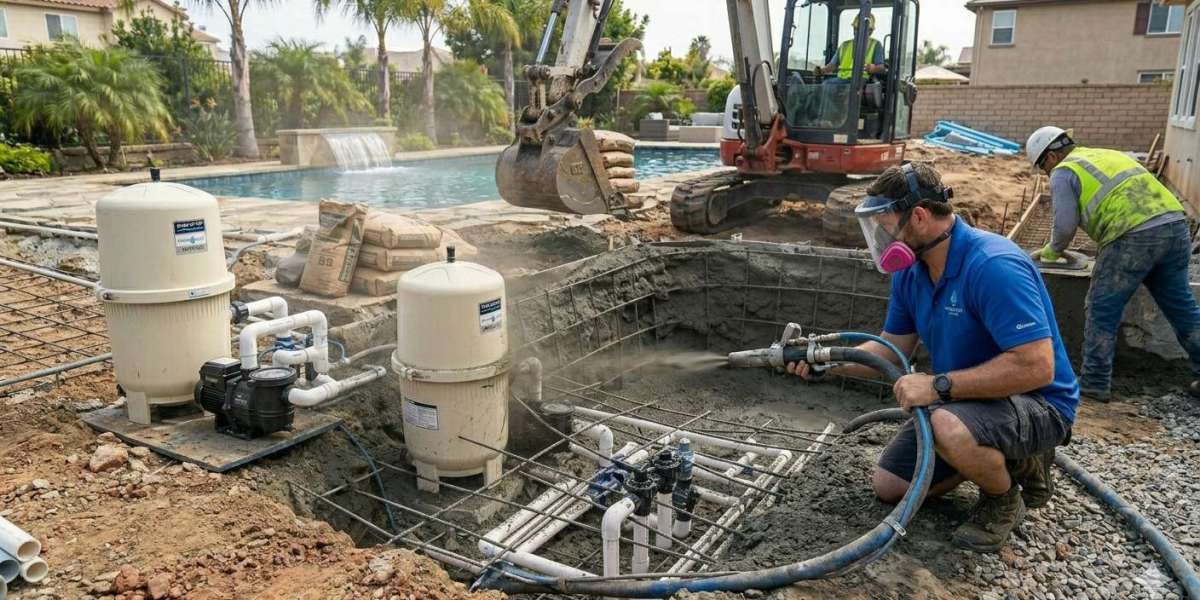
The structural phase involves building the pool shell. This includes:
- Reinforcement with steel bars
- Concrete pouring (shotcrete or gunite)
- Forming walls and base
A strong structure ensures the pool’s longevity and stability.
Stage 8: Plumbing and Electrical Installation
After the structure is in place, essential systems are installed:
- Water circulation pipelines
- Drainage systems
- Electrical wiring for lighting and equipment
Proper installation ensures efficient operation and safety.
Stage 9: Waterproofing
Waterproofing is a critical stage that prevents leakage and structural damage. This involves:
- Applying waterproof coatings or membranes
- Sealing joints and cracks
- Ensuring a watertight structure
This step protects the pool from long-term damage.
Stage 10: Tiling and Finishing
Once waterproofing is complete, the pool is finished with:
- Tiles or surface coatings
- Decorative elements
- Edge finishing and coping
This stage enhances both the appearance and functionality of the pool.
Stage 11: Installation of Equipment and Features
Modern pools often include advanced features such as:
- Filtration systems
- Pumps and heaters
- LED lighting
- Water features like fountains or waterfalls
These elements are installed and integrated into the system.
Stage 12: Testing and Commissioning
Before the pool is handed over, it undergoes thorough testing:
- Checking water circulation and filtration
- Testing electrical systems
- Ensuring proper chemical balance
- Inspecting for leaks or defects
This ensures the pool is fully operational.
Stage 13: Final Inspection and Handover
The final stage includes:
- Detailed inspection of all components
- Client walkthrough and demonstration
- Providing maintenance guidelines
Once everything meets quality standards, the pool is officially handed over.
Importance of Each Stage in Pool Construction
Each stage plays a critical role in ensuring:
- Structural integrity
- Efficient operation
- Long-term durability
- Safety and compliance
Skipping or poorly executing any stage can lead to future issues.
Benefits of Hiring a Professional Swimming Pool Construction Company
Expertise and Experience
Professionals bring technical knowledge and industry experience.
Quality Assurance
Each stage is executed with precision and quality checks.
Time Efficiency
Structured processes ensure timely project completion.
Customization
Designs and features can be tailored to client needs.
Long-Term Reliability
Proper construction reduces maintenance issues.
Common Challenges in Pool Construction
- Site limitations
- Design complexities
- Coordination between teams
- Weather conditions
Experienced companies are equipped to handle these challenges effectively.
Role of Technology in Modern Pool Construction
Modern construction companies use advanced tools such as:
- 3D design software
- Automated construction techniques
- Smart pool systems
These technologies improve accuracy and efficiency.
Tips for a Successful Pool Construction Project
- Clearly define your requirements
- Choose an experienced construction company
- Review designs carefully
- Ensure proper planning and approvals
- Follow recommended maintenance practices
These steps help ensure a smooth and successful project.
Conclusion
A Swimming pool construction company manages a comprehensive set of stages, from initial consultation and design to construction, testing, and final handover. Each phase is essential for creating a pool that is not only visually appealing but also safe, durable, and efficient.
Understanding these stages helps clients make informed decisions and ensures a smoother construction experience. For expert execution and reliable service, Swimwell Pools works alongside leading swimming pool companies to deliver high-quality pool construction projects.
Frequently Asked Questions (FAQs)
1. What is the first stage of pool construction?
The process begins with consultation and requirement analysis.
2. Why is site inspection important?
It ensures the project is feasible and identifies potential challenges.
3. How long does pool construction take?
The timeline depends on the project size and complexity.
4. What is the role of waterproofing?
It prevents leaks and protects the pool structure.
5. Are approvals required for pool construction?
Yes, especially for commercial projects.
Read Our Previous Blog------>Can a Swimming pool construction company handle custom pool projects?