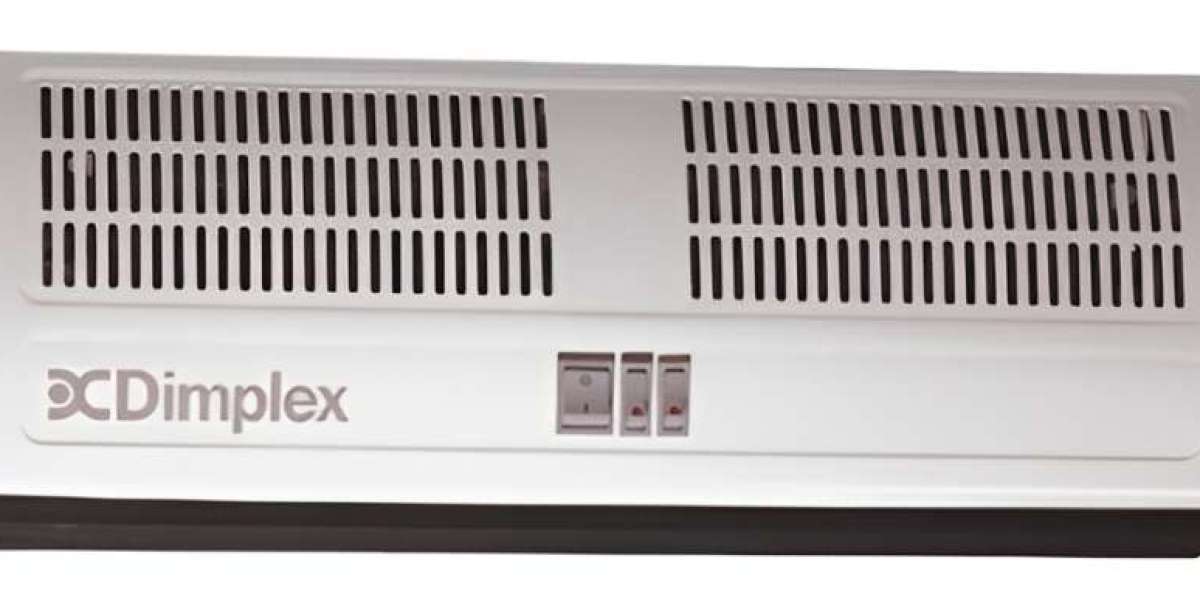

Dimplex Air Curtain
A Dimplex Air Curtain is designed to create a controlled stream of air across a doorway, helping separate indoor and outdoor environments without blocking foot traffic. As a result, it can reduce drafts, support stable indoor temperatures, and improve comfort in busy entrances where doors open frequently.
Because entrances are high loss zones, selecting the right air curtain matters for energy efficiency, day to day reliability, and user safety. When sized and installed correctly, it supports HVAC performance while keeping reception areas, retail entrances, and industrial doorways more comfortable.
What a Dimplex Air Curtain Does at an Entrance
An air curtain forms an invisible barrier of moving air across the opening. Instead of relying on a physical door to stop outside air, it helps limit cold drafts in winter and reduces warm air infiltration in summer.
This airflow separation can support:
• More consistent indoor temperatures near entrances
• Reduced heat loss and improved comfort for staff and visitors
• Better control of odours, dust, and airborne contaminants in some settings
• Smoother HVAC operation, since the system compensates less for sudden air changes
Where a Dimplex Air Curtain Fits Best
Air curtains are commonly used wherever doors open repeatedly and temperature stability is important. These environments often include retail storefronts, reception entrances, warehouses, workshops, and commercial buildings with high footfall.
A practical match is any doorway where you want access to stay open for customers, deliveries, or workflow. At the same time, you want the indoor environment to remain comfortable and controlled.
Typical applications
• Shops and showrooms with frequent door opening
• Office lobbies and public buildings
• Loading bays and warehouse doors
• Cafes and service counters where drafts affect comfort
Key Buying Factors for the Right Model
To choose an air curtain that performs well, focus on airflow coverage, installation height, heat option, and control method. A unit that is too small may not seal the opening effectively, while an oversized unit can add noise and unnecessary energy use.
Sizing and doorway coverage
Start with the door width and mounting height. The airflow must cover the full opening, and the unit should be rated for your installation height so the air stream reaches the floor zone effectively.
Heated or ambient airflow
Some air curtains provide ambient airflow only, while others include electric heat. Heated options can improve comfort at exposed entrances, particularly in colder climates. However, they also require careful electrical planning and protection.
Controls and building integration
Many models support multi speed settings and automatic control. In a commercial space, pairing with door switches or building controllers can improve efficiency, because the unit runs harder only when needed.
Installation and Electrical Considerations
Professional installation helps ensure correct performance and safe operation. This includes secure mounting, correct alignment, and proper electrical connection using suitable cables and protection devices.
Because these units may draw significant power, the supply design should include appropriate fuses, isolators, and protection. Where required, contactors may be used to switch higher loads safely, especially if the unit is controlled by external systems.
Wiring and component protection
Air curtains often depend on clean power delivery and stable switching. In real installations, you may see:
• Correctly sized cables for load and distance
• Suitable connectors for secure termination
• Protective fuses and switches for isolation and fault protection
• Contactors for controlled switching in higher power setups
For heated units, thermal safety is critical. Overheat protection, airflow monitoring, and correct clearance around the unit all support reliable operation.
Energy Efficiency and Comfort Benefits
An air curtain can help reduce the burden on heating and cooling systems by limiting the volume of exchanged air at doorways. Over time, that can support lower energy consumption and improved temperature stability.
In addition, better comfort at entrances can improve customer experience and staff productivity. Cold drafts, temperature swings, and sudden bursts of outdoor air can create discomfort that is hard for HVAC systems to fix quickly.
Practical efficiency improvements
• Reduced warm air escape in winter
• Less hot air entry in summer
• Fewer HVAC recovery cycles after door openings
• More stable indoor zones near entrances
Maintenance for Long Term Reliability
Routine maintenance is simple but important. Dust buildup can reduce airflow and increase noise. In heated units, restricted airflow can affect thermal performance and safety.
A sensible maintenance routine includes:
• Cleaning inlet and outlet areas to maintain airflow
• Checking mounting stability and alignment
• Inspecting electrical connections and connectors for signs of heat or looseness
• Confirming switches and control settings operate as intended
In some environments, maintenance teams also check related electronics, especially where controllers are used for automation. Clean, stable control signals reduce the risk of nuisance shut offs and improve overall reliability.
Smart Control and Electronics in Modern Systems
Many commercial entrances benefit from smarter operation rather than constant full speed running. Air curtains can work with sensors that detect door activity or occupancy, then adjust airflow automatically.
In advanced setups, control electronics may include:
• Door sensors to trigger boost mode
• Time schedules set by controllers for business hours
• Integration with building management systems for coordinated HVAC control
These systems can rely on microcontrollers and microprocessors inside control modules, enabling fast response and consistent behaviour. In some installations, status indicators use LEDs to show operating mode or fault conditions.
Protecting control components
Control circuits often include protective design elements such as:
• A capacitor for smoothing and stability in some power sections
• Dedicated thermal pads for heat transfer in compact electronics
• Secure connectors to reduce signal loss and vibration issues
This type of design is common across many electronic systems, including laptops and industrial controllers, because stable control and heat management improve reliability.
Safety and Compliance Focus
Safety should be built into both selection and installation. This includes proper mounting, electrical protection, and correct clearances. Heated air curtains also require attention to airflow integrity so heat can dissipate safely.
In addition to electrical protection, maintenance teams should use appropriate tools and safe handling practices. For example, using insulated grips and correct isolation procedures reduces risk during inspection. In industrial sites, appropriate lubricants and oils may be used for related door hardware, but they should never contaminate the air curtain inlet or electrical sections.
Making the Product Decision
A Dimplex Air Curtain is a practical solution when you need an open doorway experience without sacrificing indoor comfort. The best results come from correct sizing, suitable heat selection, and a control approach that matches your building usage.